 Free Estimate
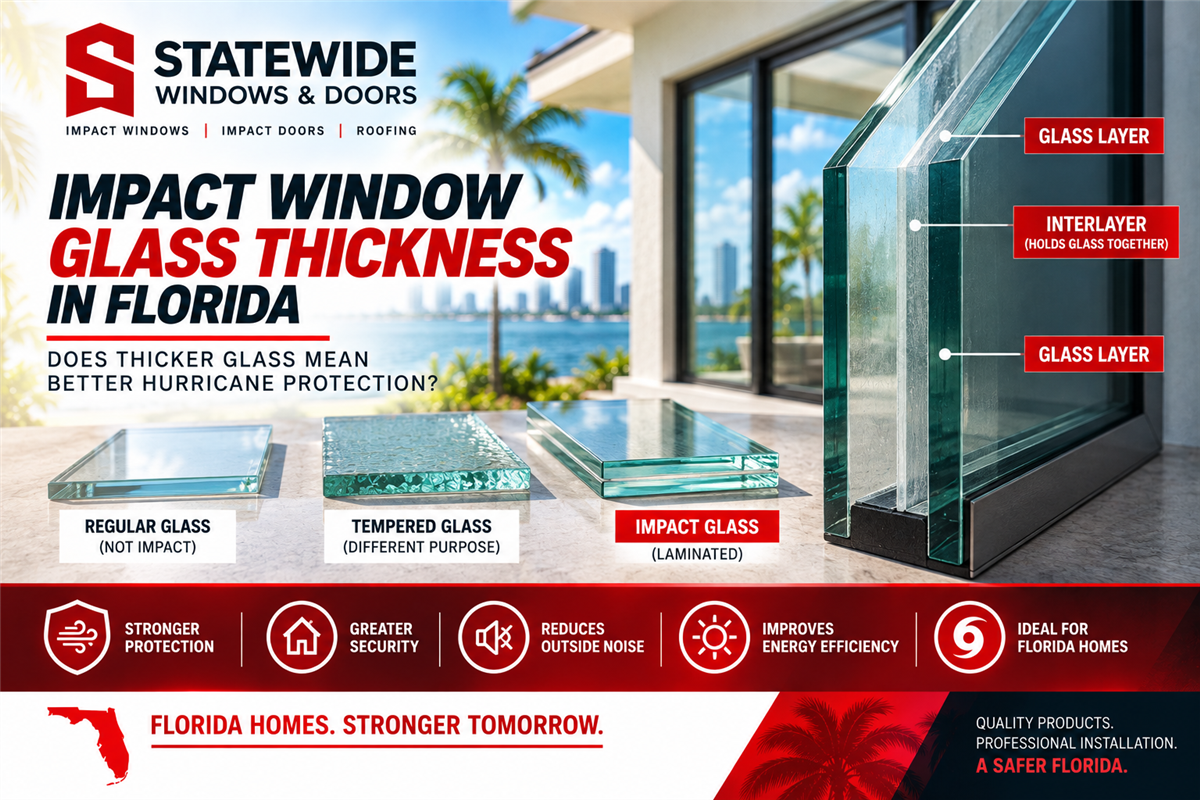
When Florida homeowners compare impact windows, one of the questions that often comes up is glass thickness.
It seems logical to assume that thicker glass must automatically mean stronger hurricane protection. But impact-resistant windows are more complicated than simply measuring how thick the glass is.
An impact window is a complete tested system that can include multiple layers of glass, an interlayer, the frame, glazing components, hardware, anchoring, and an approved installation method.
Glass thickness can be part of a product's design, but homeowners should not choose impact windows based on thickness alone.
Here is what Florida homeowners should understand about impact window glass thickness, laminated glass, product testing, and hurricane protection.
How Thick Is Impact Window Glass?
There is no single glass thickness used for every impact window in Florida.
The exact glass construction can vary depending on:
- Manufacturer
- Product series
- Window or door type
- Opening size
- Glass configuration
- Performance requirements
- Approved product configuration
Instead of looking for one universal thickness, homeowners should focus on whether the complete product being proposed is approved and appropriate for its intended application.
What Is Impact-Resistant Glass Made Of?
Many impact-resistant window systems use laminated glass.
Laminated glass is created by combining layers of glass with a durable interlayer between them.
If the glass is damaged, the interlayer is designed to help hold broken glass together rather than allowing the opening to immediately become completely exposed.
This concept is one of the major differences between laminated impact-resistant glass and ordinary residential glass.
Why the Interlayer Matters
The interlayer is an important part of laminated impact-resistant glass.
Homeowners sometimes focus entirely on the thickness of the visible glass while overlooking what is between the glass layers.
However, impact performance depends on the complete glazing construction.
The glass layers and interlayer work together as part of the approved system.
This is why comparing two impact windows based only on the thickness of their glass can be misleading.
Does Thicker Glass Mean a Stronger Impact Window?
Not automatically.
A thicker glass configuration may be used for certain products or applications, but thickness by itself does not tell homeowners everything they need to know about impact performance.
The complete system matters.
That includes:
- Glass construction
- Interlayer
- Frame
- Glazing method
- Hardware
- Anchoring
- Product configuration
- Installation
A homeowner should therefore avoid assuming that the thickest-looking glass is automatically the best impact window.
Impact Windows Are Tested as Systems
One of the most important concepts to understand is that hurricane protection is not determined by glass thickness alone.
Impact window and door systems are evaluated according to applicable testing and approval requirements.
The product's performance depends on the tested or approved configuration rather than one isolated component.
This means homeowners should evaluate the entire window system.
What Happens When Impact Glass Is Struck?
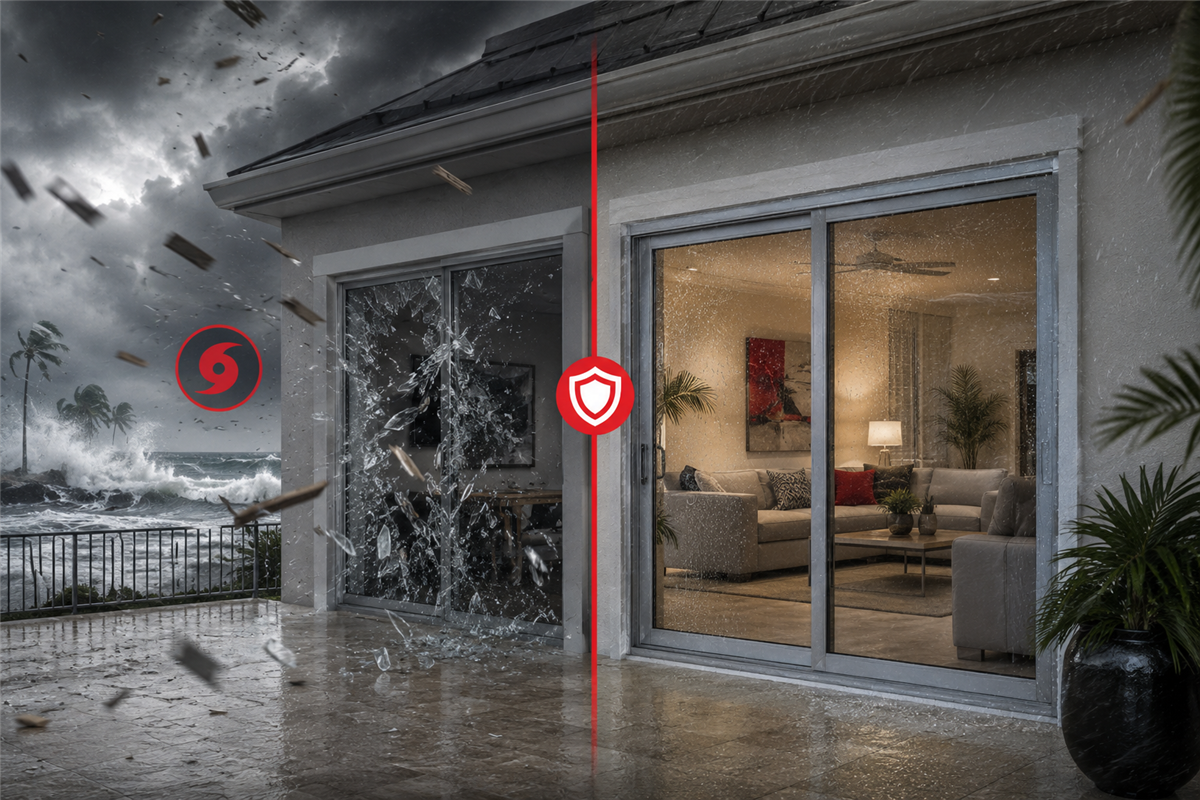
Impact-resistant glass is designed to address specified impact conditions as part of an approved system.
That does not mean the glass can never crack or break.
Under a sufficiently strong impact, the glass may become damaged.
The laminated construction is designed to help the glazing remain together rather than behaving like ordinary glass that may leave an exposed opening after breaking.
This distinction is why the term impact-resistant is more accurate than terms such as "unbreakable" or "hurricane-proof."
Can Impact Windows Break During a Hurricane?
Yes. Impact-resistant does not mean indestructible.
Severe weather can involve powerful winds and windborne debris, and no responsible contractor should promise that a window can never experience damage.
The purpose of an impact-resistant system is to provide protection according to the conditions and performance requirements for which the product has been tested and approved.
The goal is not to create glass that can never crack under any circumstance.
Why Keeping the Building Envelope Protected Matters
During severe wind events, protecting exterior openings is an important part of reducing vulnerability to wind and debris.
If an exterior opening is compromised, wind can enter the building and affect internal pressures.
Impact-resistant windows and doors are designed as part of a broader approach to protecting building openings.
This is one reason Florida homeowners should evaluate the complete approved system rather than simply asking how thick the glass is.
Impact Glass vs. Regular Window Glass
Standard residential window glass and impact-resistant laminated glass should not be treated as interchangeable products.
Impact-resistant systems are specifically designed and evaluated for applications requiring impact performance.
Regular window glass may not provide the same type of laminated construction or impact performance.
Homeowners replacing windows in hurricane-prone areas should understand exactly what type of glazing is included in the proposed product.
Impact Glass vs. Tempered Glass
Tempered glass and laminated impact-resistant glass also serve different purposes.
Tempered glass is heat-treated so that when it breaks, it generally breaks into relatively small pieces rather than large sharp shards.
Laminated glass uses an interlayer designed to help keep the glazing together after breakage.
A product being described as tempered glass should not automatically be interpreted as an impact-resistant hurricane window.
The specific approved window or door system is what matters.
Does Double-Pane Glass Mean It Is Impact-Resistant?
No.
Double-pane or insulated glass and impact resistance describe different characteristics.
An insulated glass unit generally uses multiple panes separated by a sealed space, which can contribute to thermal performance.
An impact-resistant system uses a glazing configuration designed to meet applicable impact requirements.
An impact window can incorporate insulated glass, but simply seeing two panes does not prove that a window is impact-resistant.
Does Impact Glass Have Multiple Layers?
Laminated impact glazing commonly incorporates multiple layers as part of its construction.
However, the exact configuration varies by product.
Homeowners may encounter different combinations of glass layers, laminated components, insulating spaces, coatings, and other features.
Rather than trying to determine product quality by counting visible layers, review the specifications and applicable approval for the exact window being proposed.
What About Insulated Impact Glass?
Some impact window systems can combine impact-resistant glazing with an insulated glass configuration.
This allows the product to address impact performance while also incorporating features related to energy efficiency.
Depending on the product, an insulated configuration may include:
- Multiple glass panes
- A sealed airspace
- Laminated impact-resistant glazing
- Low-E coatings
- Other product-specific features
Homeowners should compare the exact configuration rather than assuming every impact window uses the same glass package.
Glass Thickness vs. Energy Efficiency
Glass thickness alone does not determine how energy-efficient a window will be.
Energy performance can involve several factors, including:
- Glass configuration
- Low-E coatings
- Insulated glass
- Frame material
- Window design
- Installation
If energy efficiency is important to you, ask about the applicable performance information for the complete window rather than relying on glass thickness as a shortcut.
Does Impact Glass Help Reduce Outside Noise?
Laminated glass can contribute to noise reduction compared with certain standard window configurations, but the amount of sound reduction depends on the complete system and surrounding building conditions.
Glass construction, airspaces, frame design, seals, installation, and the existing structure can all influence the result.
Homeowners should be cautious of promises that a particular glass thickness will make a home completely silent.
Impact windows can help with noise, but they should not be marketed as soundproof.
Does Thicker Glass Provide Better Home Security?
Laminated impact-resistant glazing can provide an additional barrier compared with many ordinary residential windows because the interlayer helps the damaged glass remain together.
However, homeowners should avoid viewing glass thickness as a complete home-security rating.
The window frame, locks, hardware, installation, and other parts of the opening also matter.
Impact windows can contribute to a home's overall security, but no window should be described as impossible to penetrate.
Why the Frame Matters Just as Much as the Glass
A strong glazing configuration still depends on the frame surrounding it.
Impact windows are complete assemblies.
The frame helps support the glazing and connects the product to the structure.
Florida homeowners may encounter both aluminum and vinyl impact window systems.
Statewide Windows & Doors offers both aluminum and vinyl options depending on the needs of the project.
The better choice depends on the particular home, product, opening, design preferences, and project requirements.
Why Anchoring Matters
The window also has to be properly attached to the structure.
An impact-resistant product cannot simply be placed inside an opening and expected to perform as intended.
Approved installation requirements may specify factors involving:
- Fastener type
- Fastener spacing
- Substrate
- Frame conditions
- Edge distances
- Other installation details
These requirements can vary by product and configuration.
There is no universal anchoring method that applies to every impact window.
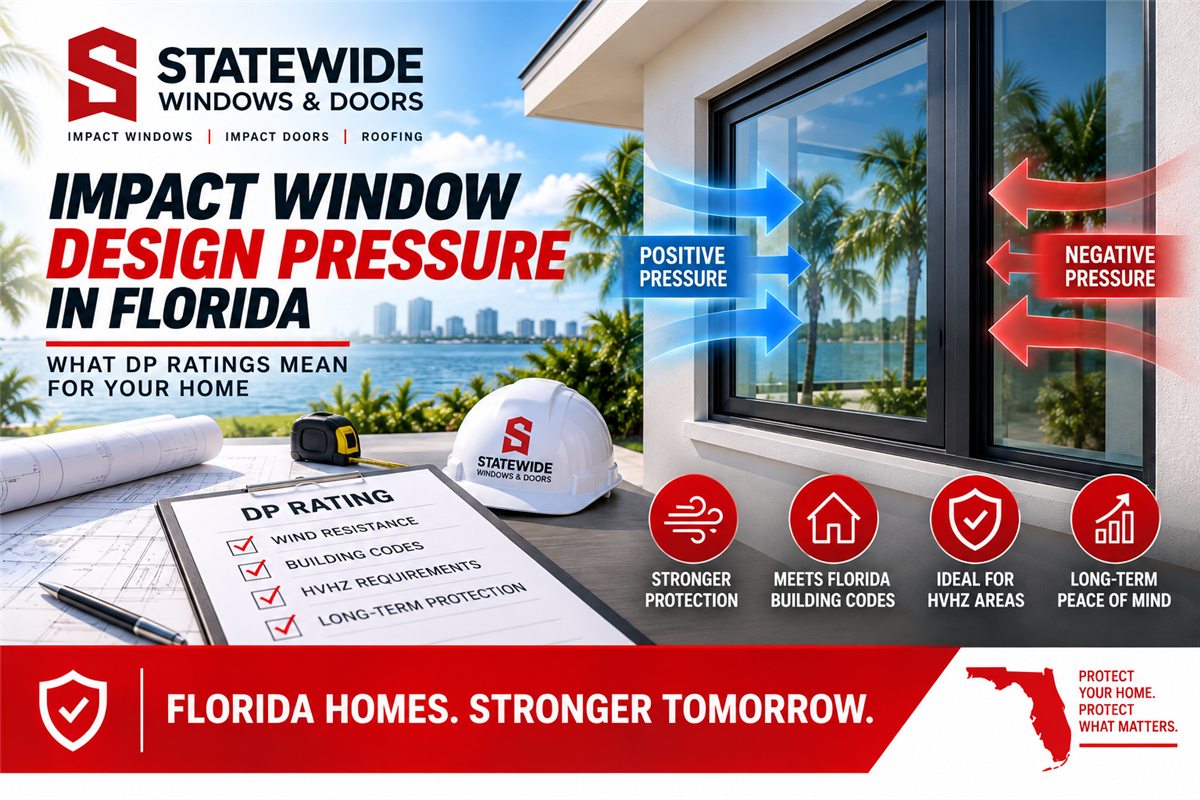
Glass Thickness vs. Design Pressure
Glass thickness and design pressure should not be treated as the same measurement.
Design pressure relates to the pressure forces the approved window or door configuration is designed to address for a particular application.
Glass construction is one part of that complete system.
A homeowner should not assume that increasing glass thickness automatically produces the appropriate design-pressure performance for every opening.
Read our guide to Impact Window Design Pressure in Florida to learn more about DP ratings and how they relate to a project.
Why Window Size Matters
The size of a window or door can affect the configurations available within a product system.
This becomes especially important for large openings.
A product series may offer different approved sizes and configurations with different performance information.
Homeowners should make sure the specific size being ordered corresponds with the applicable product documentation.
Impact Glass for Sliding Glass Doors
Sliding glass doors can contain very large glass panels, making the complete product configuration particularly important.
When comparing impact sliding glass doors, consider:
- Panel configuration
- Opening dimensions
- Frame material
- Glass configuration
- Applicable product approval
- Design-pressure requirements
- Installation method
Do not compare two sliding glass doors solely by asking which one has thicker glass.
Explore impact sliding glass doors from Statewide Windows & Doors.
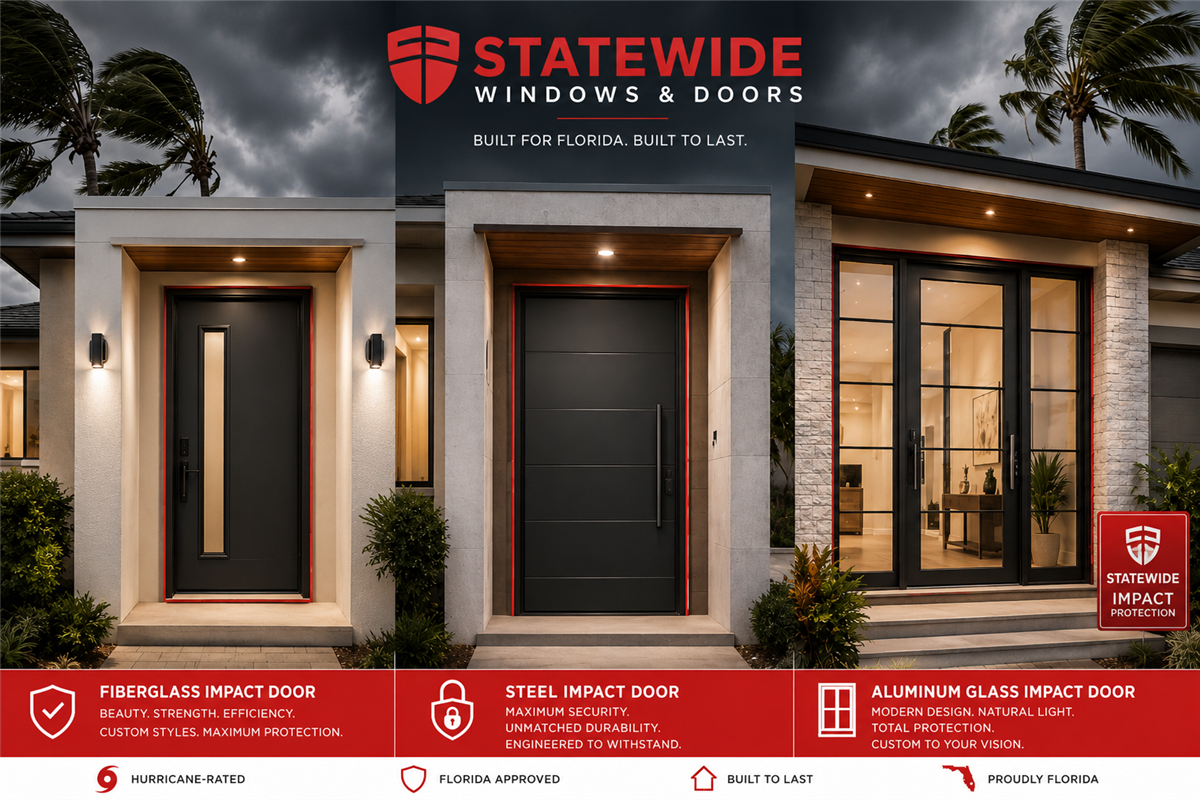
Impact Glass for Entry and French Doors
Impact-resistant glazing can also be incorporated into exterior door systems.
As with windows, the complete door system matters.
That can include:
- Door panel
- Glass
- Frame
- Hardware
- Anchoring
- Configuration
- Approved installation
Homeowners can explore impact door options from Statewide Windows & Doors.
Impact Glass in Miami-Dade and Broward County
Miami-Dade and Broward County are within Florida's High-Velocity Hurricane Zone.
Homeowners in these areas should pay particular attention to whether the specific window or door configuration being proposed is approved for its intended HVHZ application.
Simply describing a product as having thick glass or impact glass is not enough.
The applicable product approval and configuration should be verified.
Statewide Windows & Doors has completed thousands of projects across Miami-Dade and Broward County and has experience with impact window and door projects in the HVHZ.
Miami-Dade NOA and Florida Product Approval
Florida homeowners may encounter Miami-Dade Notices of Acceptance and Florida Product Approvals while researching impact windows.
A Miami-Dade NOA is one recognized product approval pathway.
Qualifying Florida Product Approvals specifically approved for HVHZ use can also apply.
A generic Florida Product Approval does not automatically mean that every configuration is approved for an HVHZ application.
The important question is whether the specific product and configuration are approved for the intended use.
Learn more in our guide to Miami-Dade NOA vs. Florida Product Approval.
Can You Tell If a Window Is Impact-Resistant Just by Looking at It?
Homeowners should not rely on appearance alone.
A standard window and an impact-resistant window can sometimes look similar from a distance.
Instead, review the product information and applicable documentation associated with the exact window or door system.
Your contractor should be able to identify what is being proposed and explain why it is appropriate for your project.
How Do You Compare Impact Glass Between Quotes?
If you receive multiple impact window quotes, do not ask only which contractor provides the thickest glass.
Compare:
- Exact product
- Window style
- Frame material
- Glass configuration
- Applicable product approval
- Design-pressure information
- Energy-efficiency features
- Installation scope
- Warranty coverage
This provides a much more useful comparison than a single glass measurement.
Questions to Ask Your Impact Window Contractor About Glass
Before purchasing, consider asking:
- What exact glass configuration is included?
- Is the glazing laminated?
- Is the product impact-resistant?
- Is this insulated glass?
- Does it include Low-E glass?
- What product approval applies?
- Is this specific configuration appropriate for my opening?
- If I live in Miami-Dade or Broward, is it approved for the intended HVHZ application?
- Does the window size affect the approved configuration?
- What warranty applies to the glass?
- What happens if the glass is damaged in the future?
A contractor should be able to explain the product without relying on vague claims such as "ours is thicker, so ours is better."
Common Myths About Impact Window Glass
"Impact Glass Cannot Break"
False. Impact-resistant glass can become damaged or cracked. It should not be described as indestructible.
"The Thickest Glass Is Always the Best"
False. Glass thickness is only one part of the complete approved window system.
"Double-Pane Means Impact"
False. Insulated glass and impact resistance are different characteristics.
"Tempered Glass Is the Same as Impact Glass"
False. Tempered and laminated impact-resistant glazing serve different purposes.
"Any Impact Window Works Anywhere in Florida"
False. The specific product and configuration must be appropriate for the intended application.
How Statewide Windows & Doors Helps Homeowners Select Impact Glass
At Statewide Windows & Doors, selecting an impact window involves evaluating more than the thickness of the glass.
Depending on the project, our team can help homeowners consider:
- Window and door styles
- Opening sizes
- Aluminum or vinyl frames
- Impact-resistant glazing
- Glass configurations
- Energy-efficiency options
- Applicable product documentation
- Design-pressure considerations
- Installation requirements
Statewide has more than 25 years of combined industry experience and has completed thousands of projects across Miami-Dade and Broward County while serving homeowners throughout Florida.
Homeowners can explore our impact windows, impact doors, completed projects, and Florida service areas.
Why Choose Statewide Windows & Doors?
Impact windows are complete systems, and choosing the right products requires looking beyond one specification.
Statewide Windows & Doors helps homeowners evaluate the window style, frame material, glazing configuration, applicable product requirements, installation, and other factors involved in their project.
Our team also works across project management, permitting coordination, installation, inspections, and customer service to help homeowners move through the complete replacement process.
If you are considering impact windows or doors for your Florida home, Statewide can help you explore the options available for your property.
Final Words
Thicker glass does not automatically mean better hurricane protection.
Glass thickness is only one characteristic of an impact-resistant window or door system.
The glass layers, interlayer, frame, product configuration, design-pressure requirements, product approval, anchoring, and installation all work together.
Instead of asking which impact window has the thickest glass, ask whether the complete product and configuration are appropriate for your specific opening and Florida property.
That provides a much better foundation for comparing impact windows and choosing the right system for your home.
Tags
Subscribe to Statewide Windows & Doors's Blog



Comments