

When Florida homeowners think about protecting their homes from hurricanes, two major improvements often come to mind: impact-resistant windows and a stronger roof.
Both can play important roles in a home's overall hurricane preparedness. However, many homeowners approach these projects separately without considering how they fit into a larger wind-mitigation strategy.
Planning impact windows and roof replacement together can help homeowners evaluate their property's vulnerabilities, understand different protection features, coordinate project schedules, and make informed decisions about their investment.
At Statewide Windows & Doors, homeowners can explore impact windows, impact doors, and roofing services as part of their home-improvement plans.
This guide explains how impact windows and roofing work together, what homeowners should evaluate before beginning, and how to create a practical wind-mitigation project plan.
Why Florida Homeowners Should Think About Windows and Roofing Together
Florida homes face several weather-related challenges, including strong winds, windborne debris, heavy rainfall, intense sunlight, and humidity.
During severe storms, different parts of a home are exposed to different forces.
The roof helps protect the structure from weather exposure, while windows and exterior doors protect openings in the building envelope.
These systems serve different purposes, but both are important when evaluating a home's hurricane readiness.
Instead of focusing exclusively on one improvement, homeowners may benefit from reviewing the condition of both.
What Is Wind Mitigation?
Wind mitigation refers to construction features and improvements intended to help reduce a building's vulnerability to wind-related damage.
In Florida, wind-mitigation characteristics can include:
- Roof covering
- Roof deck attachment
- Roof-to-wall connections
- Roof geometry
- Secondary water resistance
- Opening protection
- Other applicable construction characteristics
These features are not interchangeable.
For example, installing impact windows does not automatically improve the roof's attachment system. Likewise, replacing a roof does not automatically make existing windows impact-resistant.
A complete improvement plan considers the different functions of each system.
How Impact Windows Help Protect Florida Homes
Impact-resistant windows are designed and tested to withstand specified impact and wind-pressure conditions.
Unlike ordinary glass, impact-resistant window systems typically use laminated glazing and approved frame and installation configurations.
When properly selected and installed, impact windows can provide several benefits.
- Resistance to windborne debris
- Protection of glazed openings
- Improved security characteristics
- Reduced outside noise
- Potential UV protection
- Energy-efficiency features, depending on the product
- Reduced reliance on certain temporary storm coverings
However, impact-resistant does not mean hurricane-proof or indestructible.
Products must be appropriate for the property's location, opening dimensions, and applicable building requirements.
Learn more about impact windows from Statewide Windows & Doors.
How Roofing Helps Protect Florida Homes
The roof is another critical part of a home's exterior protection system.
It helps shield the structure and interior from rain, sunlight, and weather exposure.
During hurricanes, roofs may experience significant uplift forces and other wind-related stresses.
Roof performance depends on more than the visible roofing material.
Important considerations can include:
- Roof covering type
- Condition of the roof covering
- Installation methods
- Roof deck attachment
- Roof-to-wall connections
- Underlayment and water-resistance details
- Roof geometry
- Applicable building requirements
Replacing a deteriorated roof can address existing roofing problems, but homeowners should understand exactly which components and improvements are included in the project.
Impact Windows vs. Roof Replacement: Which Should Come First?
There is no universal answer.
The right order depends on the condition of the home, immediate repair needs, budget, construction requirements, and project goals.
For example, a homeowner with an actively leaking or severely deteriorated roof may need to prioritize roofing repairs or replacement.
Another homeowner with a relatively new roof but older, unprotected windows may decide that opening protection is the more immediate improvement.
Before deciding, evaluate both systems rather than assuming one project is always more important.
When Roof Replacement May Be the Priority
Homeowners may need to evaluate roofing work sooner when they notice:
- Active roof leaks
- Missing or damaged roofing materials
- Recurring water intrusion
- Visible deterioration
- Storm-related roof damage
- Other conditions identified by a qualified roofing professional
Some conditions require prompt attention to prevent additional damage.
Have a qualified professional evaluate the roof rather than relying only on its age or exterior appearance.
When Impact Windows May Be the Priority
Impact-window replacement may be a priority when a home has:
- Older non-impact windows
- Deteriorating frames
- Windows that no longer operate properly
- Water intrusion around openings
- Damaged glass
- Unprotected glazed openings
- Noise or energy-efficiency concerns
Homeowners should also consider the condition of exterior doors and sliding glass doors when evaluating opening protection.
Can You Replace Impact Windows and Your Roof at the Same Time?
Yes. Depending on the project, homeowners may choose to plan both improvements during the same general renovation period.
That does not necessarily mean both installations should happen simultaneously.
Roofing and window replacement involve different installation procedures, materials, inspections, and scheduling requirements.
Coordinating the projects can help homeowners establish a clearer overall timeline.
Benefits of Planning Both Projects Together
1. A More Complete Home Evaluation
Reviewing the roof and exterior openings together can help homeowners identify which areas may need attention.
2. Better Budget Planning
Homeowners can compare the costs of different improvements and decide whether to complete everything at once or in phases.
3. Coordinated Scheduling
Planning ahead can reduce avoidable conflicts involving deliveries, access, installation crews, and inspections.
4. Clearer Documentation
Maintaining organized records for both projects can help homeowners track permits, product information, warranties, and inspection results.
5. Long-Term Improvement Planning
Homeowners can consider how both projects fit into their long-term property maintenance and hurricane-preparedness goals.
Why Opening Protection Matters Alongside Roofing
A roof is only one part of a home's exterior envelope.
Windows, doors, skylights, and other exterior openings can also be exposed to severe weather.
Opening protection may involve:
- Impact windows
- Impact entry doors
- Impact French doors
- Impact sliding glass doors
- Appropriately rated garage doors
- Skylights
- Other approved opening-protection systems
Homeowners should not assume that installing impact windows alone means every exterior opening has the same protection characteristics.
What About Sliding Glass Doors?
Sliding glass doors are common throughout Florida, especially in homes with patios, pools, balconies, and waterfront views.
Because these doors often contain large areas of glass, they deserve attention during hurricane-protection planning.
When comparing sliding glass doors, homeowners should consider:
- Product approvals
- Opening dimensions
- Design pressures
- Glass configurations
- Frame materials
- Installation requirements
- Hardware
- Warranty coverage
Learn more about impact sliding glass doors.
Should You Replace Impact Doors Too?
If homeowners are already evaluating windows and roofing, it may be useful to inspect exterior doors as well.
Older doors may have different protection characteristics from newly installed impact windows.
Homeowners can consider:
- Front entry doors
- French doors
- Side entry doors
- Glazed entry systems
- Sliding glass doors
Any replacement product should be appropriate for the opening and applicable requirements.
Explore impact door options from Statewide Windows & Doors.
What Does a Wind-Mitigation Inspection Evaluate?
A Florida wind-mitigation inspection evaluates specified construction characteristics that may relate to a home's wind resistance.
These can include roof-related features and opening protection.
For example, the inspector may evaluate:
- Roof covering
- Roof deck attachment
- Roof-to-wall attachment
- Roof geometry
- Secondary water resistance
- Opening protection
Each category is evaluated separately according to the applicable inspection form.
Homeowners should not assume that completing one improvement automatically changes every category.
Florida's Updated 2026 Wind-Mitigation Form
Florida's Uniform Mitigation Verification Inspection Form, OIR-B1-1802, was revised in April 2026.
The revised form includes updated documentation requirements and categories relating to opening protection and roof-related characteristics.
It also includes information involving qualifying FORTIFIED Home certifications.
Homeowners planning impact-window and roofing improvements should keep records that may be useful during a future inspection.
An appropriately authorized professional must evaluate and document the property's applicable wind-mitigation characteristics.
Will New Impact Windows and a New Roof Lower Homeowners Insurance?
They may affect certain wind-mitigation characteristics, but homeowners should never assume a guaranteed insurance discount.
Insurance treatment can depend on:
- Insurance company
- Policy
- Property characteristics
- Inspection findings
- Opening-protection classification
- Roof-related mitigation features
- Applicable underwriting and rating requirements
A new roof does not automatically establish every roof-related mitigation credit.
Similarly, installing impact windows does not automatically establish the protection classification for all openings.
Homeowners should discuss insurance-specific questions with their insurance professional.
How Product Approvals Affect Impact Window Projects
Impact windows must be selected based on the actual product and intended application.
Relevant information can include:
- Manufacturer
- Product series
- Florida Product Approval
- Miami-Dade Notice of Acceptance, where applicable
- Approved dimensions
- Glass configuration
- Design pressures
- Installation requirements
Homeowners should avoid choosing windows based solely on general marketing descriptions.
The exact approved configuration matters.
Does Every Florida Home Have the Same Wind Requirements?
No.
Building requirements can vary based on factors such as location, exposure, building characteristics, and the applicable building code.
For example, Miami-Dade and Broward counties are within Florida's High-Velocity Hurricane Zone, commonly called the HVHZ.
Other Florida counties, including Palm Beach and Lee, are outside the HVHZ.
Being outside the HVHZ does not eliminate the need to follow applicable wind-design, product-approval, and installation requirements.
Permits for Impact Windows and Roofing
Window replacement and roof replacement may involve separate permitting requirements.
The applicable process depends on the property's jurisdiction and the scope of work.
Permit-related information can include:
- Project scope
- Contractor information
- Product approvals
- Installation details
- Supporting documents
- Inspection requirements
Homeowners should understand which permits apply to each project and confirm that required inspections are completed.
Should Roofing and Window Installation Happen on the Same Day?
Not necessarily.
Although both projects may be planned together, the installation schedules should reflect the actual work involved.
For example, homeowners may need to consider:
- Material delivery dates
- Permit approvals
- Inspection scheduling
- Weather conditions
- Contractor access
- Protection of landscaping
- Debris removal
- Safe work areas
The appropriate sequence should be determined based on the specific property and project.
How to Budget for Impact Windows and a New Roof
Combining two major improvements requires careful financial planning.
Instead of comparing only the total prices, homeowners should review what each proposal includes.
For impact windows, costs may depend on:
- Number of openings
- Window sizes
- Window styles
- Frame material
- Glass configuration
- Product series
- Installation complexity
For roofing, costs may depend on:
- Roof size
- Roof complexity
- Roofing material
- Existing roof condition
- Required repairs
- Installation scope
- Permitting requirements
Homeowners should request detailed written proposals and compare the actual scope of work.
Can You Finance Both Projects?
Financing may be an option for some homeowners planning major exterior improvements.
However, financing availability, terms, and eligibility depend on the provider and individual circumstances.
Before accepting financing, review:
- Amount financed
- APR
- Interest rate
- Repayment term
- Monthly payment
- Fees
- Promotional conditions
- Total repayment amount
A lower monthly payment does not necessarily mean a lower total project cost.
Should You Complete Both Projects or Work in Phases?
Some homeowners prefer to complete their improvements within one renovation period.
Others may decide to spread the work over time.
A phased approach can be appropriate when:
- Budget is limited
- One system needs more immediate attention
- Projects have different permit timelines
- Products have different lead times
- The homeowner wants to spread out construction activity
The most important consideration is prioritizing actual property conditions and safety-related needs rather than choosing a schedule based only on convenience.
Why You Should Inspect the Entire Home Before Starting
Before investing in major improvements, homeowners should understand the condition of the property's exterior systems.
Consider reviewing:
- Roof condition
- Existing windows
- Exterior doors
- Sliding glass doors
- Garage doors
- Skylights
- Known water intrusion
- Visible deterioration
This evaluation can help identify problems that may otherwise be overlooked when focusing on only one improvement.
Common Mistakes When Planning Impact Windows and Roofing
1. Assuming One Upgrade Protects the Entire Home
Impact windows and roofing serve different purposes. Neither should be treated as a substitute for evaluating other vulnerable areas.
2. Choosing Products Based Only on Price
Homeowners should compare product specifications, installation scope, warranties, and applicable approvals.
3. Ignoring Exterior Doors
Older entry doors and sliding glass doors may have different protection characteristics from new impact windows.
4. Assuming Insurance Savings Are Guaranteed
Insurance results depend on the property, policy, inspection findings, and insurer.
5. Forgetting About Permits
Both window and roofing work may require permitting and inspections.
6. Failing to Coordinate Project Schedules
Uncoordinated deliveries and installation schedules can create unnecessary inconvenience.
7. Discarding Project Documentation
Product approvals, permits, inspection records, invoices, and warranties can remain useful for years.
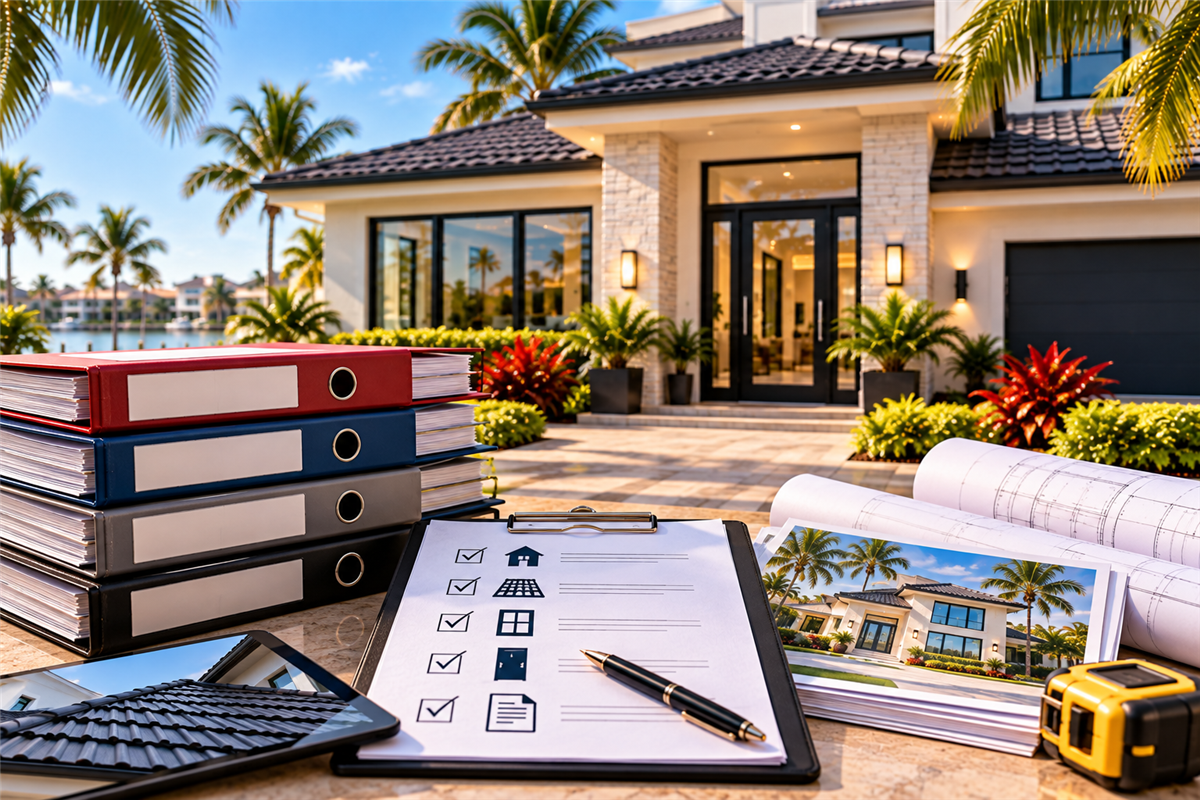
What Documents Should You Keep?
After completing impact-window and roofing improvements, maintain an organized record of both projects.
Consider keeping:
- Signed contracts
- Final proposals
- Product information
- Applicable product approvals
- Permit documents
- Final inspection records
- Invoices and receipts
- Warranty documents
- Installation dates
- Before-and-after photographs
- Relevant wind-mitigation reports
These records may be useful for future service, inspections, insurance discussions, and property transactions.
A Step-by-Step Wind-Mitigation Project Plan
Step 1: Evaluate the Existing Roof
Have a qualified professional evaluate the roof's condition and identify any immediate repair or replacement needs.
Step 2: Evaluate Existing Windows and Doors
Determine which exterior openings already have impact-resistant products and which may need attention.
Step 3: Identify Project Priorities
Consider current damage, safety-related concerns, budget, and long-term improvement goals.
Step 4: Review Product Options
Compare appropriate window, door, and roofing products based on the specific property.
Step 5: Request Detailed Proposals
Review the scope of work, materials, installation procedures, permitting, warranties, and exclusions.
Step 6: Determine the Project Sequence
Coordinate the work based on permit requirements, material availability, property conditions, and scheduling needs.
Step 7: Complete Required Permitting
Make sure the applicable projects proceed through the required approval processes.
Step 8: Complete Installation and Inspections
Confirm that required inspections are completed and retain the relevant records.
Step 9: Organize Project Documentation
Keep contracts, product approvals, warranties, invoices, and permit records in one secure location.
Step 10: Discuss Wind Mitigation With a Qualified Professional
If appropriate, ask an authorized wind-mitigation inspector and your insurance professional how the completed improvements relate to the property's documented characteristics.
Impact Windows and Roofing From Statewide Windows & Doors
Statewide Windows & Doors helps Florida homeowners plan exterior improvements involving impact windows, impact doors, and roofing.
Homeowners can explore products and services designed to address different aspects of their home's needs.
Statewide offers:
- Impact window replacement and installation
- Impact door replacement and installation
- Sliding glass door replacement
- Roofing services
Whether a homeowner is considering one improvement or evaluating multiple exterior upgrades, understanding the scope of each project is an important part of making an informed decision.
Why Choose Statewide Windows & Doors?
Statewide Windows & Doors brings more than 25 years of combined industry experience to Florida home-improvement projects.
Statewide helps homeowners navigate important stages of the process, including:
- Product selection
- Measurements
- Project planning
- Permitting
- Installation
- Inspections
- Project completion
- Post-installation service
Homeowners can review completed Statewide projects, explore service areas, or contact Statewide Windows & Doors to discuss impact-window, impact-door, or roofing needs.
Florida Impact Windows and Roofing Checklist
- Evaluate the existing roof
- Identify roof damage or deterioration
- Review existing windows
- Review exterior doors
- Review sliding glass doors
- Consider garage doors and skylights
- Determine project priorities
- Compare product options
- Request detailed written proposals
- Review product approvals
- Review roofing materials and installation scope
- Establish a realistic budget
- Review financing terms if applicable
- Coordinate project schedules
- Complete applicable permits
- Complete required inspections
- Save all project documentation
- Discuss wind-mitigation questions with qualified professionals
- Confirm insurance-specific information with your insurer
Frequently Asked Questions
Should I replace my roof or impact windows first?
The best order depends on the property's condition, immediate repair needs, budget, and project goals. A damaged or leaking roof may require prompt attention, while a home with a sound roof and older unprotected windows may have different priorities.
Can I replace impact windows and my roof during the same renovation?
Yes. Homeowners may plan both projects within the same renovation period, although installation schedules, permits, and inspections should be coordinated based on the actual work involved.
Do impact windows and a new roof guarantee lower insurance premiums?
No. Insurance results depend on the insurer, policy, property characteristics, inspection findings, and applicable mitigation requirements.
Are impact windows considered wind mitigation?
Impact-resistant opening protection may be relevant to a home's wind-mitigation characteristics. The actual classification must be determined under the applicable inspection requirements.
Does replacing my roof automatically qualify my home for wind-mitigation credits?
No. Roof covering, roof deck attachment, roof-to-wall connections, and other features are evaluated separately according to applicable criteria.
Should I replace sliding glass doors when installing impact windows?
Homeowners should evaluate the condition and protection characteristics of their sliding glass doors as part of their overall opening-protection plan.
Do impact-window and roof-replacement projects require permits?
Permit requirements depend on the jurisdiction and project scope. Homeowners should confirm which approvals and inspections apply to each improvement.
Can I finance impact windows and roofing?
Financing may be available depending on the provider, homeowner qualifications, and project. Always review the full terms, including APR, fees, repayment period, and total cost.
Does Statewide Windows & Doors offer both impact windows and roofing?
Yes. Statewide Windows & Doors offers impact windows, impact doors, and roofing services for Florida homeowners.
Final Words
Impact windows and roofing are two important parts of a Florida home's exterior protection strategy.
Although they serve different functions, evaluating both systems together can help homeowners develop a more complete improvement plan.
The right approach starts with understanding the home's current condition, identifying priorities, comparing appropriate products, and coordinating the required permits and installation work.
Homeowners should also keep their project documentation and avoid assuming that improvements automatically guarantee insurance savings.
By planning carefully, Florida homeowners can make informed decisions about impact windows, impact doors, and roofing while preparing their homes for the challenges of Florida weather.
Tags
Subscribe to Statewide Windows & Doors's Blog



Comments