
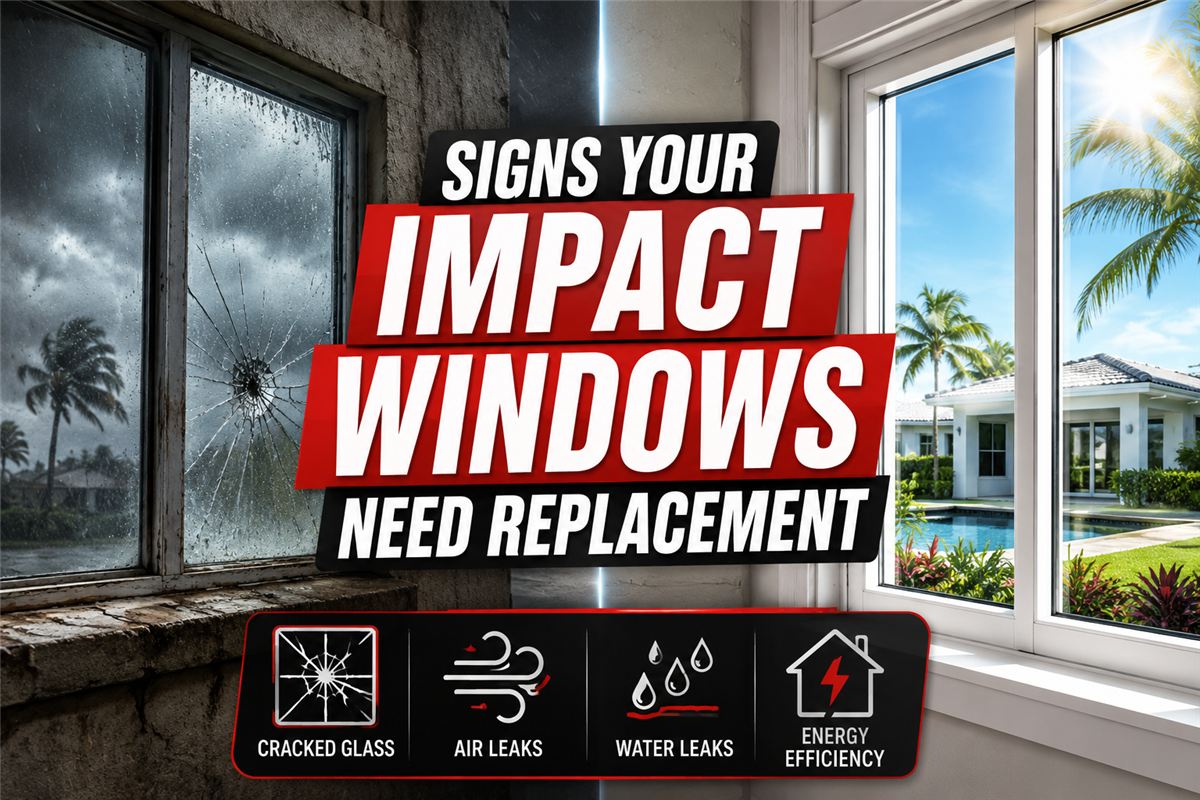
Signs Your Impact Windows Need Replacement
Impact windows are built to last—but like any part of your home, they don’t last forever. Over time, wear and tear, weather exposure, and aging materials can reduce their effectiveness.
Knowing when to replace your impact windows is essential for maintaining your home’s protection, energy efficiency, and overall value.
If you're evaluating your current windows or considering impact windows, here are the key signs it may be time for a replacement.
Quick Answer: When Should You Replace Impact Windows?
- Visible damage or cracks in the glass
- Drafts or reduced energy efficiency
- Difficulty opening or closing windows
- Water leaks or seal failure
Bottom line: If your windows aren’t performing like they should, replacing them can restore protection and efficiency.
1. Visible Damage or Cracks
Impact windows are designed to withstand heavy force—but they’re not immune to damage over time.
Signs to look for:
- Cracks in the glass
- Chips or surface damage
- Cloudiness between panes
Even if the glass hasn’t shattered, damage can reduce performance and protection.
2. Drafts or Air Leaks
If you feel air coming through your windows, it’s a sign something isn’t right.
This may indicate:
- Worn-out seals
- Frame deterioration
- Poor insulation
Drafts not only reduce comfort—they also increase energy costs.
3. Difficulty Opening or Closing
Impact windows should operate smoothly. If they don’t, it may be a sign of aging or structural issues.
Common problems include:
- Windows sticking or jamming
- Misaligned frames
- Broken hardware
These issues can affect both usability and safety.
4. Water Leaks or Moisture Buildup
Water intrusion is a serious concern—especially in Florida’s climate.
Watch for:
- Water around window frames
- Condensation between glass panes
- Signs of mold or mildew
This often indicates seal failure or installation issues.
5. Reduced Energy Efficiency
If your energy bills are rising without explanation, your windows could be the cause.
Older or failing windows may:
- Allow heat to enter your home
- Reduce insulation performance
- Force your HVAC system to work harder
Replacing them can improve efficiency and lower costs.
6. Outdated or Lower Performance Ratings
Impact window technology continues to improve over time.
Older windows may not meet current standards for:
- Design Pressure (DP) ratings
- Energy efficiency
- Hurricane protection requirements
Upgrading ensures your home is protected with modern performance levels.
7. Increased Noise from Outside
If you’re noticing more outside noise than usual, your windows may no longer be sealing properly.
This can be caused by:
- Seal deterioration
- Frame wear
- Glass performance decline
New windows can restore comfort and sound insulation.
8. Installation Issues from the Start
Sometimes, the problem isn’t the window—it’s how it was installed.
Signs of poor installation include:
- Gaps around the frame
- Uneven alignment
- Recurring leaks or drafts
Professional installation ensures proper performance and long-term durability.
What Most Homeowners Don’t Realize
Impact windows don’t last forever
Even high-quality systems need replacement over time.
Small issues can lead to bigger problems
Ignoring early signs can result in costly damage later.
Upgrading improves more than protection
New windows enhance efficiency, comfort, and home value.
What This Means for Your Home
Your impact windows play a critical role in protecting your home—but they need to be in top condition to do their job.
If you’re noticing signs of wear, damage, or reduced performance, replacing your windows can restore safety, efficiency, and peace of mind.
In Florida, where storms and heat are constant factors, keeping your windows up to date isn’t just maintenance—it’s essential for protecting your home and your investment.
Subscribe to Statewide Windows & Doors's Blog



Comments