 Free Estimate
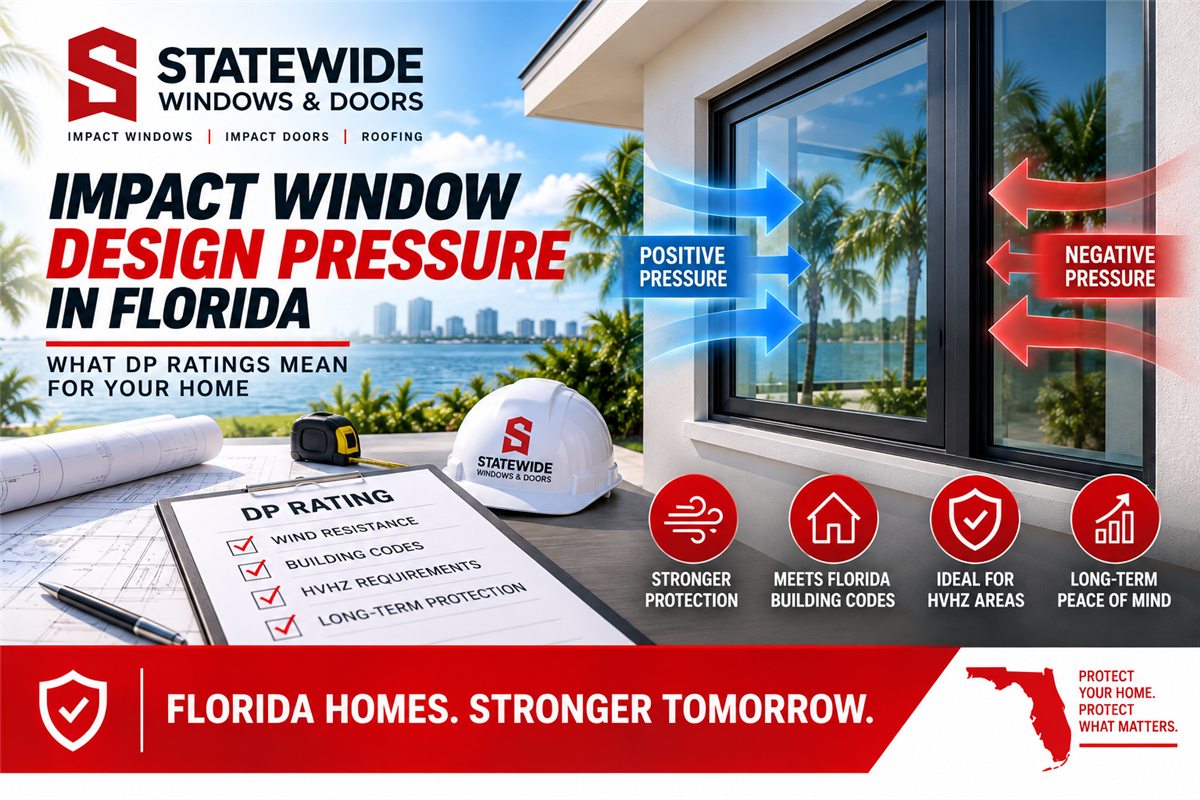
When Florida homeowners shop for impact windows, they often focus on the glass, frame material, appearance, and price. But another important part of selecting the appropriate window or door system is design pressure.
Design pressure is commonly associated with terms such as DP rating, positive pressure, negative pressure, wind load, and product approval. These numbers can look highly technical, but they serve an important purpose.
They help determine whether a particular window or door configuration is appropriate for the conditions it is expected to experience.
For Florida homeowners—especially those living in hurricane-prone coastal areas or within the High-Velocity Hurricane Zone—understanding the basics of design pressure can make it easier to evaluate impact window products and contractors.
Here is what homeowners should know.
What Is Design Pressure for Windows?
Design pressure is a calculated pressure associated with the wind forces a building component may need to resist for a particular application.
For windows and doors, design pressure helps determine whether a specific product and configuration is suitable for a particular opening and building condition.
It is commonly expressed in pounds per square foot, or PSF.
Homeowners may see design-pressure information represented in product documentation using values for positive and negative pressure.
The important point is that design pressure is not simply a marketing score showing that one window is "stronger" than another.
It needs to be considered in relation to the specific project.
What Does DP Mean on a Window?
DP generally refers to design pressure.
A window's applicable pressure ratings relate to the conditions under which that particular product configuration has been evaluated or approved.
However, homeowners should be careful when comparing a single DP number without additional context.
Performance can depend on factors such as:
- Window type
- Window size
- Product series
- Frame configuration
- Glass configuration
- Installation method
- Anchoring
- Substrate
- Opening location
Two windows from the same product line may not necessarily have identical applicable ratings when their sizes or configurations differ.
Positive vs. Negative Design Pressure
Homeowners may encounter both positive and negative pressure values in window and door documentation.
This reflects the fact that wind can create different forces on a building.
Positive Pressure
Positive pressure generally represents wind pushing toward a building surface.
Imagine strong wind pushing directly against an exterior window.
Negative Pressure
Negative pressure generally represents suction or pressure pulling away from the building surface.
This can occur as wind moves around and over a structure.
Windows and doors therefore need to be evaluated for the types of pressures applicable to their locations and configurations.
Why Does Design Pressure Matter in Florida?
Florida buildings can be exposed to significant wind conditions during tropical storms and hurricanes.
Building requirements therefore address wind resistance when exterior components such as windows and doors are selected.
The appropriate design pressure for a project can depend on multiple characteristics of the property.
That is why homeowners should not simply search online for a single "Florida DP rating" and assume it applies to every house.
What Determines the Required Design Pressure?
The pressure requirements applicable to an opening can depend on several project-specific factors.
Depending on the property and applicable requirements, considerations can include:
- Building location
- Applicable wind criteria
- Building height
- Building geometry
- Opening location
- Exposure conditions
- Proximity to building corners
- Opening size
- Other project-specific factors
This means two windows on the same house may not necessarily be treated identically simply because they are installed on the same property.
Why Window Location on the House Can Matter
Wind does not create identical pressure across every part of a building.
Certain areas can experience different forces based on their location on the structure.
For example, openings near building corners may be subject to different pressure considerations than openings located farther from those areas.
This is one reason proper project evaluation involves more than counting how many windows a home has.
The location and characteristics of each opening can matter.
Does a Higher DP Rating Always Mean a Better Window?
Not necessarily.
A higher pressure rating may indicate greater tested or approved pressure capacity for a particular configuration, but that does not automatically make the product the best choice for every home.
The more important question is:
Does this specific window or door configuration meet the requirements for this particular opening?
A properly selected product should satisfy the applicable requirements for its intended application.
Buying a window solely because someone advertises a large DP number oversimplifies the product-selection process.
Design Pressure vs. Impact Resistance
Design pressure and impact resistance are related to hurricane protection, but they do not mean the same thing.
Impact resistance addresses the ability of an approved window or door system to meet applicable impact-testing requirements.
Design pressure relates to pressure forces acting on the building component.
An impact-resistant product therefore still needs to be appropriate for the applicable pressure requirements of the project.
Homeowners should not assume that the word "impact" automatically answers every question about the suitability of a window for a particular opening.
Impact Windows Are Systems, Not Just Glass
One of the most important concepts for homeowners to understand is that impact protection involves a complete window or door system.
That system can include:
- Impact-resistant glass
- Frame
- Glazing components
- Hardware
- Anchoring
- Installation method
The performance of the product depends on the approved configuration rather than the glass alone.
This is why replacing one component or changing an installation detail without confirming the applicable approval requirements can matter.
Does Window Size Affect Design Pressure?
Size can be an important factor when reviewing a product's approved configurations.
A manufacturer may offer the same general window style in many different dimensions, but homeowners should not assume that every possible size carries identical performance characteristics.
The specific product approval documentation should be reviewed for the size and configuration being proposed.
This becomes especially important with large openings and products such as sliding glass doors.
Design Pressure and Sliding Glass Doors
Large sliding glass doors are popular in Florida because they create expansive views and connect indoor and outdoor living spaces.
They also create much larger openings than many standard windows.
The applicable product configuration must therefore be evaluated for the specific opening and project requirements.
When comparing impact sliding glass door proposals, homeowners should consider more than appearance and panel count.
Ask whether the specific proposed configuration is appropriate for the opening.
You can explore sliding glass door options from Statewide Windows & Doors.
Design Pressure and Impact Doors
Exterior impact doors must also be selected for their intended applications.
Entry doors, French doors, and other door configurations can differ significantly in size, operation, hardware, and installation requirements.
Homeowners should make sure the exact door configuration being proposed corresponds with the requirements applicable to the opening.
Explore impact door options available through Statewide Windows & Doors.
Design Pressure in Miami-Dade and Broward County
Miami-Dade and Broward County are located within Florida's High-Velocity Hurricane Zone, commonly called the HVHZ.
Projects within these counties require particular attention to the products and configurations being used.
Homeowners should not assume that a product is appropriate for an HVHZ project simply because it is marketed as an impact window or has a Florida approval.
The specific approval and configuration must be suitable for the intended HVHZ application.
Statewide Windows & Doors has completed thousands of projects across Miami-Dade and Broward County and has experience working with the requirements associated with impact window and door projects in these areas.
Miami-Dade NOA vs. Florida Product Approval
Design-pressure information often appears within the broader product approval documentation homeowners encounter during an impact window project.
In Florida, homeowners may see products associated with a Miami-Dade Notice of Acceptance or Florida Product Approval.
A Miami-Dade NOA is one recognized approval pathway for qualifying products.
A qualifying Florida Product Approval specifically approved for HVHZ use can also apply.
Generic Florida Product Approval should not automatically be interpreted as approval for every HVHZ application.
For a more detailed explanation, read Miami-Dade NOA vs. Florida Product Approval: What Florida Homeowners Need to Know.
Where Can Homeowners Find Design-Pressure Information?
Applicable performance and installation information can be found within product documentation associated with the specific window or door system.
Depending on the product, homeowners may encounter documents containing:
- Product approval information
- Approved sizes
- Configurations
- Pressure information
- Glass options
- Installation details
- Anchoring requirements
- Limitations or conditions of use
These documents can be highly technical.
A qualified contractor should be able to explain how the proposed products relate to the homeowner's project without expecting the homeowner to interpret technical approval documents alone.
Design Pressure and Florida Window Permits
Product selection, permitting, and design requirements are interconnected parts of an impact window replacement project.
Depending on the project and jurisdiction, permit documentation may include information concerning the products and configurations being installed.
The contractor should make sure the permitted project and the actual installation remain coordinated.
A product should not be selected solely because it fits physically inside the opening.
It must also be appropriate for its intended application.
Why Final Measurements Matter
Final measurements do more than make sure a window physically fits.
The dimensions of an opening help determine the exact product configuration that will be required.
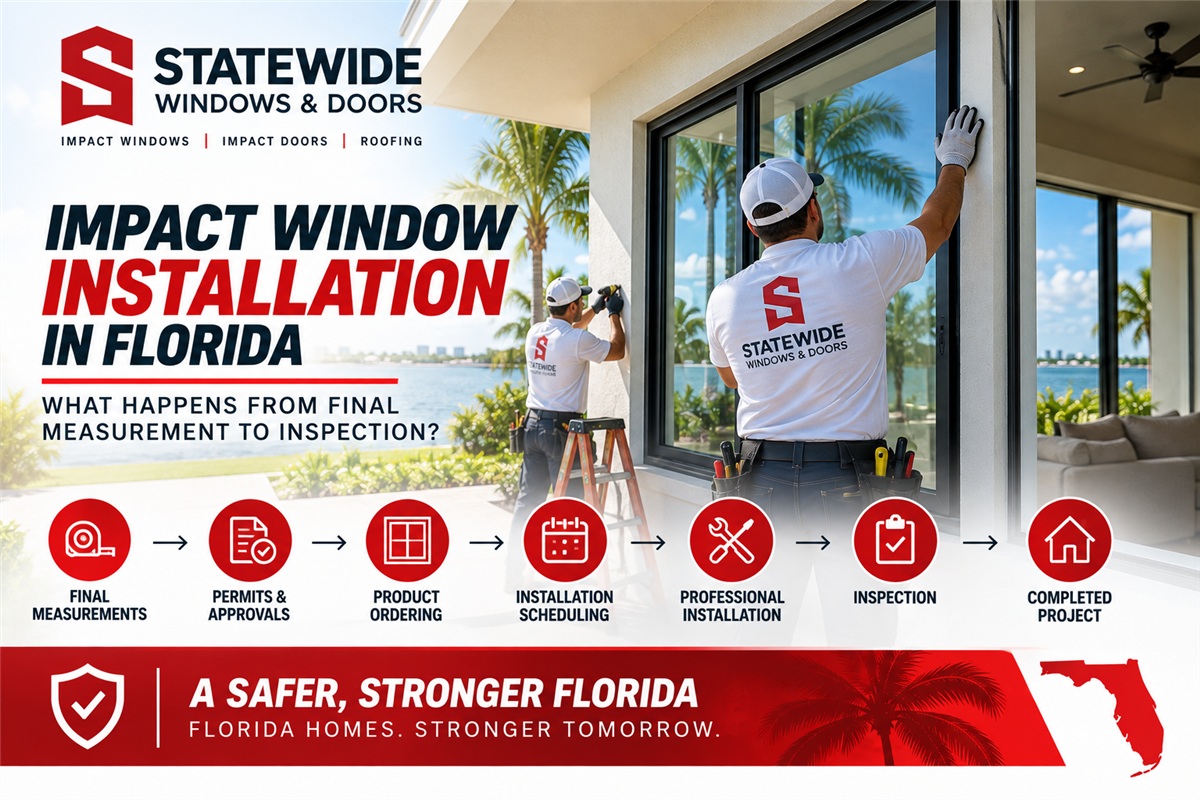
Once final measurements are established, the contractor can coordinate the applicable product, configuration, documentation, and installation requirements.
This is one reason final measurement is such an important stage before products are ordered.
Why Installation Matters
A window's product documentation is based on specific configurations and installation requirements.
Proper installation therefore remains critical even when the product itself has the appropriate approvals.
Depending on the system, installation requirements may address factors such as:
- Anchor type
- Anchor spacing
- Edge distance
- Substrate
- Frame conditions
- Other approved installation details
There is no universal anchoring method that applies to every impact window.
The installation should correspond with the requirements applicable to the specific approved product and project.
Can You Determine the Correct DP Rating From Your ZIP Code?
A ZIP code alone generally does not tell a homeowner everything necessary to select the appropriate window configuration.
Location matters, but so can the characteristics of the building and the particular opening.
Online tools that reduce the decision to a single number based only on location may leave out important project-specific considerations.
Homeowners should rely on qualified professionals and applicable project requirements when determining appropriate products.
Can Two Windows on the Same Home Have Different Requirements?
Potentially, yes.
Different openings can vary in:
- Size
- Location
- Height
- Configuration
- Proximity to corners
- Product type
Those differences can affect the products and configurations selected for a project.
This is another reason homeowners should be cautious when a contractor provides overly simplified answers without evaluating the actual property.
Design Pressure and High-Rise or Condominium Projects
Condominium and multi-story projects can introduce additional considerations.
Opening location and building height can be relevant to the conditions the product must address.
Condominium projects may also involve association requirements in addition to building permits.
Homeowners should make sure their contractor understands the specific requirements of the property rather than assuming the process for a condominium is identical to a single-family home.
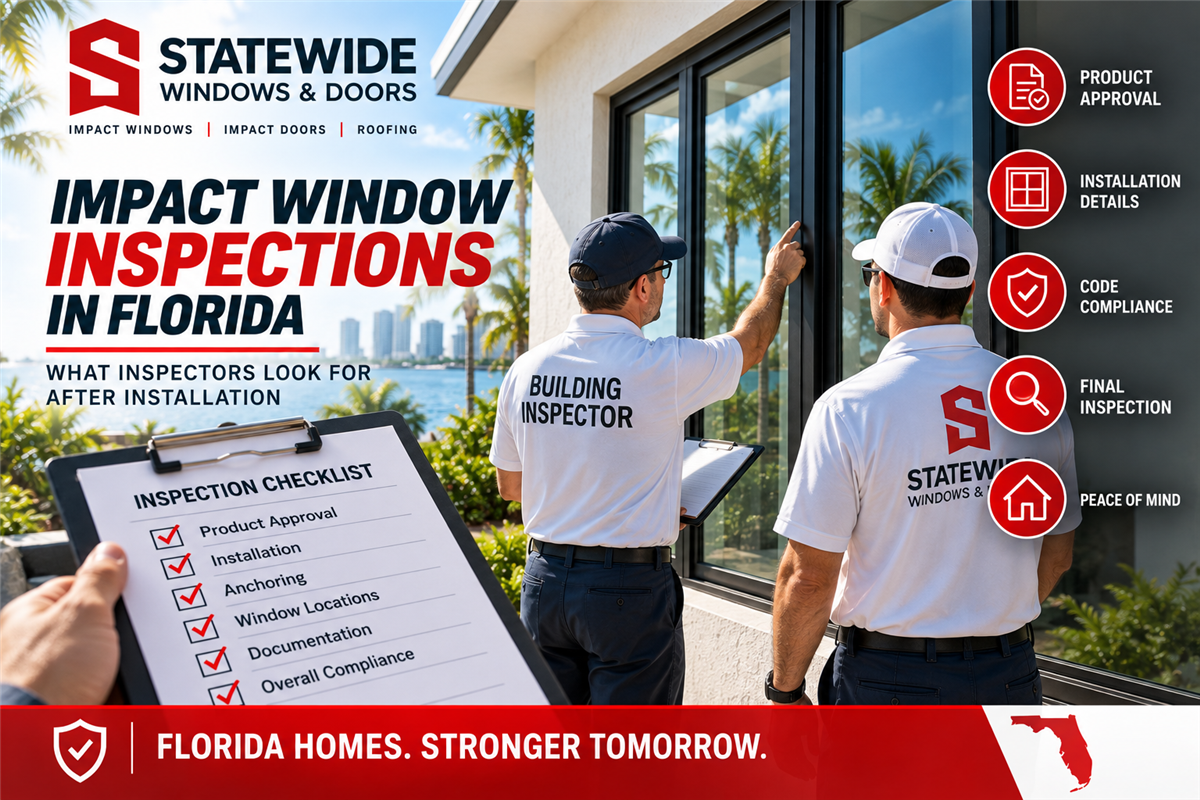
Does the Building Inspector Verify Design Pressure?
The inspection process focuses on the permitted work and applicable project requirements.
The exact items reviewed depend on the jurisdiction and project.
This is why the contractor should coordinate the correct product documentation before installation rather than waiting until inspection to determine whether a product is appropriate.
Product selection, permitting, installation, and inspection should function as connected stages of the same project.
Common Design-Pressure Misunderstandings
Florida homeowners should be cautious of several common misconceptions.
"The Highest DP Number Is Always the Best Window"
Not necessarily. The goal is to use a product and configuration appropriate for the specific application.
"All Impact Windows Have the Same DP Rating"
No. Products, sizes, configurations, and applicable performance information can vary.
"If It Is Impact Glass, Design Pressure Doesn't Matter"
Incorrect. Impact resistance and pressure performance address different aspects of the system.
"Florida Approved Means Approved Everywhere in Florida"
Homeowners should verify the specific approval and conditions of use, particularly for projects within the HVHZ.
"The Glass Determines the Entire Rating"
An impact window is a complete system involving more than glass alone.
Questions to Ask Your Impact Window Contractor
Homeowners do not need to become engineers to make an informed decision.
Instead, ask the contractor clear questions:
- How are the requirements for my openings being determined?
- What exact window or door configuration are you proposing?
- Is this configuration appropriate for my property's location?
- What product approval applies?
- If I live in Miami-Dade or Broward, is the configuration approved for the applicable HVHZ use?
- Does the window size affect the applicable pressure information?
- How does the installation correspond with the product approval?
- Will the permit documentation identify the products being installed?
- Who verifies these details before the products are ordered?
A professional contractor should be prepared to explain the process in understandable terms.
Do Not Compare Impact Window Quotes by DP Rating Alone
Design pressure is important, but it should not become the only number homeowners compare.
A complete impact window proposal should also be evaluated based on:
- Product type
- Product configuration
- Frame material
- Glass options
- Applicable approvals
- Installation scope
- Permitting
- Warranty coverage
- Contractor qualifications
- Project management
- Post-installation service
The objective is to choose an appropriate complete system—not simply the product associated with the largest number on a sales sheet.
How Statewide Windows & Doors Evaluates Impact Window Projects
At Statewide Windows & Doors, product selection begins with understanding the actual project.
Depending on the home, the process can involve evaluating:
- Existing openings
- Final measurements
- Window and door styles
- Aluminum or vinyl options
- Impact-resistant glass systems
- Product configurations
- Applicable product documentation
- Permitting requirements
- Installation considerations
Statewide has more than 25 years of combined industry experience and has completed thousands of projects across Miami-Dade and Broward County in addition to serving homeowners throughout Florida.
Homeowners can explore our impact window options, impact doors, completed projects, and Florida service areas.
Why Choose Statewide Windows & Doors?
Choosing impact windows requires more than selecting a frame color or comparing prices.
The products must be appropriate for the property, the documentation needs to correspond with the project, and the installation must follow the applicable requirements.
Statewide Windows & Doors combines product selection, project management, permitting coordination, installation, inspections, and customer service to help homeowners move through the complete impact window and door replacement process.
If you are considering impact windows or doors for your Florida home, Statewide can help you explore the products and configurations available for your project.
Final Words
Design pressure is an important part of impact window selection in Florida, but homeowners do not need to memorize technical pressure tables to make an informed decision.
The key is understanding that a DP rating should never be viewed in isolation.
The appropriate product depends on the specific window or door configuration, opening, property, location, and applicable project requirements.
Impact resistance, design pressure, product approval, permitting, and installation are different pieces of the same overall system.
Instead of asking which window has the biggest DP number, ask whether the specific product being proposed is appropriate for the exact opening where it will be installed.
Tags
Subscribe to Statewide Windows & Doors's Blog



Comments