 Free Estimate
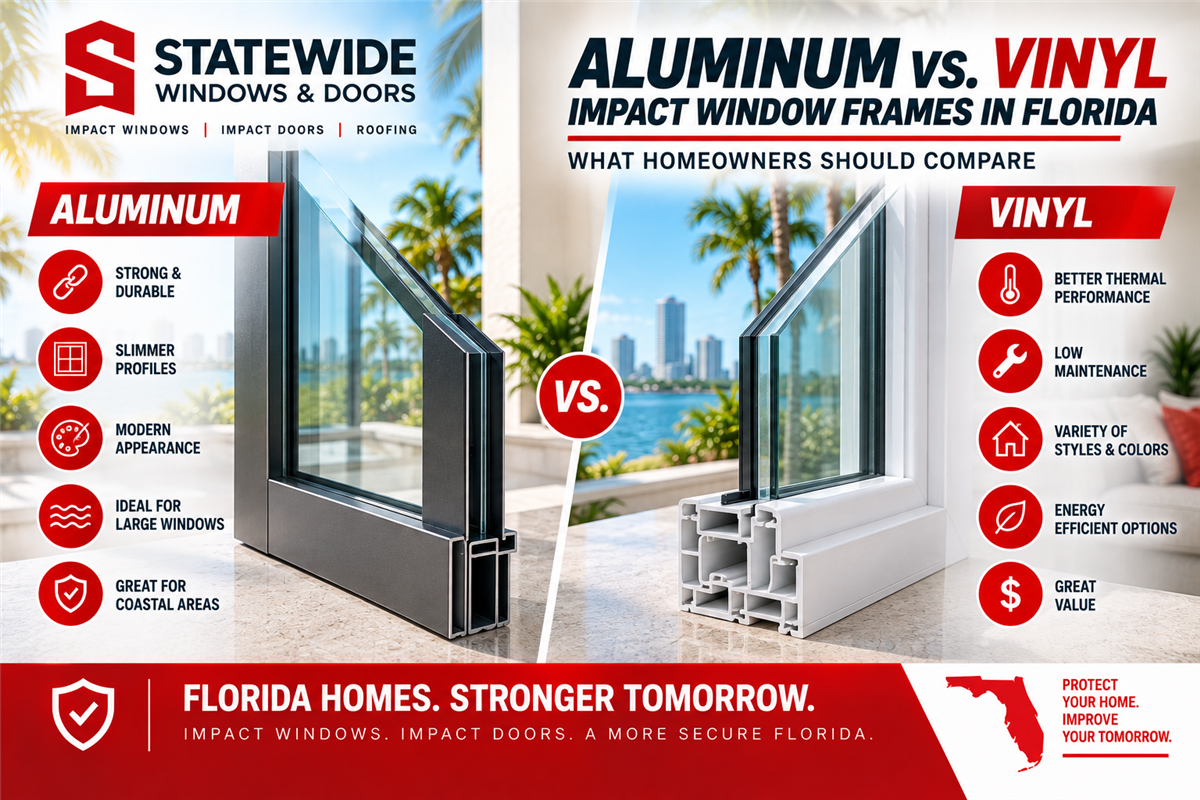
When Florida homeowners compare impact windows, much of the attention goes to the glass. But the frame surrounding that glass is also an important part of the complete impact-resistant window system.
Two of the most common frame materials homeowners encounter are aluminum and vinyl.
Both can be used in impact-resistant window systems, and neither material is automatically the right choice for every Florida home.
The better option depends on the specific product, opening sizes, design preferences, energy-performance goals, project requirements, and approved configurations available for the property.
Statewide Windows & Doors offers both aluminum and vinyl impact window options. Here is what Florida homeowners should understand when comparing them.
Why Does the Window Frame Matter?
An impact window is a complete system—not simply a piece of impact-resistant glass.
The system can include:
- Impact-resistant glazing
- Frame
- Glazing components
- Hardware
- Locks
- Anchoring
- Installation method
The frame helps support the glazing and connects the window assembly to the structure.
That means homeowners should evaluate the complete approved product rather than choosing a window based on glass or frame material alone.
What Are Aluminum Impact Windows?
Aluminum impact windows use aluminum as the primary frame material surrounding the glazing system.
Aluminum has been widely used in Florida window construction and is available in numerous impact-resistant window and door configurations.
Depending on the product, aluminum frames can offer relatively narrow profiles while providing the structural characteristics required for the approved system.
This can make aluminum appealing for homeowners who want larger areas of visible glass or a particular architectural appearance.
What Are Vinyl Impact Windows?
Vinyl impact windows use vinyl-based frame systems designed for the applicable window configuration.
Vinyl is popular among homeowners interested in characteristics such as thermal performance, maintenance, and appearance.
Like aluminum, vinyl impact windows are available in different styles, sizes, glass packages, and performance configurations.
The fact that a frame is vinyl does not by itself establish whether the window is appropriate for a particular Florida opening.
The complete product still needs to satisfy the requirements of the project.
Aluminum vs. Vinyl: Which Is Stronger?
This question sounds simple, but comparing frame materials by themselves can be misleading.
Aluminum as a material has different structural characteristics from vinyl, but homeowners are purchasing complete window systems—not loose pieces of frame material.
A window's suitability depends on factors such as:
- Product design
- Frame construction
- Reinforcement where applicable
- Window size
- Glass configuration
- Design-pressure requirements
- Applicable product approval
- Installation
The better question is whether the specific aluminum or vinyl window being proposed is approved and appropriate for the opening where it will be installed.
Which Frame Is Better for Hurricane Protection?
Neither aluminum nor vinyl should automatically be considered better for hurricane protection simply because of the frame material.
Impact resistance depends on the complete approved window system.
A qualifying aluminum impact window can provide hurricane protection for its approved application, and a qualifying vinyl impact window can do the same.
Homeowners should compare the exact products and configurations rather than assuming that every window made from one material performs identically.
Aluminum vs. Vinyl and Design Pressure
Design pressure is another important part of comparing impact windows.
It relates to the pressure forces a window or door configuration is designed to address for its intended application.
The applicable pressure information can vary depending on:
- Product series
- Window type
- Window dimensions
- Configuration
- Installation
- Other project-specific factors
Homeowners should not assume that all aluminum windows have higher design-pressure capabilities than all vinyl windows—or vice versa.
Compare the specific products proposed for your openings.
Which Is More Energy Efficient: Aluminum or Vinyl?
Vinyl is often associated with favorable thermal characteristics because the material itself does not conduct heat in the same way as aluminum.
However, the energy performance of an actual window involves much more than the frame material.
Factors can include:
- Frame design
- Glass configuration
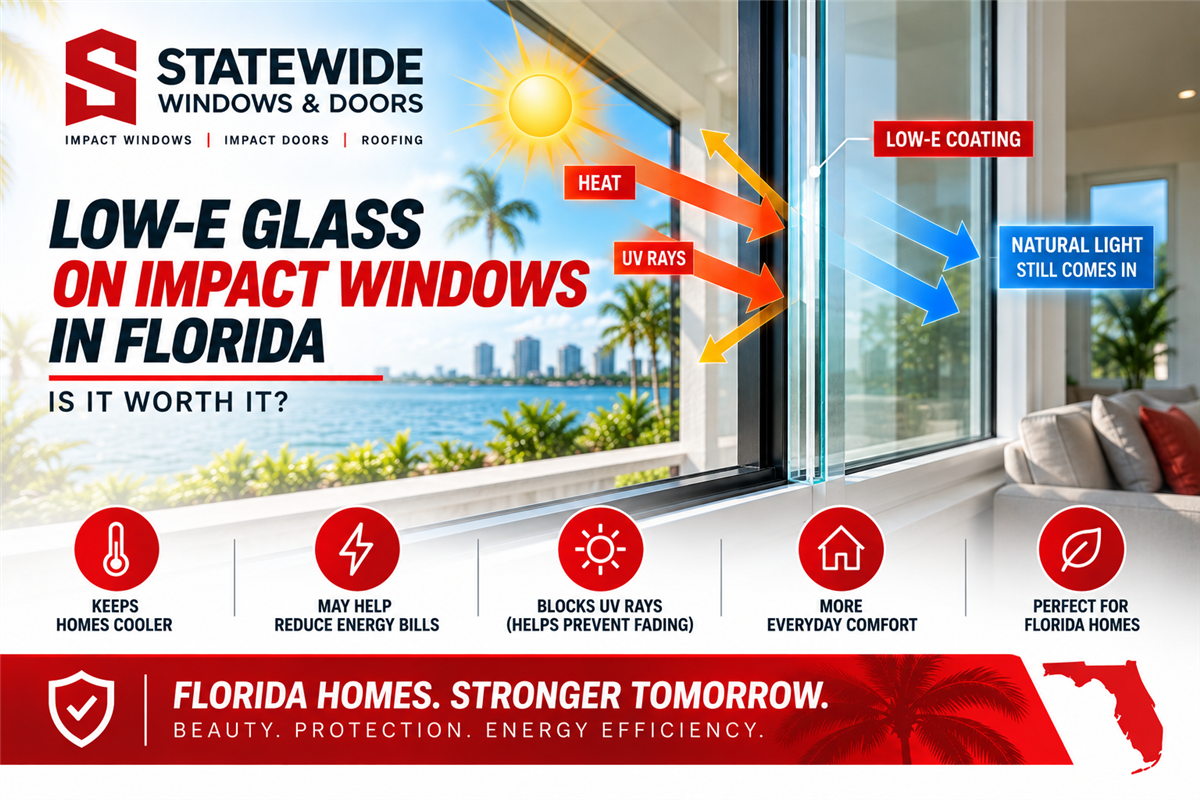
- Low-E coatings
- Insulated glass
- U-factor
- Solar Heat Gain Coefficient
- Weatherstripping
- Installation
Instead of assuming that one frame material guarantees better energy efficiency, compare the documented performance of the complete windows being proposed.
Why Energy Performance Matters in Florida
Florida homeowners spend much of the year cooling their homes.
Windows exposed to strong sunlight can contribute to heat entering the living space, making solar performance particularly relevant.
When comparing aluminum and vinyl impact windows, ask about the complete glass and frame package.
A window incorporating appropriate Low-E or insulated glass options may provide different energy characteristics from another window using the same general frame material.
Does Aluminum Get Hotter Than Vinyl?
Aluminum conducts heat more readily than vinyl as a material.
However, homeowners should be cautious about translating that basic material property directly into conclusions about the performance of every finished window.
Modern window systems can use different frame designs and glazing packages that affect overall thermal performance.
Compare U-factor, Solar Heat Gain Coefficient, glass options, and other documented performance information for the exact products you are considering.
Which Frame Material Is Better for Large Windows?
Large openings can make product selection more complex.
Depending on the manufacturer and product series, aluminum may provide options that appeal to homeowners seeking larger openings or narrower-looking frame profiles.
But available sizes and configurations vary significantly between products.
Do not assume that a window can be manufactured at any size simply because it uses aluminum or vinyl.
The proposed dimensions need to fall within the applicable product's approved configurations.
Aluminum vs. Vinyl for Sliding Glass Doors
Sliding glass doors create some of the largest glazed openings in many Florida homes.
For that reason, frame construction, panel size, glass configuration, hardware, design pressure, and installation all become important considerations.
When comparing impact sliding glass doors, homeowners should evaluate:
- Opening dimensions
- Number of panels
- Frame construction
- Glass configuration
- Track system
- Hardware
- Applicable product approval
- Design-pressure requirements
- Installation requirements
Explore sliding glass door options from Statewide Windows & Doors.
Which Material Has Thinner Frames?
Homeowners interested in a modern appearance often want as much visible glass as possible.
Some aluminum window systems can provide narrower-looking frame profiles compared with certain vinyl systems.
However, this varies by product.
Frame dimensions should be compared using the actual products rather than assuming every aluminum frame is thinner than every vinyl frame.
The window style can also affect how much frame is visible.
How Do Aluminum and Vinyl Windows Look?
Appearance is subjective, and both materials can work well with Florida architecture.
Aluminum frames can complement contemporary homes where homeowners want clean lines and a streamlined appearance.
Vinyl frames can work with modern and traditional homes depending on the product style and available finishes.
When comparing appearance, consider:
- Frame profile
- Available colors
- Window style
- Glass appearance
- Grid options
- Exterior architecture
- Interior design
What About Frame Colors?
Available frame colors depend on the manufacturer and product series.
Homeowners should verify the exact color options before selecting a product.
This is especially important when replacing only part of the home's windows because new products may need to coordinate visually with existing windows and doors.
Homeowners living in HOA or condominium communities should also confirm whether exterior frame colors require association approval.
Which Is Easier to Maintain?
Both aluminum and vinyl impact windows are designed as exterior building products, but maintenance requirements can vary by product and environment.
Florida conditions can expose windows to:
- Strong sunlight
- Humidity
- Heavy rain
- Salt exposure in coastal areas
- Dirt and debris
Homeowners should follow the manufacturer's cleaning and maintenance instructions for the specific product.
Proper maintenance can also be important for preserving hardware, tracks, seals, finishes, and warranty coverage.
What About Florida's Coastal Environment?
Homes near the coast can experience more aggressive environmental conditions, including salt carried through the air.
This makes product selection and maintenance especially important.
If your home is located near saltwater, ask the contractor about:
- Product suitability for the location
- Frame finishes
- Hardware
- Maintenance requirements
- Manufacturer recommendations
- Warranty limitations or conditions
Do not assume every aluminum or vinyl product has identical coastal-use recommendations.
Do Aluminum Frames Corrode?
Aluminum products can be manufactured with protective finishes, but exterior materials can still be affected by environmental exposure over time.
Coastal conditions deserve particular attention because salt can be aggressive toward building materials and hardware.
The specific finish, product design, installation, maintenance, and environmental conditions all matter.
Homeowners should follow the manufacturer's maintenance instructions rather than assuming an exterior product requires no care.
Can Vinyl Frames Warp in Florida Heat?
Quality vinyl window systems are engineered for their intended applications, but homeowners should avoid broad claims that all vinyl behaves identically.
The construction of the frame, reinforcement, dimensions, product design, installation, and approval all matter.
A qualifying vinyl impact window should be evaluated based on its complete documented configuration rather than assumptions about the raw material alone.
Which Material Lasts Longer?
There is no responsible universal lifespan that applies to every aluminum or vinyl impact window.
Longevity can depend on:
- Product quality
- Installation
- Environmental exposure
- Maintenance
- Hardware
- Frequency of operation
- Coastal conditions
- Individual components
Instead of selecting a product based on a generalized lifespan claim, compare manufacturer warranties, maintenance requirements, and the track record of the specific window system.
How Do the Warranties Compare?
Warranty coverage is product-specific.
Do not assume that every vinyl window has one type of warranty while every aluminum window has another.
Review the actual written warranty for each proposed product.
Pay attention to coverage involving:
- Frame
- Glass
- Finish
- Hardware
- Seals
- Labor, if applicable
- Coastal exclusions or requirements
- Transferability
Warranty length alone does not tell homeowners everything about the quality of the coverage.
Which Costs More: Aluminum or Vinyl Impact Windows?
There is no universal price difference that applies to every project.
Impact window pricing can depend on:
- Manufacturer
- Product series
- Window style
- Frame material
- Opening size
- Glass package
- Hardware
- Installation conditions
- Project scope
A premium product from one material may cost more than another product made from the other material.
Homeowners should compare complete proposals rather than assuming vinyl or aluminum is always the cheaper option.
Aluminum vs. Vinyl in Miami-Dade and Broward County
Miami-Dade and Broward County are located within Florida's High-Velocity Hurricane Zone.
Homeowners in these counties should focus first on whether the specific window configuration is approved for its intended HVHZ application.
That applies whether the frame is aluminum or vinyl.
A Miami-Dade Notice of Acceptance is one recognized approval pathway, while qualifying Florida Product Approvals specifically approved for HVHZ use can also apply.
The key question is whether the exact product and configuration are approved for the intended application.
Statewide Windows & Doors has completed thousands of projects across Miami-Dade and Broward County and offers both aluminum and vinyl impact window options.
Does Florida Product Approval Depend on Frame Material?
Product approvals apply to specific products and configurations rather than giving blanket approval to an entire frame material.
You should not assume that because one aluminum or vinyl window has an applicable approval, every window made from that material is approved for the same applications.
The contractor should identify the exact product being proposed and confirm that its applicable documentation supports the intended use.
For HVHZ projects, homeowners can learn more in our guide to Miami-Dade NOA vs. Florida Product Approval.
Does Frame Material Affect Impact Glass?
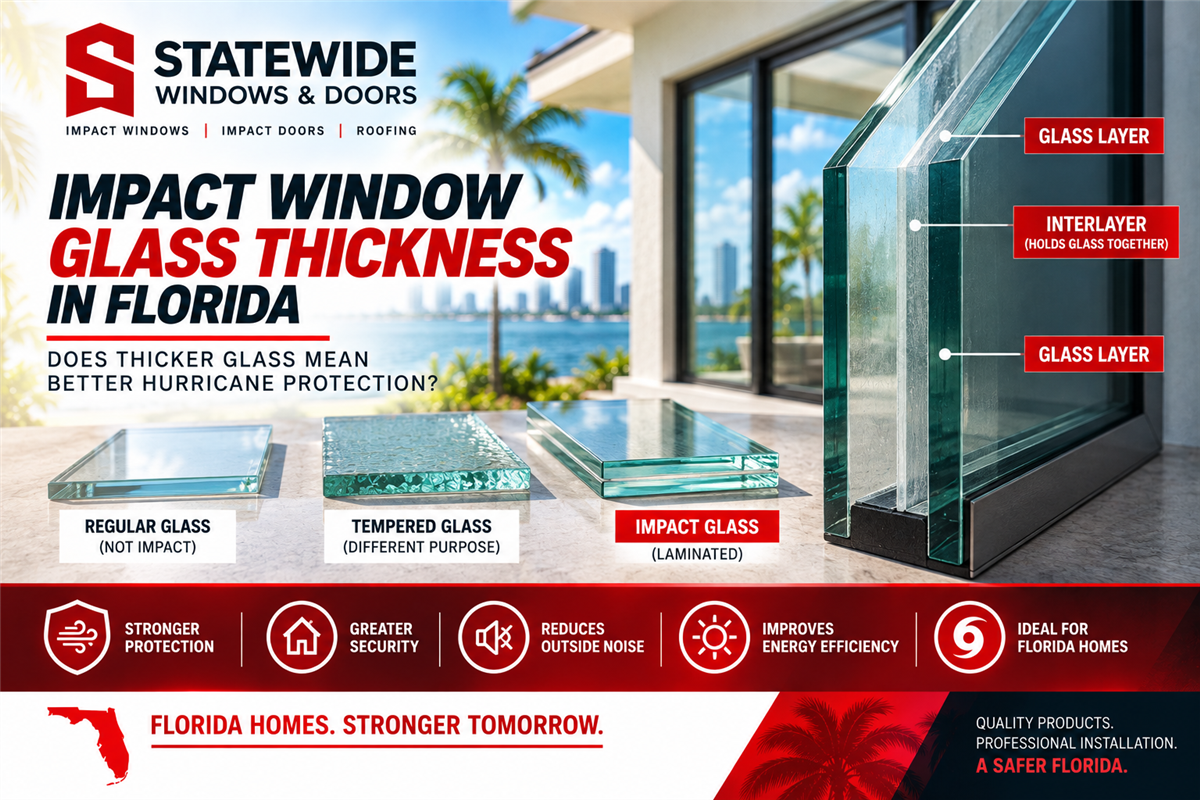
Aluminum and vinyl impact window systems can both incorporate laminated impact-resistant glazing when included within an approved configuration.
The frame material and glass construction are separate characteristics that work together within the complete window system.
Homeowners should evaluate both.
A thicker piece of glass does not automatically make one frame system better, just as a particular frame material does not automatically determine the quality of the glass.
Aluminum vs. Vinyl for Condominiums
Condominium window projects can involve additional considerations beyond the homeowner's personal preference.
The condominium association may have requirements involving:
- Frame material
- Frame color
- Exterior appearance
- Glass appearance
- Window style
- Product documentation
- Contractor documentation
Do not order a different frame style or color until applicable condominium requirements have been reviewed.
Association approval and building permit approval are separate processes.
Aluminum vs. Vinyl for Older Florida Homes
Older Florida homes can present unique replacement conditions.
Existing opening dimensions, construction methods, previous modifications, and surrounding materials can all affect the project.
The best frame material should therefore be considered alongside the conditions of the actual openings.
A professional final measurement and project evaluation can help determine which available products make sense for the home.
Can You Mix Aluminum and Vinyl Windows in the Same Home?
It may be possible to use different products within a project, but homeowners should consider both technical and visual factors before doing so.
Potential considerations include:
- Exterior appearance
- Frame dimensions
- Colors
- HOA requirements
- Product availability
- Opening requirements
- Performance characteristics
If a homeowner wants to use different product types throughout the property, that should be discussed during product selection rather than after products have been ordered.
Questions to Ask When Comparing Aluminum and Vinyl Impact Windows
Instead of simply asking, "Which material is better?" ask your contractor:
- What exact aluminum and vinyl products are available for my home?
- Are both options approved for my intended application?
- How do their frame profiles compare?
- What sizes are available?
- How do their design-pressure capabilities compare for my openings?
- What glass packages are available?
- What are their U-factor and SHGC values?
- What colors and finishes are available?
- What maintenance does each product require?
- Are there special considerations for coastal exposure?
- How do the manufacturer warranties differ?
- How does the total installed price compare?
These questions create a much more useful comparison than choosing based on frame material alone.
Common Myths About Aluminum and Vinyl Impact Windows
"Aluminum Is Always Stronger"
Material characteristics differ, but homeowners should compare the complete approved window configurations rather than making a blanket assumption about every product.
"Vinyl Is Always More Energy Efficient"
Vinyl has different thermal characteristics from aluminum, but complete window energy performance depends on the frame design, glass package, coatings, and other factors.
"Aluminum Is Always More Expensive"
Pricing depends on the exact product and project. Neither material is universally more expensive in every situation.
"Vinyl Cannot Be Used for Hurricane Protection"
Incorrect. Approved vinyl impact-resistant window systems can be used for qualifying applications.
"Frame Material Is More Important Than the Product Approval"
Incorrect. The suitability of the specific approved product and configuration is what matters for the intended application.
So, Which Is Better: Aluminum or Vinyl?
There is no single answer for every Florida homeowner.
Aluminum may appeal to homeowners looking for certain structural capabilities, narrower frame profiles, or particular architectural styles.
Vinyl may appeal to homeowners prioritizing thermal characteristics, maintenance considerations, or other product features.
But neither material should be chosen based on a generalized advantage alone.
The correct comparison is between the specific aluminum and vinyl products available for your particular project.
How Statewide Windows & Doors Helps Homeowners Compare Both Options
Statewide Windows & Doors offers both aluminum and vinyl impact window options, allowing homeowners to compare products based on their actual project instead of being pushed toward only one frame material.
Depending on the property, our team can help evaluate:
- Opening sizes
- Window styles
- Aluminum and vinyl options
- Impact-resistant glazing
- Low-E and energy-efficiency options
- Design-pressure considerations
- Applicable product documentation
- HOA requirements
- Permitting
- Installation
Statewide has more than 25 years of combined industry experience and has completed thousands of projects across Miami-Dade and Broward County while serving homeowners throughout Florida.
Explore our impact window options, impact doors, completed projects, and Florida service areas.
Why Choose Statewide Windows & Doors?
Choosing between aluminum and vinyl is easier when homeowners can compare both options within the context of their actual property.
Statewide Windows & Doors helps homeowners evaluate frame materials, impact-resistant glazing, window styles, energy-performance options, product requirements, permitting considerations, and installation needs.
Our team also works across project management, permitting coordination, installation, inspections, and customer service to help manage the complete window replacement process.
If you are considering impact windows for your Florida home, Statewide can help you compare aluminum and vinyl options and determine which available products make sense for your project.
Final Words
Aluminum and vinyl can both be excellent frame materials for Florida impact windows when the specific product is appropriate for the project.
Rather than asking which material is universally better, compare the exact products available for your openings.
Consider hurricane performance, applicable product approval, design pressure, window size, frame profile, energy efficiency, glass options, coastal exposure, maintenance, warranty, appearance, and installed cost.
The best impact window is not simply the one made from aluminum or vinyl. It is the complete approved system that fits the requirements and priorities of your Florida home.
Tags
Subscribe to Statewide Windows & Doors's Blog



Comments