 Free Estimate
What Happens If Your Roof Leaks During a Hurricane?
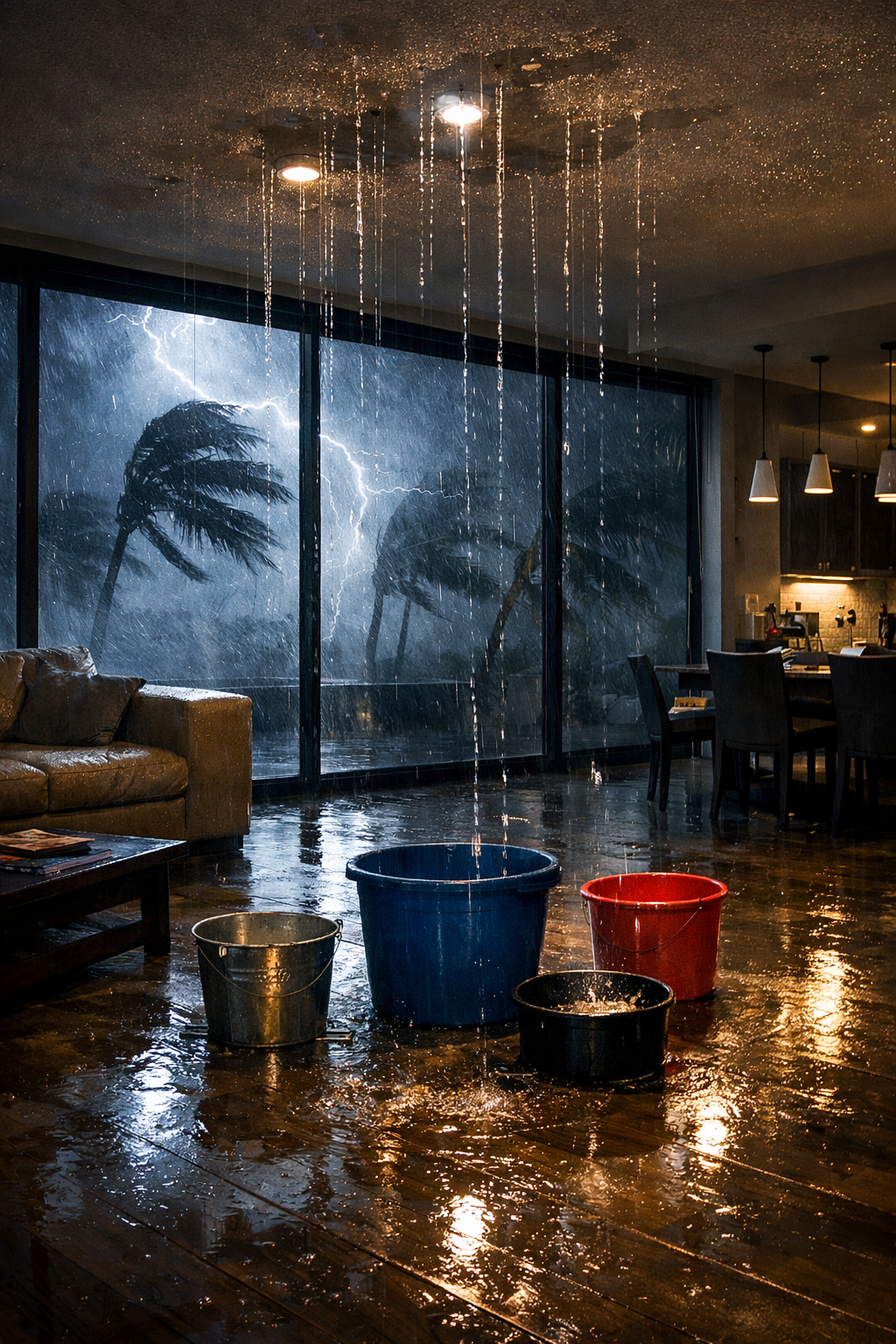
During a hurricane in South Florida, your roof is your home’s first line of defense. But what happens if it fails—or even develops a small leak—while the storm is still happening?
The reality is that a roof leak during a hurricane can quickly turn into serious interior and structural damage. If you're investing in home protection upgrades like impact windows, it’s just as important to understand how your roof performs under extreme conditions.
Why Roof Leaks During Hurricanes Are So Dangerous
Hurricane conditions are very different from normal rainstorms. You’re dealing with:
- High wind speeds
- Wind-driven rain
- Constant pressure changes
This means water doesn’t just fall—it gets forced into your home through even the smallest openings.
What Happens When Your Roof Starts Leaking
1. Rapid Water Intrusion
Once a leak starts, water can enter your home quickly and continuously.
This can lead to:
- Ceiling damage
- Soaked insulation
- Water pooling inside walls
During a hurricane, this process can happen in minutes—not hours.
2. Interior Damage to Walls and Ceilings
Water spreads fast once inside your home.
You may see:
- Stains and bubbling drywall
- Peeling paint
- Sagging ceilings
In severe cases, ceiling sections can collapse.
3. Electrical Hazards
Water and electricity are a dangerous combination.
A leaking roof can:
- Reach wiring inside walls or ceilings
- Cause short circuits
- Create fire or shock risks
This is one of the most serious hidden dangers.
4. Mold Growth Begins Quickly
South Florida’s humidity accelerates mold growth.
After water intrusion:
- Mold can begin forming within 24–48 hours
- It can spread behind walls and ceilings
- Air quality can be affected
5. Structural Damage Over Time
If water continues to enter, it can weaken your home’s structure.
This includes:
- Wood framing rot
- Compromised roof decking
- Long-term stability issues
What starts as a small leak can become a major repair.
What Causes Roof Leaks During a Hurricane?
Common causes include:
- Loose or missing shingles/tiles
- Damaged flashing
- Clogged or poor drainage
- Aging roofing materials
- Improper installation
Even a small vulnerability can be exposed under hurricane conditions.
What Most Homeowners Don’t Realize
Leaks don’t always start where you see them
Water can travel along beams and surfaces before becoming visible.
Minor damage can escalate quickly
A small entry point can allow large amounts of water under pressure.
Your entire home system is connected
Your roof, windows, and doors all work together to prevent water intrusion.
What to Do If Your Roof Leaks During a Storm
Safety comes first. During a hurricane:
- Stay away from affected areas if possible
- Place containers to catch dripping water
- Move valuables away from the leak
- Turn off electricity in affected areas if safe to do so
Do not attempt roof repairs during the storm.
After the Hurricane: Next Steps
Once it’s safe:
- Inspect visible damage
- Document everything for insurance
- Schedule a professional roof inspection
- Address repairs immediately
Quick action can prevent further damage.
How to Prevent Roof Leaks in the Future
Preparation is key in South Florida:
- Schedule regular roof inspections
- Replace aging materials before failure
- Ensure proper drainage systems
- Upgrade weak points in your home
Many homeowners also combine roof upgrades with impact-resistant windows to create a stronger, more sealed home.
Why Your Roof and Openings Work Together
Your roof isn’t the only factor in storm protection.
If windows or doors fail, pressure can build inside your home—making roof damage worse.
A fully protected home includes:
- A strong, well-maintained roof
- Impact-resistant windows and doors
- Proper installation across all systems
What This Means for Your Home
A roof leak during a hurricane isn’t just an inconvenience—it can lead to rapid and serious damage throughout your home.
The good news is that most of these issues are preventable with proper maintenance, timely upgrades, and a complete approach to home protection.
In South Florida, staying ahead of potential problems is the best way to protect your home before the next storm arrives.
Subscribe to Statewide Windows & Doors's Blog




Comments