 Free Estimate
Updated August 2026. Commercial impact windows in Florida are a permit and operations problem, not a brochure. Statewide Windows & Doors specs storefront, punch openings, and mid-rise work with the approvals the building official will actually stamp. For the code-and-cost version, see Are impact windows required for commercial buildings in Florida?
Quick answer
If the building is in HVHZ (Miami-Dade and Broward) or the coastal wind-borne debris region, glazed openings generally need approved opening protection: impact-rated windows and doors, or another approved shutter/panel system. Impact glass is usually the cleaner commercial spec because it stays in place year-round. Shutters only work if someone is there to close them.
What to put on the submittal
- Florida Product Approval (FL#) or Miami-Dade NOA on the exact system
- Design pressure (DP) that matches height and exposure on that building
- ASTM E1886 / E1996 on the assembly
- Shop drawings and anchor details that match the approval
If a bid cannot produce those, it is not a commercial bid.
Glass and frame, without the catalog
- Laminated impact glass: the debris-resistant makeup. Tempered by itself is not a substitute.
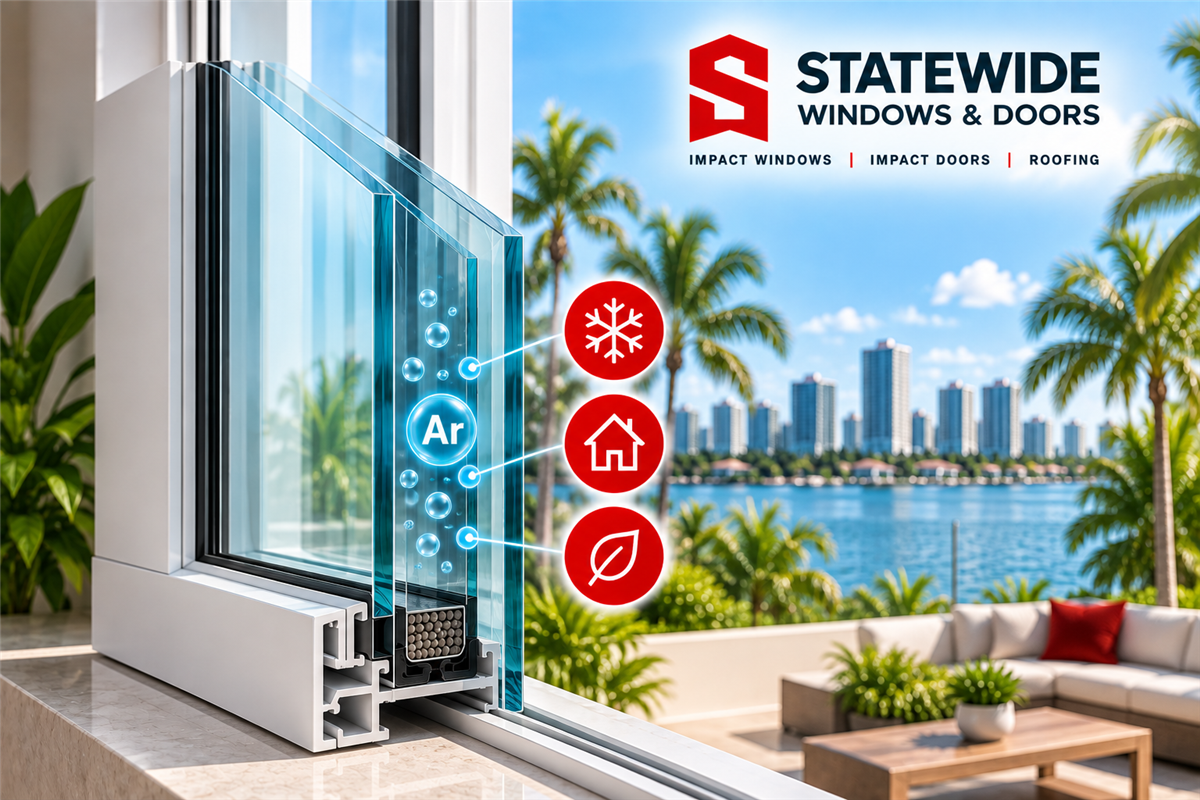
- Insulating (IG) units: two panes, better heat and noise. Often laminated IG on commercial work.
- Frames: aluminum is the usual commercial and mid/high-rise story. Vinyl shows up on some low-rise punch openings. Confirm what is actually on the shop drawing.
What drives cost
- Retrofit vs new construction, and whether the building stays occupied
- Height and access (lifts, swing stages)
- Glass makeup, Low-E, and custom finishes
- Engineering, permit, and inspections
Installed commercial work we still see in 2026 commonly lands in a $75 to $120 per square foot band for typical punch and storefront, then moves up for high-rise access and after-hours labor. Get product, labor, permit, engineering, and disposal as separate lines.
How to pick the installer
- Florida license and insurance that actually cover commercial openings
- Occupied-building or multi-story examples
- NOA/FL sheets and shop drawings in the submittal, not after the fact
- A schedule that includes lead time and tenant notices
- Who warranties labor, and who shows up when a unit is damaged
Statewide’s certified specialty contractor license is SCC131152028.
FAQ
Will this lower insurance?
It can, if the approvals match what the carrier wants. Put the NOA or FL numbers in the bid. Do not promise a discount the underwriter has not confirmed.
Can we phase the building?
Usually. Occupied commercial work is sequenced. Ask for that plan before you sign.
Can we use shutters instead?
Sometimes, if the product is approved and operations actually close them. For tenant-occupied retail and offices, impact glass usually matches how the building is used.
Need a commercial opening spec?
Call Statewide Windows & Doors at (561) 816-4010 and ask for commercial. Bring address, approximate glazing area, and whether the building stays occupied.
Tags
Subscribe to Statewide Windows & Doors's Blog



Comments