 Free Estimate
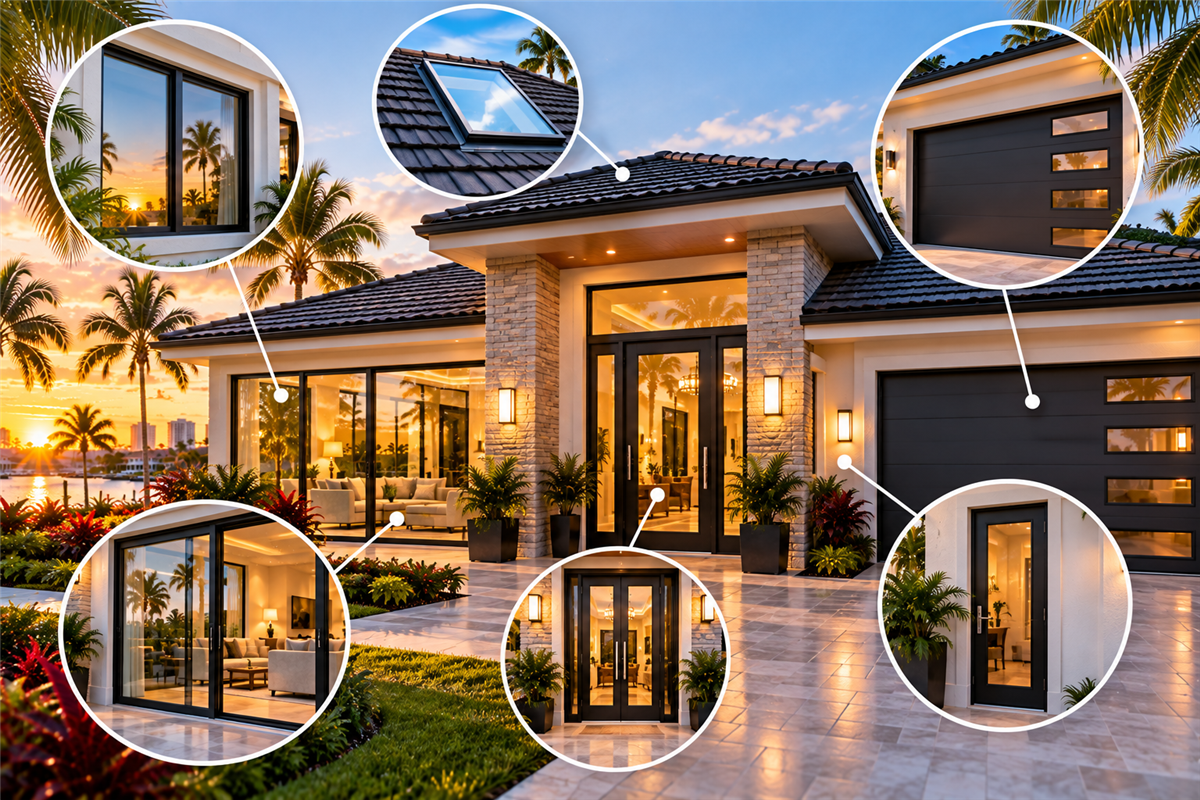
When Florida homeowners think about hurricane protection, impact windows are often the first upgrade that comes to mind.
But windows are only one part of a home's exterior opening protection.
Entry doors, French doors, sliding glass doors, skylights, garage doors, and other exterior openings can also be exposed to high winds and windborne debris during severe weather.
That is why homeowners preparing for hurricane season should evaluate the home as a complete system rather than focusing on only one type of opening.
A home with impact windows but an unprotected exterior door or vulnerable garage opening may still have an important area that needs attention.
This Florida opening-protection checklist explains the major openings homeowners should evaluate and what to consider when planning hurricane protection for the entire home.
What Is Opening Protection?
Opening protection refers to protection for exterior building openings that can be exposed to windborne debris and severe storm conditions.
Depending on the home, exterior openings can include:
- Windows
- Front entry doors
- Side and rear exterior doors
- French doors
- Sliding glass doors
- Skylights
- Garage doors
- Other glazed exterior openings
The goal is to understand how each exterior opening is protected rather than assuming that upgrading one category automatically protects the entire home.
Why Whole-Home Opening Protection Matters
During severe storms, windborne debris can strike different parts of a home.
That means homeowners should not evaluate only the openings that are easiest to see from the front of the property.
For example, a home may have newly installed impact windows but still contain:
- An older non-impact front door
- Non-impact French doors leading to a patio
- A large older sliding glass door
- An unprotected skylight
- An older garage door
A complete hurricane-readiness review should identify all of these openings.
The "Weakest Opening" Concept
Homeowners sometimes spend most of their hurricane-protection budget on the most visible openings while overlooking other exterior openings.
However, storm protection should be approached as a complete system.
If most of a home's windows are impact resistant but another exterior opening remains vulnerable, that opening still deserves attention.
This does not mean every opening has identical requirements.
Instead, it means homeowners should know what type of protection each opening has and avoid assuming that protecting most of the home is the same as evaluating the entire building envelope.
Florida Home Opening Protection Checklist
When evaluating your home, review the following major areas.
- Windows
- Front door
- Side exterior doors
- Rear exterior doors
- French doors
- Sliding glass doors
- Skylights
- Garage door
- Large glass openings
- Any other exterior glazed openings
For each opening, determine what type of storm protection is currently present and whether that protection is appropriate for the property.
1. Check Every Window
Start by identifying the type of windows currently installed throughout the home.
Do not assume that every window is impact resistant simply because some windows have been replaced.
This is particularly important in homes where renovations were completed in phases.
Homeowners should identify:
- Which windows are impact resistant
- Which windows are standard non-impact windows
- Which windows rely on another form of storm protection
- Whether any windows are damaged or deteriorated
- Whether previous additions contain different windows
A room-by-room walkthrough can make it easier to identify differences.
How Do Impact Windows Protect an Opening?
Impact windows are complete window systems designed and tested for specified impact and wind-pressure conditions.
The system can include:
- Impact-resistant laminated glass
- Frame
- Sash
- Locks
- Hardware
- Anchoring components
- Installation materials
The entire system matters.
A piece of impact-resistant glass alone does not automatically make the entire opening an approved impact-window system.
Learn more about impact windows from Statewide Windows & Doors.
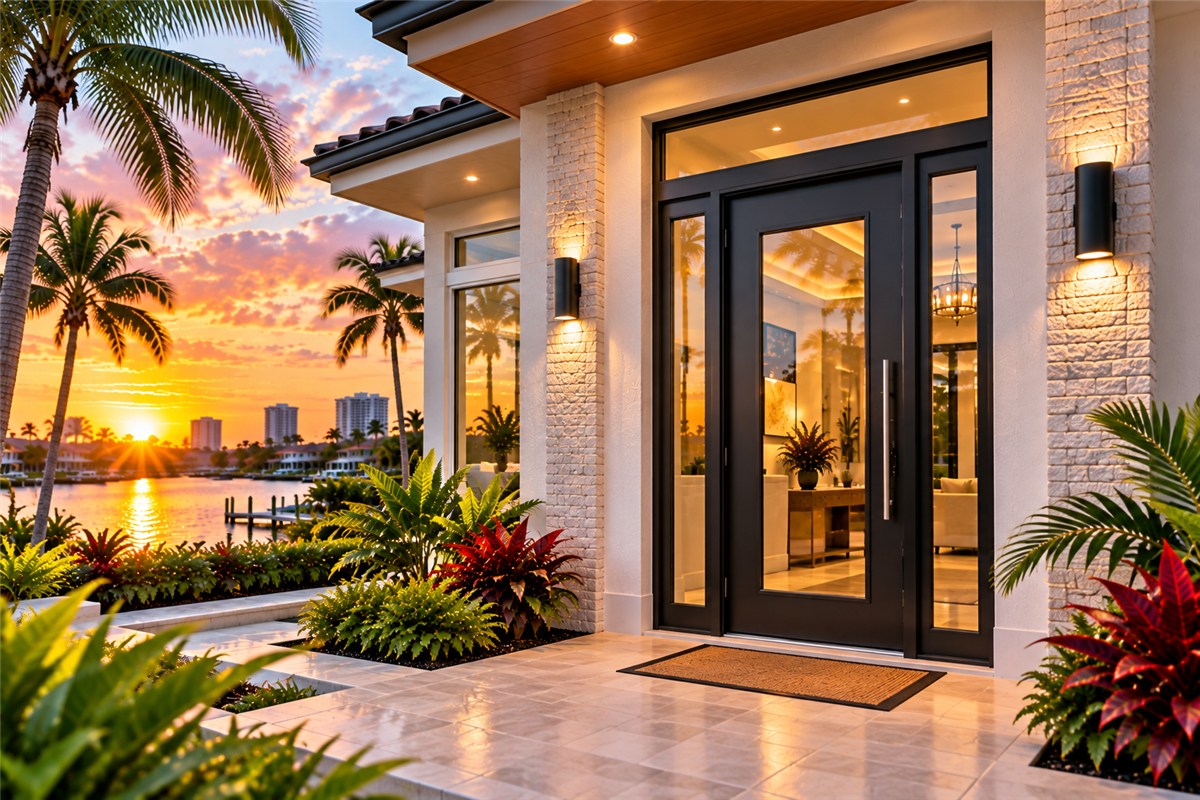
2. Check the Front Entry Door
The front door is easy to overlook when homeowners concentrate primarily on their windows.
Ask whether the existing front entry system is impact resistant or otherwise appropriately protected.
Remember that an entry system may contain more than a single door panel.
It can include:
- The door
- Glass inserts
- Sidelights
- Transoms
- Frame
- Hardware
- Threshold
If an entry system contains large areas of glass, those components should also be considered when evaluating hurricane protection.
3. Check Side and Rear Exterior Doors
The front entrance is not the only exterior door that matters.
Florida homes may also contain:
- Side entry doors
- Garage-to-exterior doors
- Rear patio doors
- Pool-access doors
- Utility-room exterior doors
- Balcony doors
Walk around the entire exterior of the home and identify every door that directly separates the interior from outdoor conditions.
Homeowners sometimes discover openings they had not considered part of their hurricane-protection plan.
4. Check French Doors
French doors are common in Florida homes, particularly around patios, pools, courtyards, balconies, and outdoor living spaces.
Because French doors consist of multiple components, homeowners should evaluate the complete system.
Important components can include:
- Both door panels
- Glass
- Frame
- Hinges
- Locking hardware
- Threshold
- Anchoring
If the existing French doors are older, determine what form of hurricane protection they currently have.
5. Check Sliding Glass Doors
Sliding glass doors can represent some of the largest exterior openings in a Florida home.
They are commonly found between living areas and:
- Patios
- Pools
- Lanais
- Balconies
- Backyards
- Waterfront areas
Because sliders contain large areas of glass, they should be an important part of a whole-home opening-protection review.
Homeowners should identify whether existing sliding glass doors are impact resistant or rely on another form of approved storm protection.
Impact Sliding Glass Doors
Impact sliding glass doors combine large glazed openings with impact-resistant construction designed for specified conditions.
When evaluating an impact slider, consider the complete system, including:
- Impact glass
- Frame
- Track
- Rollers
- Locks
- Hardware
- Anchoring
- Applicable product approval
Learn more about impact sliding glass doors.
6. Check Skylights
Skylights are easy to forget because homeowners do not encounter them the same way they interact with windows and doors.
However, a skylight is still an exterior glazed opening.
If your home contains skylights, determine:
- What type of skylight is installed
- Whether it is impact rated
- What product documentation is available
- What condition the skylight is in
- Whether another form of storm protection applies
Older skylights should not automatically be assumed to provide impact protection.
7. Check the Garage Door
The garage door can be one of the largest exterior openings in a Florida home.
For homes with one-, two-, or three-car garages, the opening can occupy a substantial portion of an exterior wall.
Homeowners should determine whether the garage door is appropriately rated for the property and whether it has been properly maintained.
Areas to evaluate can include:
- Door panels
- Tracks
- Brackets
- Rollers
- Hinges
- Fasteners
- Reinforcement components
- Overall condition
A garage door should not be assumed to have adequate wind performance simply because it appears heavy or relatively new.
Why Garage Door Wind Mitigation Matters in Florida
Garage doors receive special attention in hurricane-readiness discussions because of the size of the opening.
Homeowners evaluating wind-mitigation features should understand the documentation and characteristics of the garage-door system installed at their property.
Do not rely solely on appearance.
Product information, installation, condition, and applicable requirements are more useful than assuming a particular door is hurricane rated.
What About the Door Between the Garage and the House?
The large exterior garage door and the interior access door between the garage and living space serve different purposes.
When conducting a hurricane-readiness review, homeowners should distinguish between exterior openings directly exposed to outdoor conditions and doors located within the structure.
The home's overall building and safety requirements should be evaluated according to the specific property.
8. Look for Openings Added During Renovations
Homes that have been renovated over many years may contain products from different construction periods.
For example, an addition may contain newer impact windows while the original portion of the home still contains older windows.
Or the opposite may be true.
Check:
- Room additions
- Converted patios
- Enclosed lanais
- Garage conversions
- New exterior doors
- Kitchen additions
- Expanded living rooms
Do not assume all exterior openings were upgraded at the same time.
9. Check Large Glass Openings Carefully
Modern Florida architecture often incorporates large areas of glass to maximize natural light and outdoor views.
These can include:
- Large picture windows
- Multi-panel sliding glass doors
- Glass entry systems
- Transoms
- Floor-to-ceiling fixed windows
Large openings can have different product configurations and design considerations than smaller openings.
Homeowners should verify the exact products installed rather than assuming all glass in the home has identical performance characteristics.
10. Identify What Is Impact Resistant and What Is Not
After walking through the property, create a simple opening inventory.
For each exterior opening, record:
- Location
- Opening type
- Impact-resistant or non-impact
- Alternative storm protection, if applicable
- Approximate age
- Visible condition
- Any known product documentation
This makes it easier to identify gaps in the home's existing protection.
Impact Protection vs. Temporary Storm Protection
Florida homeowners may use different methods to protect exterior openings.
Impact-resistant windows and doors incorporate impact resistance into the permanent opening system.
Other homes may use separate protective systems over non-impact openings.
The important question is not whether every home uses the exact same solution.
It is whether each exterior opening has an appropriate protection strategy for the property.
Statewide Windows & Doors does not sell hurricane shutters.
Do Impact Windows Mean You Can Ignore the Doors?
No.
Installing impact windows does not automatically change the protection characteristics of the home's exterior doors.
If the windows are impact resistant but the front door, French doors, or sliding glass doors are older non-impact products, those openings should still be evaluated separately.
This is why homeowners planning window replacement should consider whether it makes sense to evaluate exterior doors at the same time.
Do Impact Doors Mean You Can Ignore the Windows?
No.
The same principle works in reverse.
A new impact-resistant front door does not automatically provide protection for older non-impact windows elsewhere in the home.
Whole-home planning means identifying each exterior opening individually.
Opening Protection and Florida Wind Mitigation
Opening protection can be relevant when Florida homes are evaluated for wind-mitigation features.
However, homeowners should avoid assuming that replacing one window or door automatically produces a particular insurance result.
Wind-mitigation evaluations consider specific characteristics and documentation.
Insurance eligibility and potential credits can also depend on:
- The insurer
- The policy
- The property
- Inspection findings
- Documentation
- Other building characteristics
Homeowners should discuss property-specific insurance questions with their insurance professional.
Does Every Opening Need the Same Product?
No.
Different openings serve different purposes and can require different products.
A bedroom window, front entry door, large slider, skylight, and garage door are not interchangeable building components.
Each opening should be evaluated according to factors such as:
- Opening type
- Dimensions
- Location
- Building requirements
- Product approval
- Design requirements
- Desired operation
- Architecture
The goal is coordinated protection, not necessarily identical products.
Product Approvals Matter
When homeowners purchase impact windows or doors, they should understand the exact products included in the project.
Product approval documentation can contain information involving:
- Approved configurations
- Maximum dimensions
- Glass configurations
- Design pressures
- Anchoring
- Installation requirements
- Limitations of use
Do not rely only on broad phrases such as "Florida approved" or "hurricane rated."
The exact product and configuration matter.
Miami-Dade NOA vs. Florida Product Approval
Homeowners researching hurricane protection may encounter both Miami-Dade Notices of Acceptance and Florida Product Approvals.
A Miami-Dade NOA is one recognized approval pathway.
Florida also maintains a statewide product approval system.
Florida's High-Velocity Hurricane Zone consists of Miami-Dade and Broward counties, and homeowners should understand whether a particular product and approval is appropriate for the property's location and intended application.
A generic claim that a product is "Florida approved" should not be interpreted as proof that every configuration is approved for every application.
Why Installation Matters
A high-quality impact product still needs to be properly installed.
Installation requirements can involve:
- Opening preparation
- Anchoring
- Fastener type and spacing
- Perimeter details
- Sealants
- Threshold details for doors
- Hardware adjustment
- Manufacturer requirements
- Applicable product approval requirements
This is why homeowners should evaluate the contractor as carefully as the product.
Should You Replace Every Opening at Once?
Not every homeowner completes a whole-home project at the same time.
Some replace windows and doors in phases because of budget, renovation plans, or other priorities.
If you are completing the project in phases, create a plan showing:
- Which openings are already protected
- Which openings are being upgraded now
- Which openings will remain unchanged
- How the remaining openings are currently protected
- Which openings should be prioritized next
This can prevent an important exterior opening from being forgotten during a multi-year renovation plan.
How to Prioritize Openings
The best priority order depends on the individual property.
Homeowners may consider factors such as:
- Existing condition
- Current storm protection
- Opening size
- Product age
- Visible deterioration
- Upcoming renovations
- Budget
- Property-specific requirements
A professional evaluation can help homeowners understand the existing openings before deciding how to phase improvements.
Opening Protection for Older Florida Homes
Older homes deserve a particularly careful review because different parts of the property may have been renovated at different times.
A home may contain a combination of:
- Original non-impact windows
- Newer replacement windows
- Older exterior doors
- A recently replaced front door
- An older slider
- A newer garage door
Do not assume that one renovation upgraded the entire home's opening protection.
Opening Protection for Florida Condominiums
Condominium owners may face additional considerations involving exterior windows and doors.
Depending on the building and association, owners may need to consider:
- Association approval
- Approved products
- Frame colors
- Exterior appearance
- Building access
- Work hours
- Permit requirements
- Installation logistics
Association requirements and government permitting are separate processes.
Condo owners should understand both before ordering replacement products.
Opening Protection for Waterfront and Coastal Homes
Florida waterfront homes frequently contain large exterior openings designed to maximize views and access to outdoor living areas.
These may include:
- Large sliding glass doors
- Picture windows
- French doors
- Balcony doors
- Pool-access doors
- Large entry systems
Homeowners should consider both hurricane protection and the everyday operation, appearance, maintenance, and product requirements of these openings.
Do Permits Matter for Opening Protection Projects?
Replacement windows and exterior doors may require permits through the applicable building authority.
Requirements depend on the property, jurisdiction, products, and scope of work.
A professional contractor should be able to explain the permitting responsibilities associated with the project.
Before signing a contract, homeowners should understand who handles:
- Permit preparation
- Product approval documentation
- Permit submission
- Installation
- Inspection coordination
- Required corrections
- Permit closeout
Whole-Home Hurricane Protection Planning
A useful hurricane-readiness plan begins with understanding what is already installed.
Before purchasing new products:
- Walk around the exterior of the property.
- List every window and exterior door.
- Identify sliders and other large glass openings.
- Identify skylights.
- Evaluate the garage opening.
- Determine which products are impact resistant.
- Identify openings relying on other storm protection.
- Gather available product documentation.
- Note damaged or deteriorated openings.
- Determine which areas need professional evaluation.
This creates a clearer starting point than simply asking for a price to replace a few windows.
Questions to Ask a Window and Door Contractor
- Which exterior openings should I evaluate?
- Which existing windows and doors appear to be impact resistant?
- What exact products are you proposing?
- What product approvals apply?
- Are my sliding glass doors included?
- Should my exterior doors be evaluated with the windows?
- What permit requirements apply?
- Who handles permitting?
- Who performs the installation?
- Who coordinates inspections?
- What manufacturer warranties apply?
- What workmanship coverage applies?
- Who handles service after installation?
Impact Windows and Doors From Statewide Windows & Doors
Statewide Windows & Doors helps Florida homeowners evaluate impact-resistant windows and exterior doors as part of a broader opening-protection plan.
Statewide offers:
- Impact windows
- Impact entry doors
- Impact French doors
- Impact sliding glass doors
- Other window and door replacement solutions
Homeowners can explore impact windows, impact doors, and sliding glass doors when planning exterior opening upgrades.
Why Choose Statewide Windows & Doors?
Statewide Windows & Doors brings more than 25 years of combined industry experience to Florida window and door projects.
Statewide helps homeowners navigate important stages of the project, including:
- Product selection
- Measurements
- Project planning
- Permitting
- Installation
- Inspections
- Project completion
- Post-installation service
Homeowners can also review completed projects, explore Statewide's service areas, or contact Statewide Windows & Doors to discuss a window or door project.
Complete Florida Opening Protection Checklist
Before hurricane season, consider reviewing the following:
- Front-facing windows
- Side windows
- Rear windows
- Large picture windows
- Front entry door
- Entry sidelights
- Entry transoms
- Side exterior doors
- Rear exterior doors
- French doors
- Sliding glass doors
- Patio doors
- Pool-access doors
- Balcony doors
- Skylights
- Garage door
- Openings in additions or renovated areas
- Product documentation
- Existing storm-protection equipment
- Condition of frames and hardware
If you cannot determine how a particular opening is protected, consider having it professionally evaluated rather than guessing.
Frequently Asked Questions
Are impact windows enough to protect my entire home?
Impact windows provide protection for the window openings where they are installed. Exterior doors, sliders, skylights, garage doors, and other openings should be evaluated separately.
Should I replace my impact windows and doors at the same time?
Not necessarily. Some homeowners complete projects in phases. The important step is understanding which openings are protected and what protection remains for openings that are not being replaced.
Are sliding glass doors part of hurricane opening protection?
Yes. Sliding glass doors are exterior glazed openings and can represent some of the largest openings in a Florida home.
Should I check my skylights?
Yes. Skylights are exterior glazed openings and should be included in a whole-home hurricane-readiness review.
Why is the garage door important?
Garage doors can represent very large exterior openings. Homeowners should understand the wind-related characteristics, condition, documentation, and requirements applicable to the garage-door system installed at their property.
Does every opening need to be impact resistant?
The requirements and appropriate protection strategy depend on the property, location, building code, project, and opening. Homeowners should have their specific property evaluated rather than relying on a universal rule.
Do impact windows and doors guarantee an insurance discount?
No. Potential insurance benefits depend on the insurer, policy, property, inspection findings, documentation, protection characteristics, and other building features.
Does Statewide Windows & Doors sell hurricane shutters?
No. Statewide Windows & Doors does not sell hurricane shutters. Statewide specializes in impact-resistant window and door solutions, along with other home-improvement services.
Final Words
Florida hurricane protection should not stop at the windows.
A complete opening-protection review should consider windows, entry doors, French doors, sliding glass doors, skylights, garage doors, and other exterior openings throughout the property.
The key is understanding exactly how each opening is protected.
If a home has impact windows but an older unprotected exterior door, slider, skylight, or garage opening, that area should not be overlooked simply because other parts of the home have already been upgraded.
By creating an opening inventory and evaluating the home as a complete system, Florida homeowners can make more informed decisions about hurricane preparation and future improvements.
Tags
Subscribe to Statewide Windows & Doors's Blog



Comments