 Free Estimate
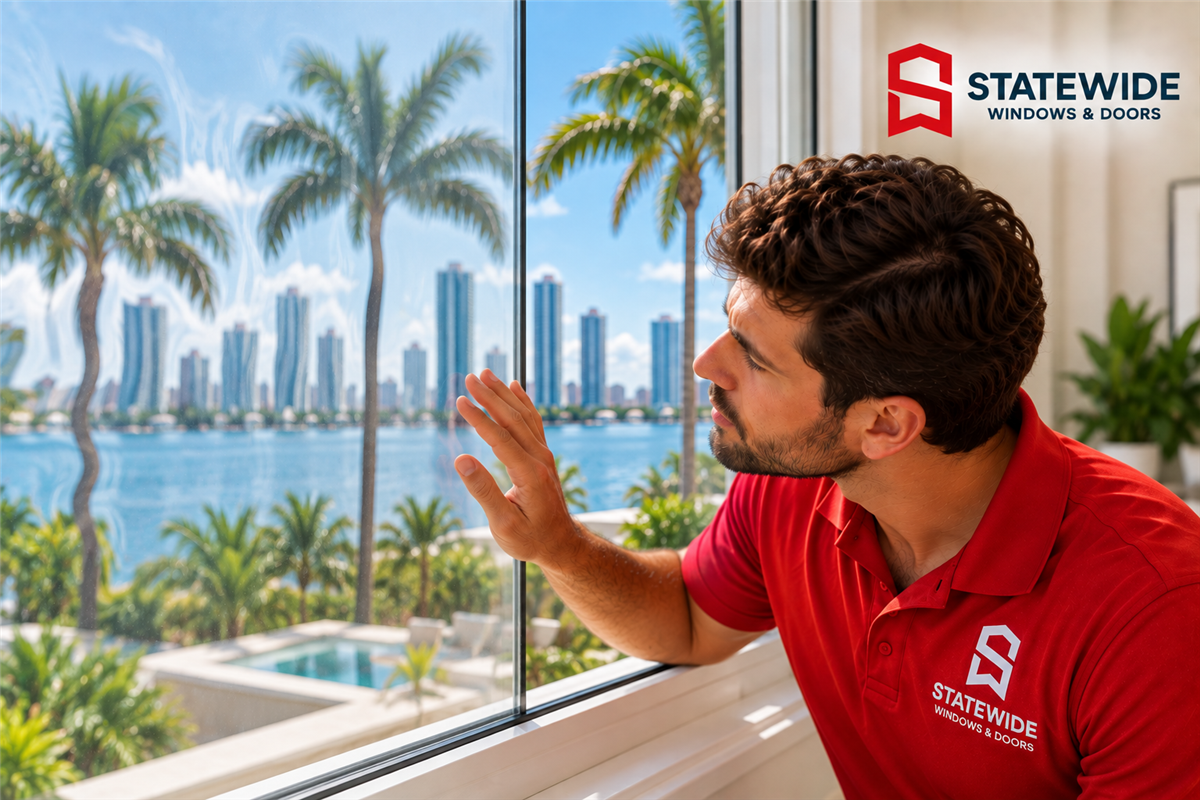
After installing new impact windows, some Florida homeowners notice that the glass does not always look perfectly flat from every angle.
Reflections may appear slightly wavy, straight lines outside may look subtly distorted, or the appearance of the glass may change depending on where you stand.
Seeing distortion does not automatically mean an impact window is defective.
Impact-resistant and insulated glass assemblies can be more complex than ordinary residential glass, and several factors can affect how reflections and objects appear through the window.
At the same time, significant or unusual distortion should not simply be ignored.
Understanding what can influence the appearance of impact glass can help homeowners determine when a visual characteristic may be normal and when professional evaluation may be appropriate.
Why Can Impact Window Glass Look Different From Regular Glass?
Impact windows are complete systems designed for specific performance requirements.
Depending on the product, the glazing assembly may incorporate:
- Multiple layers of glass
- A laminated interlayer
- Insulated glass construction
- Low-E coatings
- Tints
- Spacers
- Other product-specific glass components
Because of this construction, impact glass may not always look exactly like the older standard glass it replaced.
What Does Wavy Window Glass Look Like?
Homeowners describe glass distortion in several ways.
You might notice:
- Reflections that appear slightly curved
- Straight objects that look subtly wavy
- A mirror-like reflection that changes as you move
- Distortion that is more noticeable from an angle
- Reflections that look different in the center of the glass
- Visual changes that appear only in certain lighting
The exact appearance can depend on the glass construction, size, lighting, viewing angle, and surrounding environment.
Is Some Glass Distortion Normal?
Some degree of optical variation can occur in manufactured architectural glass.
Glass does not need to function exactly like a perfectly flat mirror to perform as a window.
The important question is whether what you are seeing is a normal characteristic of the particular glass product or evidence of an actual defect or damage.
If the appearance is significant, new, or concerning, the specific glass should be evaluated rather than diagnosed from appearance alone.
Why Do Reflections Look Wavy in My Impact Windows?
Reflections can make subtle variations in glass surfaces much more noticeable.
This is especially true when the glass reflects:
- Straight rooflines
- Nearby buildings
- Fences
- Power lines
- Palm trees
- Clouds
- Other windows
A reflection can exaggerate small optical variations that may be much less noticeable when simply looking through the window.
Viewing Angle Can Change What You See
Impact glass can appear different depending on the angle from which it is viewed.
A homeowner looking straight through the glass may notice very little distortion, while someone standing far to one side may see more variation in reflections.
Before deciding that a window has a problem, observe it from several normal viewing positions and under different lighting conditions.
Why Does the Distortion Look Worse From Outside?
Exterior viewing conditions can make reflections much more prominent.
During bright daylight, the exterior surface of a window may reflect the sky, landscaping, neighboring homes, and other surroundings.
Those reflections can make optical variations easier to notice than they are from inside the home.
This does not automatically indicate that the glass is damaged.
Why Does the Glass Look Different at Different Times of Day?
Lighting can dramatically change the appearance of glass.
Morning sunlight, afternoon sun, cloudy conditions, interior lighting, and nighttime reflections can all create different visual effects.
A characteristic that is obvious during one part of the day may be almost invisible during another.
When documenting a concern, note when the distortion is most noticeable.
What Is Laminated Impact Glass?
Laminated glass generally consists of glass layers bonded together with an interlayer.
This construction is an important part of many impact-resistant glazing systems.
If the glass is struck and damaged, the interlayer helps hold broken glass together rather than allowing the opening to behave like ordinary unlaminated glass under certain impact conditions.
Laminated construction can also influence the optical appearance of the complete glazing assembly.
Does Laminated Glass Always Look Perfectly Flat?
Homeowners should not assume that every laminated glass assembly will produce a perfectly mirror-like reflection from every viewing angle.
The finished glazing consists of multiple components manufactured together as a system.
Small optical variations can be more noticeable in large glass areas or under strong reflective conditions.
What Is Insulated Impact Glass?
Some impact windows use insulated glass configurations.
An insulated glass unit typically contains separate panes with a sealed space between them.
Depending on the product, an impact-resistant laminated component may be incorporated into that overall glass assembly.
This means a single window can contain multiple glass surfaces.
Can Insulated Glass Look Wavy?
Insulated glass can sometimes show optical effects because multiple panes and sealed spaces are involved.
Changes in environmental conditions and the physical characteristics of the unit can affect reflections.
The appearance should be evaluated in the context of the specific product rather than assuming any visible variation means the unit has failed.
Why Does the Center of the Glass Look Different?
In some insulated glass units, homeowners may notice that reflections across the center of a large pane appear somewhat different from reflections near the edges.
Several physical and optical factors can influence how a large sealed glass assembly appears.
If the condition is extreme, appears suddenly, or is accompanied by other symptoms, have the glass evaluated.
Can Outdoor Temperature Affect the Appearance of Insulated Glass?
Temperature and atmospheric conditions can influence materials within a window system.
Florida windows can experience substantial differences between:
- Hot outdoor air
- Direct sunlight
- Air-conditioned interiors
- Morning and afternoon temperatures
- Changing weather conditions
Homeowners may therefore notice that reflections appear slightly different under changing environmental conditions.
Does Low-E Glass Cause a Different Appearance?
Low-E coatings are used to influence solar and thermal performance.
Depending on the specific coating and glass configuration, Low-E glass can have subtle differences in reflectivity or color compared with ordinary clear glass.
This may be especially noticeable when comparing a new Low-E impact window directly with an older window that uses a different glass configuration.
Why Does My New Window Have a Slight Tint?
Different glass products can have different visible appearances.
Factors can include:
- Glass thickness
- Low-E coatings
- Factory tint
- Laminated interlayers
- Insulated configurations
- Exterior lighting
A subtle color difference does not automatically indicate a problem.
The glass specifications for the particular product can help explain its intended appearance.
Why Don't All of My Windows Look Exactly the Same?
If different windows use different glass configurations, sizes, coatings, tints, or product series, their appearance may not be identical.
Even windows using similar products can look different because of:
- Orientation of the home
- Sun exposure
- Interior lighting
- Exterior reflections
- Nearby landscaping
- Viewing angle
If windows were intended to use matching glazing but one looks dramatically different, review the project specifications or ask the contractor to verify the product.
Large Impact Windows Can Make Optical Effects More Noticeable
Large expanses of glass provide a bigger reflective surface.
As a result, subtle optical variations can sometimes be easier to see in:
- Large fixed windows
- Picture windows
- Sliding glass doors
- Large contemporary window systems
This is one reason homeowners may notice an effect in a large opening but not in a smaller window nearby.
Can Impact Sliding Glass Doors Look Distorted?
Large impact sliding glass doors contain substantial glass panels, so reflections and optical effects can be especially visible.
Observe the glass from normal viewing positions rather than judging it only from an extreme angle.
If one panel appears dramatically different from the others or shows signs of physical damage, professional evaluation may be appropriate.
Explore impact sliding glass doors from Statewide Windows & Doors.
How Can I Tell the Difference Between Distortion and Dirty Glass?
Before assuming the glass itself is distorted, clean the accessible surfaces according to the manufacturer's recommendations.
Florida windows can accumulate:
- Salt residue
- Hard-water spots
- Dust
- Pollen
- Cleaning-product residue
- Construction debris
Surface deposits can create haze, streaks, or irregular reflections that may initially appear to be a glass problem.
Hard Water Can Change How Glass Looks
Irrigation water can leave mineral deposits on exterior glass.
Over time, these deposits can become very noticeable, especially in direct sunlight.
Mineral spotting is different from optical distortion within the glass assembly.
Proper cleaning can help determine whether the visible condition is on the surface.
Coastal Salt Can Make Glass Look Hazy
Homes near Florida's coast can experience salt deposits on exterior windows and doors.
Salt residue can make the glass appear cloudy or uneven.
Regular cleaning according to the window manufacturer's recommendations can help maintain visibility and make it easier to distinguish surface residue from other conditions.
Can Cleaning Damage the Appearance of Impact Glass?
Improper cleaning methods can potentially scratch or damage accessible surfaces or coatings.
Avoid assuming that aggressive scrubbing, abrasive pads, razors, or harsh chemicals are appropriate for every window.
Follow the cleaning instructions for the specific glass product.
What If the Glass Looks Scratched?
A scratch is different from optical distortion.
Scratches are physical surface conditions that may be visible when light hits the glass at certain angles.
If you notice scratches after a new installation, document them and discuss the condition with the contractor.
Do not attempt aggressive polishing before determining what type of glass and coating is present.
What If I See a Line Inside the Glass?
A visible line can have several possible explanations, including reflections, surface marks, glass features, or actual damage.
If a line cannot be cleaned from either accessible surface and appears to be within the glass assembly, have it evaluated.
Do not attempt to dismantle insulated or laminated glazing to investigate it yourself.
How Is Glass Distortion Different From Fogging?
Optical distortion and between-pane fogging are different conditions.
Optical distortion changes how objects or reflections appear through or on the glass.
Between-pane fogging can create a cloudy or hazy appearance that cannot be wiped from either accessible surface.
Persistent moisture trapped between panes may indicate a condition involving an insulated glass unit and should be evaluated separately.
How Is Distortion Different From Cracked Glass?
A crack is physical damage to the glazing.
Distortion changes the appearance of reflections or objects without necessarily involving a visible fracture.
If you can see a definite crack, chip, star-shaped impact mark, or other physical damage, treat that as a glass-damage concern rather than normal optical variation.
Can Impact Glass Still Work If It Looks Slightly Wavy?
The appearance of a reflection alone does not determine whether an impact window meets its intended performance characteristics.
Impact performance depends on the specific tested and approved window system and configuration.
A homeowner should not attempt to judge structural or impact performance simply by looking at reflected lines in the glass.
When Should Glass Distortion Be Evaluated?
Professional evaluation may be appropriate if:
- The distortion is severe
- One window looks dramatically different from matching windows
- The appearance changed suddenly
- The glass is visibly cracked
- There is moisture between panes
- The glass appears damaged around an edge
- The frame appears distorted
- The window has operating problems
- The condition appeared after an impact
These additional symptoms can provide important context.
What If My Impact Window Looks Wavy Immediately After Installation?
If you notice significant distortion in a newly installed window, document it before attempting any modifications.
Take photographs from:
- Inside the home
- Outside the home
- Several viewing angles
- Different distances
- Different times of day if necessary
Then discuss the concern with the installation company.
Why Photographs of Glass Distortion Can Be Difficult
Optical effects can look different in photographs than they do in person.
Phone cameras themselves can introduce perspective changes, lens effects, and reflections.
When documenting a concern, take several photos rather than relying on a single close-up image.
Video while slowly changing the viewing angle may also help demonstrate what you are seeing.
Compare Similar Windows
If your home contains several windows from the same project, compare similar products under similar conditions.
Consider whether:
- The windows are the same size
- They use the same glass configuration
- They face the same direction
- They receive similar sunlight
- The distortion occurs in one window or several
This information can help a contractor understand the concern.
Can Installation Cause Glass Distortion?
Homeowners should not diagnose the cause of significant glass distortion without evaluation.
Windows are complete assemblies installed within building openings, and the condition of the frame, glazing, and installation can all be relevant when investigating an unusual appearance.
If the window also has difficulty opening, closing, or locking, mention those symptoms during the evaluation.
What If the Frame Looks Bowed?
A visibly unusual frame condition should be evaluated separately from normal optical characteristics of glass.
Possible warning signs include:
- Uneven gaps
- Difficulty operating the window
- Lock misalignment
- Visible frame deformation
- A sash that does not sit evenly
Do not attempt to bend or reshape an impact window frame yourself.
Can Heat Make Impact Glass Look More Distorted?
Environmental conditions can influence the appearance of reflections, particularly in multi-pane glazing assemblies.
Florida's combination of strong sunlight, high outdoor temperatures, and cooled interiors can create changing conditions throughout the day.
If an optical effect changes with temperature and lighting, document that pattern when requesting evaluation.
Can Window Screens Affect the View?
Yes.
Screens can create visual patterns, especially when viewed from certain angles or against bright backgrounds.
Before assuming the glass itself is creating a pattern, determine whether a screen is contributing to what you see.
Can Reflections From Another Window Create a Strange Effect?
Modern homes can contain multiple large glass surfaces.
Reflections from nearby windows, sliding doors, pools, water, mirrors, and neighboring buildings can create complex visual effects.
Observe the window from several locations to determine whether the appearance changes significantly.
Should I Put Aftermarket Film on Distorted Glass?
Do not apply aftermarket film as a way to hide a suspected glass problem before the window has been evaluated.
Film can change the appearance and thermal behavior of glazing, and compatibility can vary by product.
It may also affect warranty coverage depending on the manufacturer's terms.
Identify the original condition first.
Do Not Try to Heat or Reshape the Glass
Impact glass should never be heated, pressed, drilled, ground, or otherwise modified by a homeowner in an attempt to correct optical distortion.
Impact glazing is manufactured as part of a specific window system.
If replacement is necessary, the appropriate glazing should be used.
What If Only One Pane Looks Different?
If one window or door panel looks dramatically different from other matching products, verify whether it uses the same glass specifications.
Useful information can include:
- Manufacturer
- Product series
- Glass type
- Low-E option
- Tint
- Impact glazing configuration
- Window size
Your original contract and product documentation may help identify the intended configuration.
Why Window Documentation Matters
Keeping records from an impact window project can make future service questions easier to resolve.
Useful documents can include:
- Contract
- Manufacturer information
- Product series
- Glass specifications
- Warranty documents
- Permit records
- Installation date
- Previous service records
This information can help identify the exact glass if evaluation or replacement is needed.
What If I Bought a Home With Distorted Impact Glass?
If you did not purchase the windows yourself, begin by identifying the installed products.
Look for available:
- Window labels
- Glass markings
- Permit records
- Manufacturer information
- Previous homeowner documents
Do not assume that a window is impact-rated solely because it looks thick or has multiple panes.
Does Double-Pane Glass Automatically Mean Impact Glass?
No.
Insulated glazing and impact resistance are different characteristics.
A standard non-impact window can use multiple panes, while an impact window can use a product-specific laminated or insulated impact glazing configuration.
The product documentation or markings should be used to identify the window.
Impact Glass in Miami-Dade and Broward County
Miami-Dade and Broward County are within Florida's High-Velocity Hurricane Zone.
For applicable projects in these areas, impact windows and doors should use specific products and configurations appropriate for their intended HVHZ application.
If impact glazing needs replacement, homeowners should not substitute generic glass simply because it fits the opening.
A Miami-Dade Notice of Acceptance is one recognized product-approval pathway, while qualifying Florida Product Approvals specifically approved for HVHZ use can also apply.
The important question is whether the specific product and configuration are approved for the intended application.
Statewide Windows & Doors has completed thousands of projects across Miami-Dade and Broward County and has substantial experience with impact window and door projects in these markets.
A Simple Checklist for Wavy or Distorted Impact Glass
If your impact window glass appears distorted, start with these steps:
- Clean the accessible interior and exterior glass surfaces appropriately.
- Look at the window from several normal viewing angles.
- Observe it at different times of day.
- Determine whether you notice distortion when looking through the glass, in reflections, or both.
- Compare the window with similar windows in the home.
- Check for visible cracks, chips, or edge damage.
- Look for persistent moisture between panes.
- Check whether the window opens, closes, and locks normally.
- Review the product and glass specifications if available.
- Request professional evaluation if the condition is significant or unusual.
Questions to Ask About Distorted Impact Glass
If you have the glass evaluated, consider asking:
- Is this appearance expected for this glass configuration?
- Is the window laminated, insulated, or both?
- Does the glass contain a Low-E coating or tint?
- Is there any physical damage?
- Is the frame in suitable condition?
- Is there moisture between the panes?
- Do matching windows use the same glass specification?
- Does the glass require replacement?
- If replacement is needed, is compatible impact glazing available?
- Could warranty coverage apply?
Common Myths About Wavy Impact Glass
"Any Distortion Means the Window Is Defective"
Not necessarily. Architectural glass can show optical variation, particularly in reflections and certain multi-layer configurations.
"Impact Glass Should Look Exactly Like My Old Windows"
Not necessarily. Impact glazing can use a different construction, coatings, thickness, and configuration.
"Double-Pane Means the Window Is Impact-Rated"
False. Insulated glazing and impact resistance are separate characteristics.
"If the Reflection Is Wavy, the Glass Is Cracked"
No. Optical distortion and physical cracking are different conditions.
"Low-E Glass Should Be Completely Invisible"
Not always. Some coatings and glass configurations can have subtle differences in color or reflectivity.
"I Can Fix Distortion With Window Film"
Film should not be used to hide a suspected glass problem before the underlying condition is identified.
How Statewide Windows & Doors Helps Florida Homeowners
Statewide Windows & Doors helps Florida homeowners with impact window and door projects from product selection and project coordination through permitting, installation, inspections, and customer service.
Understanding the exact window and glass configuration is important when evaluating concerns involving appearance, fogging, damage, operation, or replacement.
Statewide has more than 25 years of combined industry experience and has completed thousands of projects across Miami-Dade and Broward County while serving homeowners throughout Florida.
Explore our impact window options, impact sliding glass doors, customer service information, completed projects, and Florida service areas.
Why Choose Statewide Windows & Doors?
Impact windows involve more than a single sheet of glass.
Laminated glazing, insulated glass, Low-E coatings, frames, hardware, product approvals, installation, and other components can all be part of the finished system.
Statewide Windows & Doors helps Florida homeowners navigate impact window and door replacement with an experienced team serving communities throughout the state.
Final Words
If your impact window glass looks slightly wavy or distorted, it does not automatically mean the window is defective.
Impact-resistant and insulated glazing can contain multiple layers, coatings, panes, and other components that influence how reflections and objects appear.
Lighting, viewing angle, window size, direct sunlight, surface residue, and surrounding reflections can also make optical effects more noticeable.
Start by cleaning the glass appropriately, viewing it from several normal positions, and comparing it with similar windows.
If the distortion is severe, appeared suddenly, is limited to one unusual window, or occurs along with cracked glass, fogging, frame damage, or operating problems, have the window professionally evaluated.
Understanding the difference between an optical characteristic and genuine physical damage can help Florida homeowners avoid unnecessary replacement while still addressing problems that deserve attention.
Tags
Subscribe to Statewide Windows & Doors's Blog





Comments