 Free Estimate
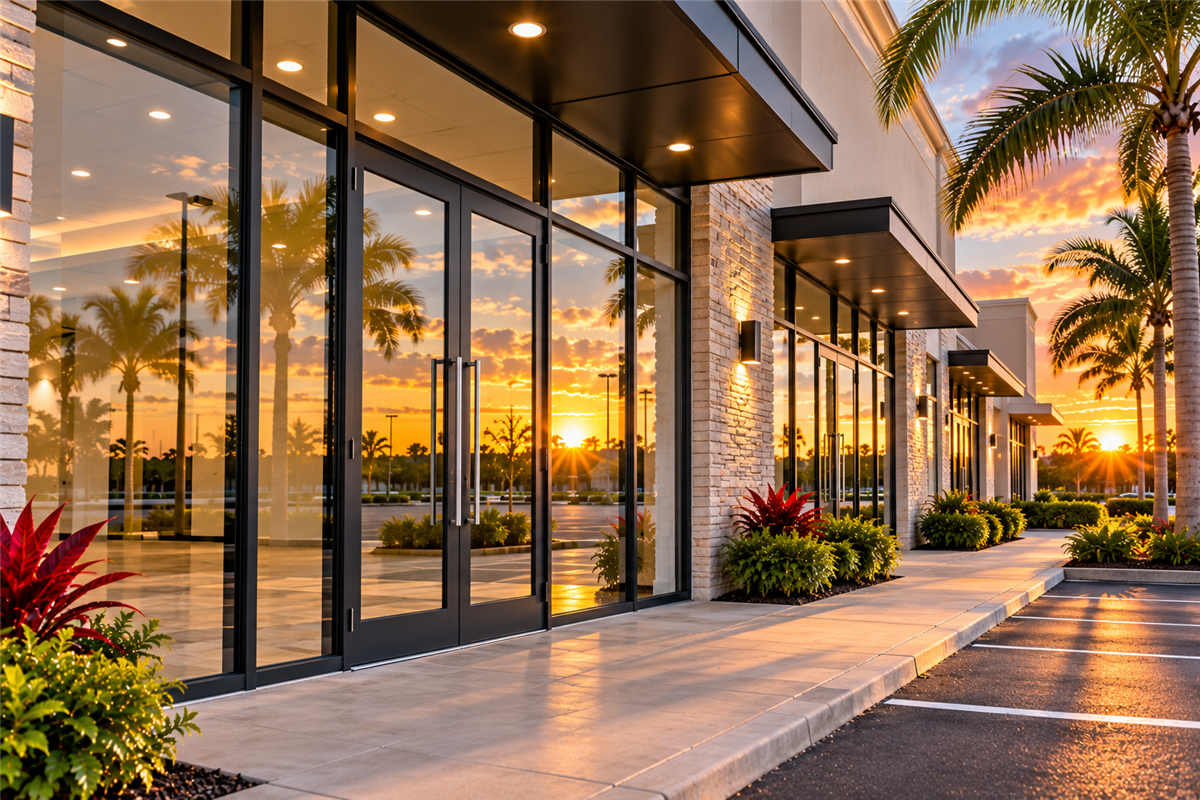
Windows and doors are an important part of any commercial property in Florida.
For retail stores, offices, restaurants, shopping centers, and other commercial buildings, exterior glazing affects much more than appearance. Business owners and property managers may also need to consider hurricane protection, building-code requirements, security, energy performance, water resistance, accessibility, permitting, installation logistics, and potential disruption to normal business operations.
When older storefront windows, commercial doors, or other exterior glazing need replacement, impact-resistant systems may provide a long-term solution designed for Florida's demanding weather conditions.
This guide explains what Florida business owners and property managers should know when planning a commercial impact window, door, or storefront replacement project.
What Are Commercial Impact Windows?
Commercial impact windows are window systems designed and tested to meet specified impact and wind-pressure requirements.
Depending on the building and product, a commercial impact glazing system can include:
- Impact-resistant laminated glass
- Commercial-grade framing
- Anchoring components
- Sealants
- Hardware
- Operable or fixed window components
The entire system matters. Installing impact-resistant glass into an unsuitable frame does not automatically create an approved impact window system.
What Is Commercial Storefront Glazing?
Storefront glazing refers to the window, glass, framing, and entrance systems commonly used on the exterior of commercial properties.
Storefront systems are frequently seen on:
- Retail stores
- Restaurants
- Professional offices
- Shopping centers
- Medical offices
- Salons
- Showrooms
- Service businesses
- Mixed-use properties
A storefront can include large fixed glass panels, aluminum framing, commercial entrance doors, sidelites, transoms, and other glazed components.
Why Florida Businesses Consider Impact-Resistant Storefronts
Florida commercial properties can be exposed to hurricanes, tropical storms, high winds, windborne debris, intense sunlight, heavy rain, heat, and humidity.
Depending on the property and product, commercial impact glazing can provide benefits involving:
- Permanent impact-resistant opening protection
- Reduced need for temporary storm protection on applicable openings
- Additional resistance against forced entry
- Modernized exterior appearance
- Available energy-performance options
- Replacement of aging storefront systems
- Improved everyday operation of commercial doors and windows
The actual benefits depend on the products selected, existing conditions, installation, and specific building.
Commercial Impact Windows vs. Standard Commercial Glass
Standard commercial glazing and impact-resistant commercial glazing are not necessarily designed or tested for the same conditions.
Impact systems may differ in areas such as:
- Glass construction
- Frame design
- Anchoring
- Maximum approved sizes
- Design-pressure capabilities
- Product approvals
- Installation requirements
Business owners should evaluate the complete system rather than comparing only the appearance or thickness of the glass.
Is Commercial Impact Glass Hurricane-Proof?
No commercial glass system should be described as completely hurricane-proof.
The more accurate term is impact-resistant.
Products are designed and tested for specified conditions, and the exact capabilities depend on the complete approved system.
Business owners should be cautious of absolute claims that a particular window or storefront system can never fail or be damaged during severe weather.
Commercial Storefront Replacement in Florida
Storefront replacement may involve much more than removing old glass and installing new panes.
Depending on the project, replacement can involve:
- Existing glass removal
- Existing frame removal
- New commercial framing
- Impact-resistant glazing
- Commercial entrance doors
- Thresholds
- Hardware
- Anchoring
- Sealants
- Exterior finishing
- Permitting
- Inspections
The project should be evaluated as a complete exterior opening system.
When Should a Commercial Storefront Be Replaced?
Commercial property owners may consider storefront replacement for several reasons.
Potential signs that a professional evaluation may be appropriate include:
- Damaged frames
- Cracked or damaged glass
- Doors that are difficult to operate
- Corroded components
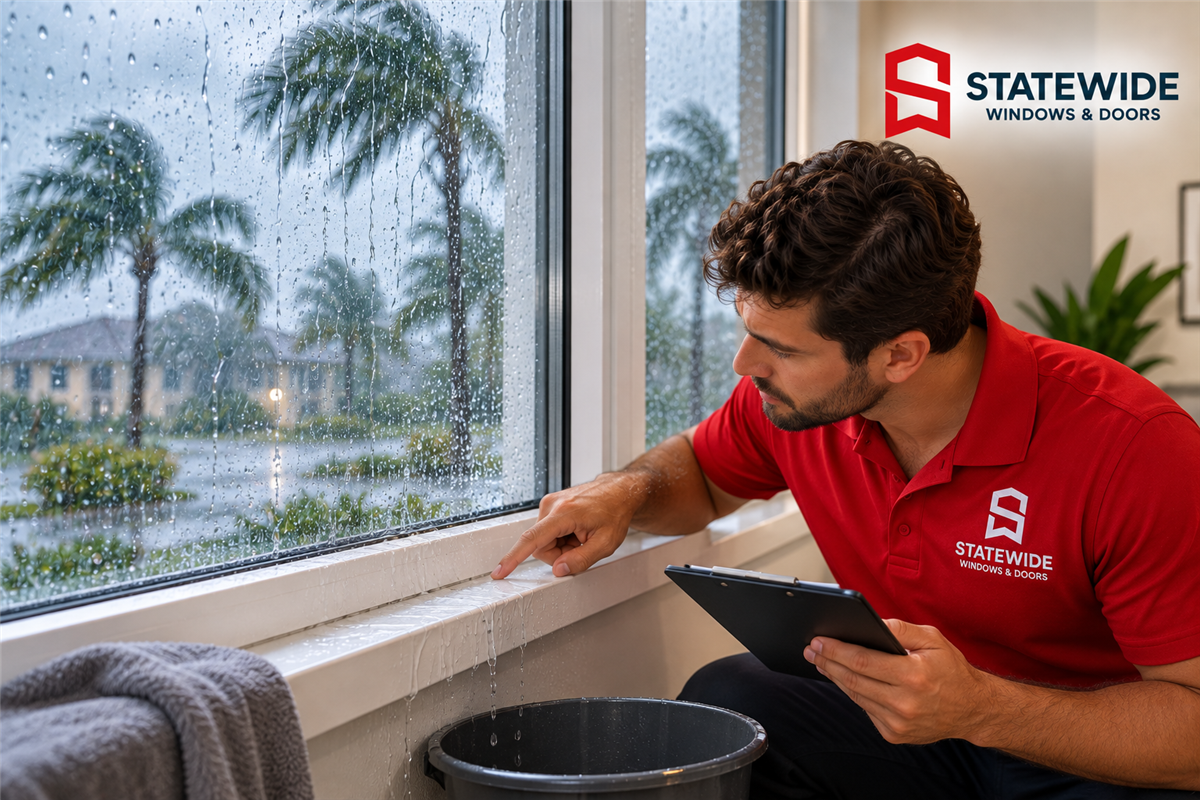
- Water-intrusion concerns
- Failed seals or glazing components
- Outdated storm protection
- Major property renovations
- Changes to the building's exterior design
A contractor should evaluate the existing system before recommending replacement.
Commercial Impact Windows for Retail Stores
Retail storefronts frequently contain large areas of exterior glass designed to display merchandise and create visibility into the business.
When these systems are replaced, owners may need to balance:
- Impact resistance
- Visibility
- Natural light
- Exterior appearance
- Door access
- Security
- Energy performance
- Business operating hours
The goal is to select an appropriate commercial glazing system without unnecessarily sacrificing the storefront's appearance or functionality.
Commercial Impact Windows for Restaurants
Restaurants may have storefront glass, entrance doors, fixed windows, patio doors, or other large exterior openings.
Replacement projects may require careful planning because the work can affect customer entrances, dining areas, furniture, equipment, and normal operating hours.
Before beginning the project, the contractor and business owner should discuss access, work areas, installation scheduling, cleanup, and how the project will be coordinated around business operations.
Commercial Impact Windows for Offices
Office buildings may use several types of exterior glazing, ranging from smaller individual windows to large fixed commercial glass systems.
Property owners may consider replacement because of storm-protection needs, aging systems, renovations, appearance, or other property-specific concerns.
The contractor should evaluate the exact openings and existing construction before recommending products.
Commercial Entrance Doors
A commercial storefront project may also include entrance doors.
Commercial doors can involve:
- Aluminum framing
- Impact-resistant glass
- Door closers
- Locks
- Handles
- Thresholds
- Weatherstripping
- Hinges or pivots
- Other commercial hardware
Doors should be evaluated as complete systems rather than focusing only on the glass.
Impact-Resistant Storefront Doors
For applicable Florida projects, impact-resistant storefront doors can provide permanent impact protection while maintaining the glass-heavy appearance commonly associated with commercial entrances.
However, the exact door, frame, glazing, hardware, anchoring, dimensions, and approval should be evaluated together.
A door should not be assumed to be appropriate simply because it contains impact-resistant glass.
Large Commercial Glass Openings
Many commercial buildings use large glass panels to maximize visibility and natural light.
Large openings require careful product selection because dimensions can affect which systems and configurations are available.
When evaluating large commercial openings, contractors may need to consider:
- Opening dimensions
- Glass configuration
- Frame system
- Product approval
- Design requirements
- Anchoring
- Existing structural conditions
- Installation access
Why Design Pressure Matters for Commercial Windows
Exterior windows and doors experience positive and negative wind pressures during severe weather.
The requirements applicable to a particular commercial opening can depend on factors involving the building, location, height, exposure, opening, and project.
This is why commercial glazing should not be selected based only on appearance or generic hurricane-related marketing claims.
The specific system should be appropriate for the intended application.
Product Approvals for Commercial Impact Windows
Product approval documentation can be an important part of Florida commercial window and door projects.
Depending on the product, documentation can include information involving:
- Product type
- Approved configurations
- Maximum dimensions
- Glass specifications
- Design pressures
- Anchoring
- Installation conditions
- Limitations of use
The contractor should identify the exact products proposed for the building rather than relying solely on the manufacturer's general reputation.
Commercial Impact Glazing in Miami-Dade and Broward County
Miami-Dade and Broward County are located within Florida's High-Velocity Hurricane Zone, commonly called the HVHZ.
For applicable commercial projects in these counties, the specific product and configuration should be approved for its intended HVHZ application.
A manufacturer producing impact-resistant products does not automatically mean every product and configuration from that manufacturer is appropriate for every HVHZ project.
Miami-Dade NOA and Florida Product Approval
Commercial property owners may encounter both Miami-Dade Notices of Acceptance and Florida Product Approvals while reviewing products.
A Miami-Dade NOA is one recognized product-approval pathway.
Florida also maintains a statewide product approval system.
For HVHZ projects, the important question is whether the exact product and configuration is approved for its intended application.
Generic references to "Florida approval" should not replace verification of the actual product documentation.
Commercial Window Replacement Outside the HVHZ
Florida commercial buildings outside Miami-Dade and Broward County are not automatically subject to the same HVHZ requirements.
However, that does not mean product approvals, wind requirements, permitting, or proper installation become unimportant.
The contractor should evaluate the requirements that apply to the actual building and jurisdiction.
Do Commercial Window Replacements Require Permits?
Commercial window, storefront, and door replacement projects may require permits through the applicable local building jurisdiction.
The exact requirements depend on the property, scope of work, products, and jurisdiction.
Permit documentation may involve:
- Permit applications
- Project drawings or opening information where applicable
- Product approval documentation
- Product specifications
- Opening dimensions
- Installation information
- Other project-specific documentation
Business owners should confirm permit responsibilities before work begins.
Who Handles the Commercial Permit?
Before signing a commercial window or storefront contract, determine who will be responsible for:
- Preparing permit documents
- Submitting the application
- Providing product information
- Responding to permit-review comments
- Coordinating inspections
- Handling required corrections
- Closing out the permit
A clear project scope can help avoid confusion later.
How Long Do Commercial Window Permits Take?
There is no single permit timeline that applies to every commercial project in Florida.
Timing can depend on:
- Local jurisdiction
- Project scope
- Completeness of the application
- Products being installed
- Required documentation
- Plan-review comments
- Corrections or revisions
- Current review volume
Business owners planning around a renovation, opening date, lease deadline, or other milestone should discuss permitting early in the project.
How Long Does Commercial Storefront Replacement Take?
Installation time varies based on the project.
Factors can include:
- Number of openings
- Size of glass panels
- Storefront configuration
- Doors included
- Existing conditions
- Building access
- Installation complexity
- Required finishing work
- Inspection scheduling
A small storefront replacement and a large multi-opening commercial project should not be expected to follow identical schedules.
Will My Business Need to Close During Storefront Replacement?
Not necessarily, but the answer depends on the project.
Some commercial installations may be coordinated in phases or around business operations, while other projects may require temporary restrictions around entrances or work areas.
Before installation begins, discuss:
- Business hours
- Customer entrances
- Employee access
- Work zones
- Interior protection
- Exterior access
- Noise
- Cleanup
- Safety requirements
The contractor should explain how the proposed installation may affect normal operations.
How Can Businesses Reduce Downtime During Installation?
Planning is one of the most important ways to reduce unnecessary disruption.
Depending on the project, useful planning steps may include:
- Identifying critical entrances before installation
- Discussing normal business hours
- Planning work areas in advance
- Coordinating access with property management
- Protecting merchandise, furniture, or equipment
- Scheduling different sections of the project strategically
- Planning inspections and follow-up work
The appropriate approach depends on the building and scope of work.
Commercial Storefront Replacement in Shopping Centers
Businesses located within shopping centers may have additional coordination requirements.
Depending on the property, the project may involve:
- Landlord approval
- Property-management approval
- Exterior design standards
- Approved work hours
- Loading and delivery rules
- Common-area protection
- Insurance documentation
- Permit requirements
Tenants should determine which approvals are required before ordering products.
Tenant vs. Property Owner Responsibilities
Commercial properties are frequently leased, which can make responsibility for exterior improvements more complicated.
Before planning storefront replacement, review the lease and determine whether the tenant, landlord, property owner, or property manager must approve or coordinate the work.
Do not assume responsibility based solely on who currently occupies the space.
Can Commercial Impact Glass Improve Security?
Impact-resistant laminated glazing can provide an additional obstacle compared with some ordinary glass products.
However, commercial security involves much more than the glass itself.
Owners should also consider:
- Frames
- Doors
- Locks
- Hardware
- Anchoring
- Access control
- Other security systems
Impact-resistant glazing should not be treated as a guarantee against forced entry.
Can Commercial Impact Windows Reduce Outside Noise?
Some impact glazing systems may reduce certain exterior sounds compared with older or less substantial glass systems.
Actual results depend on factors such as:
- Glass configuration
- Frame construction
- Installation
- Building construction
- Doors
- Type of exterior noise
No commercial glazing system should be expected to make a building completely soundproof.
Can Commercial Impact Windows Improve Energy Performance?
Commercial window and storefront products may be available with glass options designed with energy performance in mind.
Depending on the system, options can include:
- Low-E coatings
- Insulated glazing configurations
- Tinted glass
- Other manufacturer-specific glass options
The actual effect on a building's energy use depends on many factors beyond the windows, including HVAC equipment, roof, insulation, building orientation, operating hours, and other components.
Low-E Glass for Florida Commercial Buildings
Low-emissivity, or Low-E, coatings are designed to influence how certain types of energy pass through glass.
For commercial properties with large areas of exterior glazing, the selected glass package can be an important part of the project.
Business owners should ask exactly which glass configuration is included rather than relying on a general statement that the product is "energy efficient."
Commercial Storefront Appearance and Branding
The exterior of a commercial property can be an important part of how customers experience the business.
When replacing a storefront, owners may want to consider:
- Frame color
- Glass appearance
- Door configuration
- Visibility into the business
- Natural light
- Exterior signage
- Architectural style
Impact resistance and building requirements can be considered alongside the visual goals of the property.
Replacing Storefront Glass After Storm Damage
Commercial properties can experience broken glass, damaged frames, water intrusion, or other problems after severe weather.
If a storefront is damaged, the entire affected system should be professionally evaluated before deciding whether a simple repair or broader replacement is appropriate.
Do not assume visible glass damage is the only issue that needs attention.
Replacing an Older Commercial Storefront
Some Florida commercial buildings still use older storefront systems installed before modern impact-resistant products became common.
Owners may consider replacement as part of:
- Building renovations
- Tenant improvements
- Storm-protection upgrades
- Exterior modernization
- Door replacement
- Property repositioning
The existing openings and surrounding construction should be evaluated before products are selected.
Commercial Window Replacement During a Renovation
A larger renovation can be an opportunity to coordinate storefront, window, and door improvements with other exterior work.
Early planning can help contractors coordinate product selection, measurements, permits, deliveries, installation, inspections, and finishing work with the broader construction schedule.
This can be especially important when the business has a planned opening or reopening date.
How Much Does Commercial Storefront Replacement Cost?
There is no single price that applies to every Florida commercial storefront project.
Cost can depend on:
- Total amount of glazing
- Opening dimensions
- Number of windows and doors
- Frame system
- Glass package
- Impact requirements
- Product selection
- Existing conditions
- Removal and disposal
- Installation complexity
- Permitting
- Finishing work
- Building access
A property-specific commercial quote is more useful than a generic price per window or square foot.
How to Compare Commercial Window Replacement Quotes
Do not compare proposals based only on the total price.
Determine whether each proposal clearly identifies:
- Manufacturer
- Product or system
- Frame type
- Glass configuration
- Opening dimensions
- Doors and hardware
- Applicable product approvals
- Permit responsibilities
- Removal and disposal
- Installation scope
- Finishing work
- Inspection coordination
- Manufacturer warranty
- Contractor workmanship coverage
Two commercial proposals can appear similar while including substantially different scopes of work.
Questions to Ask a Commercial Window Contractor
- What commercial glazing system are you recommending?
- Why is this product appropriate for my building?
- What impact glass configuration is included?
- What product approval applies?
- What design requirements apply to the openings?
- Who handles permitting?
- Who coordinates inspections?
- Who performs the installation?
- How will the work affect business operations?
- Can the project be completed in phases?
- What removal and disposal work is included?
- What finishing work is included?
- What manufacturer warranty applies?
- What workmanship coverage applies?
- Who handles post-installation service?
How to Choose a Commercial Window Company in Florida
Commercial property owners should evaluate the contractor as carefully as the products.
Consider:
- Florida contractor licensing
- Commercial window and door experience
- Impact-glazing experience
- Completed commercial projects
- Product options
- Permitting experience
- Project management
- Installation capabilities
- Communication
- Warranty information
- Post-installation service
The size of the contractor alone does not determine whether it is appropriate for a particular commercial project.
Commercial Window Replacement Planning Checklist
- Identify the windows, storefronts, and doors being replaced.
- Determine who owns and approves the exterior improvements.
- Evaluate existing openings and conditions.
- Discuss the desired appearance and functionality.
- Compare appropriate impact-resistant systems.
- Review glass options.
- Verify applicable product approval information.
- Determine project-specific design requirements.
- Identify the permitting authority.
- Determine landlord or property-management requirements.
- Plan around business operating hours.
- Review the installation scope.
- Plan inspections and closeout.
- Review warranty information.
- Confirm post-installation service procedures.
Common Commercial Storefront Replacement Mistakes
Choosing Glass Without Evaluating the Complete System
Glass, framing, anchoring, hardware, and installation work together as part of the exterior opening.
Waiting Too Long to Discuss Permitting
Permit review can affect the overall project schedule.
Ignoring Business Downtime
Installation logistics should be discussed before the work begins.
Choosing Only by Price
Commercial proposals may contain different products and scopes of work.
Ignoring Entrance Doors
Storefront doors and hardware are important parts of the complete system.
Assuming All Impact Products Are Approved Everywhere
The exact product and configuration should be appropriate for the intended application.
Failing to Coordinate With the Property Owner
Tenants should determine required landlord or property-management approvals before ordering products.
Commercial Impact Windows & Doors From Statewide Windows & Doors
Statewide Windows & Doors works with Florida property owners on window and door projects involving impact-resistant products and exterior opening replacement.
Commercial projects can require coordination across product selection, measurements, permitting, installation, inspections, and project management.
With more than 25 years of combined industry experience, Statewide helps guide projects from the initial evaluation through completion.
Property owners can review Statewide's commercial services, explore completed projects, or contact Statewide Windows & Doors to discuss a commercial window, door, or storefront project.
Frequently Asked Questions About Commercial Storefront Replacement
Can a storefront be replaced while a business stays open?
Potentially. Whether a business can remain open depends on the project scope, entrance locations, work areas, safety requirements, and installation plan. Discuss operating hours and access with the contractor before scheduling the work.
How long does commercial storefront replacement take?
There is no universal timeline. The number and size of openings, doors, existing conditions, installation complexity, access, inspections, and finishing work can all affect the schedule.
How long does a commercial window permit take?
Permit timelines vary by jurisdiction and project. The completeness of the submission, required documentation, plan-review comments, revisions, and local review volume can affect timing.
Do commercial impact windows require a Miami-Dade NOA?
Not every Florida commercial property is located within the Miami-Dade/Broward HVHZ, and a Miami-Dade NOA is not the only product-approval pathway. The exact product and configuration should be verified for the intended application.
Can storefront glass be impact-resistant?
Yes. Commercial systems are available that incorporate impact-resistant glazing. The complete frame, glass, anchoring, dimensions, approval, and installation should be evaluated together.
Should commercial doors be replaced with the storefront?
That depends on the condition and requirements of the existing doors. If the storefront is being upgraded for impact resistance, the exterior entrance doors should also be evaluated as part of the building's opening-protection plan.
Final Words
Commercial window and storefront replacement in Florida involves much more than selecting new glass.
Property owners should evaluate the complete glazing system, including the frames, impact-resistant glass, doors, hardware, product approvals, design requirements, permitting, installation, inspections, warranties, and post-installation service.
Business operations should also be part of the planning process. Discuss entrances, customer access, operating hours, installation areas, permit timing, and potential downtime before the project begins.
Whether the property is a retail store, restaurant, professional office, shopping-center space, or another commercial building, careful planning can help create a project that addresses both the building's technical requirements and the practical needs of the business using the space.
Tags
Subscribe to Statewide Windows & Doors's Blog



Comments