 Free Estimate
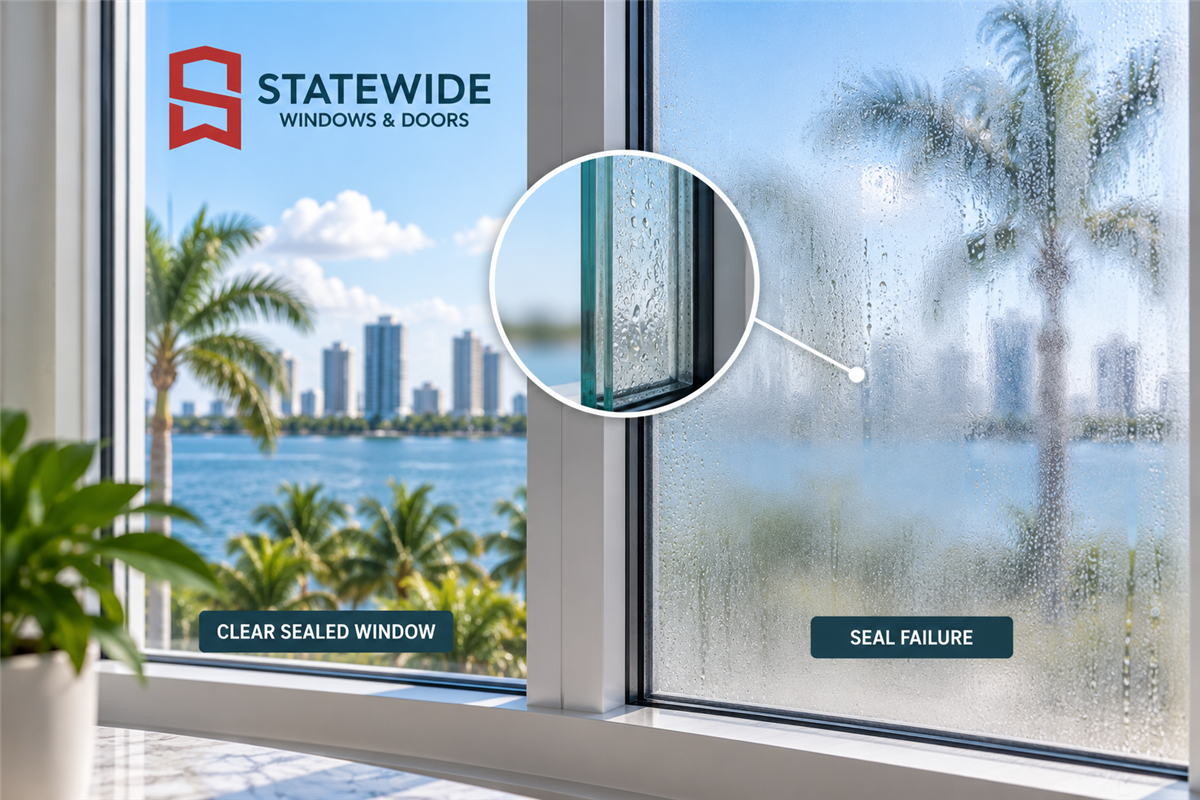
Impact windows are designed to provide long-term protection for Florida homes, but like other building products, they contain multiple components that can perform differently over time.
One component homeowners may eventually have questions about is the window seal, particularly when the impact window uses an insulated glass unit.
Fogging between panes, persistent moisture inside the glass, or changes in the appearance of an insulated window can lead homeowners to wonder whether a seal has failed.
However, not every instance of moisture on a window means there is a seal problem.
Condensation on the interior or exterior surface of the glass is different from moisture trapped inside a sealed insulated glass unit.
Understanding that difference can help Florida homeowners determine when ordinary condensation may be occurring and when a window should be evaluated for a possible seal-related issue.
What Is an Impact Window Seal?
The term "window seal" can refer to different components of a window, which can sometimes create confusion.
When homeowners talk about a failed seal and fogging between panes, they are usually referring to the seal around an insulated glass unit.
An insulated glass unit generally contains multiple panes separated by a sealed space.
The edge seal helps maintain that enclosed space as part of the manufactured glass assembly.
Do All Impact Windows Have Insulated Glass Seals?
No.
Impact resistance and insulated glass construction are not the same thing.
Different impact windows can use different glazing configurations.
Depending on the product, homeowners may encounter:
- Laminated impact glass
- Insulated impact glass
- Low-E glass
- Argon-filled insulated glass
- Tinted glass
- Other manufacturer-specific glazing configurations
If a window does not use an insulated glass unit, the discussion about a seal failure between panes may not apply in the same way.
What Is an Insulated Glass Unit?
An insulated glass unit, often called an IGU, generally uses multiple panes separated by a sealed space.
Depending on the product, that space may contain air or a gas such as argon.
The insulated construction is primarily used to influence thermal performance.
For an impact window, the complete glass system can also incorporate laminated impact-resistant glazing.
The exact construction depends on the manufacturer, product series, and approved configuration.
What Is Impact Window Seal Failure?
A seal-related problem can occur when the sealed space within an insulated glass unit no longer performs as intended.
One possible sign is moisture or persistent fogging that appears trapped between panes.
However, homeowners should avoid diagnosing the window based on appearance alone.
The condition should be evaluated to determine what is actually occurring and what service may be appropriate.
What Are the Signs of a Possible Failed Window Seal?
Possible signs that an insulated glass unit should be evaluated can include:
- Persistent fogging between panes
- Moisture that cannot be wiped from either accessible glass surface
- Cloudy or hazy appearance inside the glass unit
- Visible moisture trapped within the insulated space
- Changes in clarity that remain regardless of indoor or outdoor conditions
These symptoms do not tell homeowners the exact cause by themselves, but they can indicate that professional evaluation is appropriate.
Fogging Between Panes vs. Surface Condensation
This is one of the most important distinctions homeowners should understand.
Surface condensation occurs on an accessible interior or exterior surface of the glass.
Between-pane fogging appears inside the insulated glass assembly where homeowners cannot simply wipe it away.
Surface condensation can occur because of temperature and humidity conditions and does not automatically mean the glass seal has failed.
Persistent moisture trapped between panes should be evaluated differently.
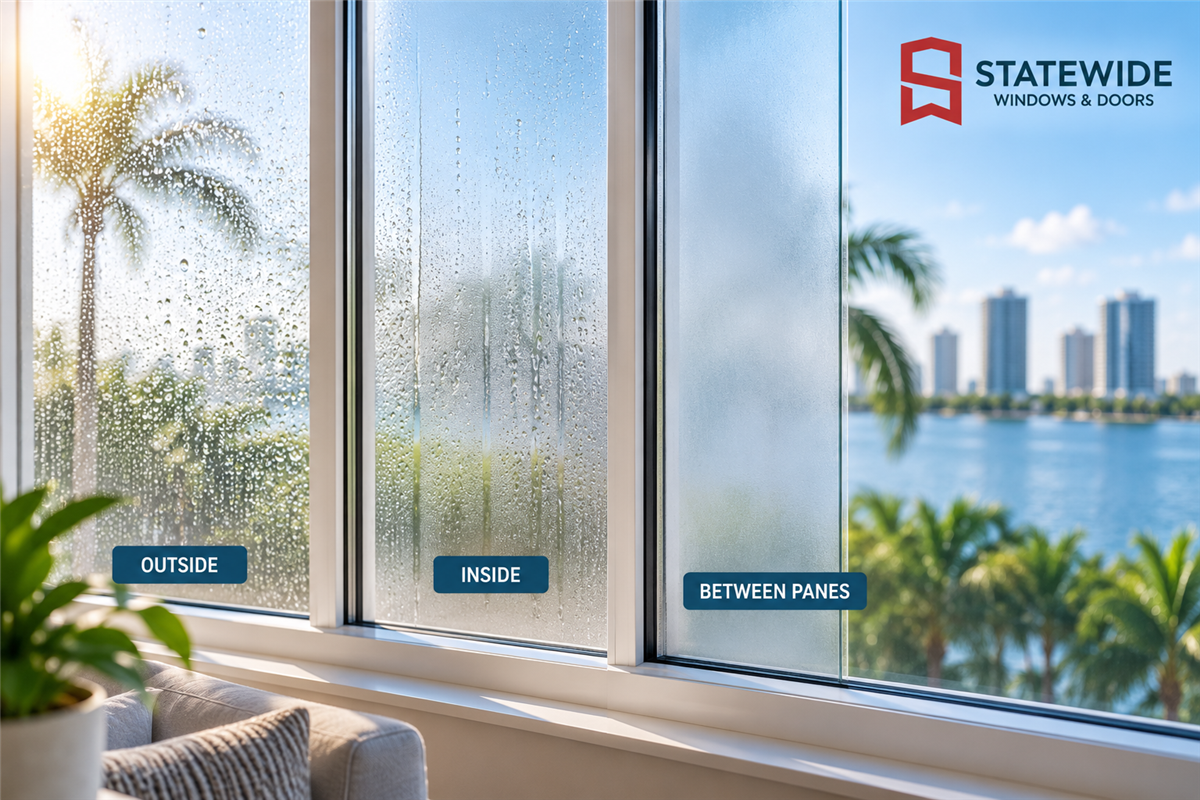
How Can You Tell Where the Moisture Is?
A simple first step is determining whether the moisture can be wiped away.
If you can wipe the moisture from the inside surface, it is interior surface condensation.
If the moisture is accessible from the exterior, it is exterior surface condensation.
If the glass continues to appear foggy and the moisture cannot be reached from either accessible side, it may be located within the insulated glass unit.
In that situation, contact the appropriate window professional or service provider for evaluation.
Does Florida Humidity Cause Window Seal Failure?
Florida's climate can expose exterior building products to demanding environmental conditions, including:
- Heat
- High humidity
- Strong sunlight
- Heavy rain
- Temperature changes
- Coastal conditions in certain areas
However, homeowners should not assume humidity alone is responsible for a particular glass or seal issue.
Product construction, installation, age, environmental exposure, and other factors can all be relevant.
Does Florida Heat Affect Insulated Impact Glass?
Windows installed in Florida routinely experience significant solar exposure and temperature changes.
Insulated glass units intended for Florida homes should be selected as part of a window system appropriate for the intended application.
Homeowners should also follow manufacturer maintenance recommendations and review applicable warranty information.
If a glass condition develops, the actual product should be evaluated rather than assuming that Florida heat alone caused the problem.
Can Sun Exposure Affect Window Seals?
Windows can experience different levels of solar exposure depending on the direction they face, surrounding shade, roof overhangs, landscaping, and other conditions.
That means two windows on the same house may experience different environmental conditions throughout the day.
Long-term performance depends on the complete manufactured glass unit and window system.
Homeowners should rely on the product manufacturer's documentation and warranty rather than assuming a specific amount of sunlight will cause seal failure.
Can Installation Affect Window Performance?
Proper installation is an important part of the overall performance of an impact window system.
The installation should follow the requirements applicable to the specific product and project.
Factors such as anchoring, opening preparation, flashing or sealant details where applicable, and other installation requirements can affect the overall window installation.
However, a problem involving an insulated glass unit should be properly diagnosed rather than automatically blamed on installation.
Does a Failed Insulated Glass Seal Mean the Window Leaks Rain?
Not necessarily.
A problem involving the sealed space between glass panes is different from water intrusion through or around the window assembly.
Rainwater entering around a frame, sill, wall, or other part of the opening should be evaluated as a potential water-intrusion issue.
Fogging trapped between panes is a different condition.
Homeowners should avoid using "seal failure" as a general description for every type of window moisture problem.
Does a Foggy Impact Window Mean It Is No Longer Impact-Resistant?
Homeowners should not automatically assume that.
Insulated-glass seal performance and hurricane impact performance describe different characteristics of the complete window.
If a glass unit develops a problem, the specific product and condition should be evaluated.
The appropriate repair or replacement depends on the manufacturer, product configuration, condition, and applicable warranty.
Impact Resistance Depends on the Complete Window System
A hurricane impact window is not defined by one glass seal.
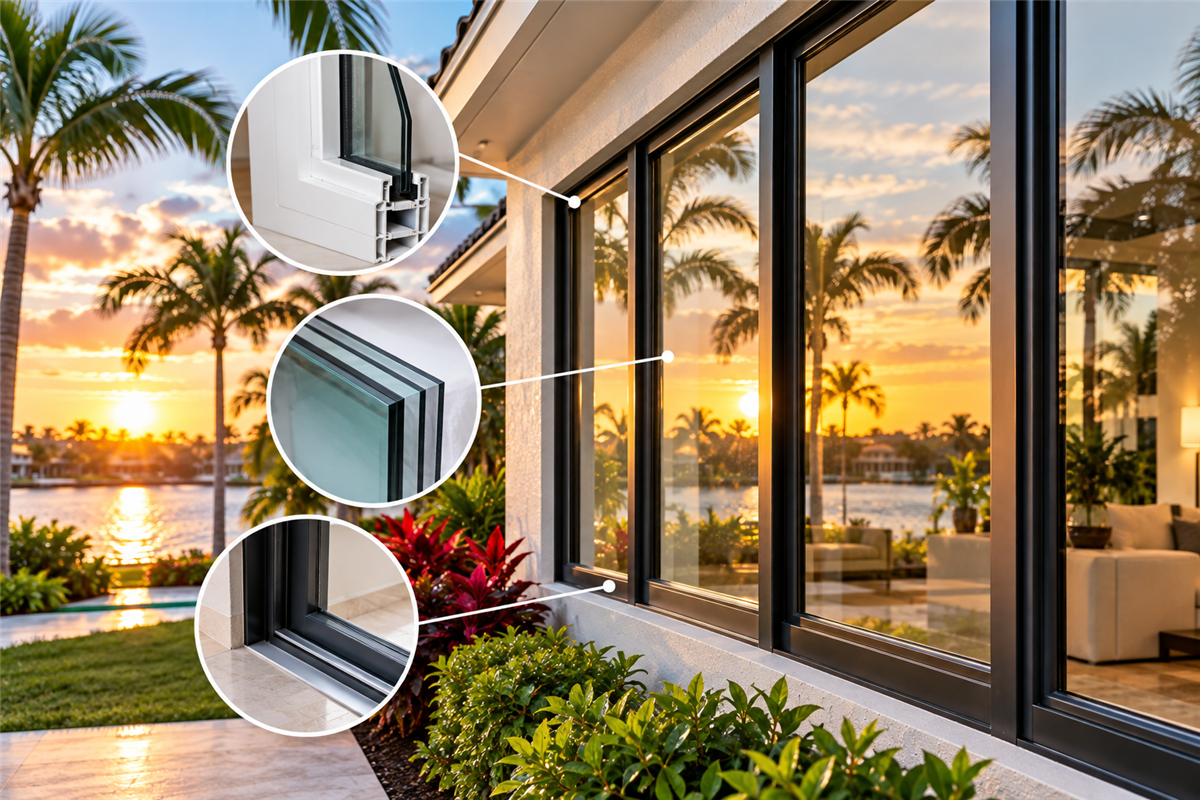
The complete impact-resistant system can involve:
- Impact-resistant glazing
- Frame construction
- Hardware where applicable
- Anchoring
- Window dimensions
- Design pressure
- Installation method
- Applicable product approval
That is why homeowners should not make conclusions about hurricane performance based solely on cosmetic appearance or fogging.
Can Argon Gas Escape if a Window Seal Has a Problem?
Argon may be used inside the sealed space of certain insulated glass units.
The gas-filled space is part of the manufactured assembly.
If there is a problem involving that sealed space, the unit should be evaluated according to the manufacturer's specifications and warranty procedures.
Homeowners should not attempt to open, drill, or otherwise modify an impact glass unit themselves.
Can You Refill Argon in an Impact Window?
Homeowners should not think of an insulated glass unit like a tire that can simply be opened and refilled.
These glass units are manufactured as sealed assemblies.
If a problem develops, the appropriate solution depends on the product and manufacturer's service procedures.
In some situations, service may involve replacement of the applicable glass unit rather than attempting to refill it at the home.
Can a Foggy Impact Window Be Repaired?
The appropriate solution depends on what is actually causing the fogging.
If moisture is simply surface condensation, the glass unit itself may not require repair.
If a condition exists within an insulated glass unit, the manufacturer, contractor, or service professional can determine what service is appropriate.
Homeowners should also review applicable warranty coverage before authorizing work.
Do You Have to Replace the Entire Window?
Not necessarily.
Depending on the window design and the condition being addressed, service may not require replacement of the entire frame and window assembly.
In some products and circumstances, an applicable glass component may be serviceable separately.
However, homeowners should not assume this is possible for every product.
The manufacturer and service provider should determine the correct procedure for the specific window.
Can You Replace Only the Impact Glass?
Possibly, depending on the product.
Impact windows are approved as specific systems and configurations, so replacement glazing should be appropriate for that exact window.
Homeowners should not replace impact glass with ordinary glass simply because it fits the opening.
Any replacement should preserve the appropriate product configuration and follow manufacturer requirements.
Why You Should Not Use Regular Glass as a Replacement
An impact window is designed and evaluated as a complete system.
Replacing an impact glazing component with ordinary non-impact glass could change the characteristics of that system.
When glass replacement is necessary, homeowners should work with qualified professionals who can identify the appropriate replacement for the exact product.
How Long Should Impact Window Seals Last?
There is no single responsible lifespan that applies to every insulated impact glass seal.
Long-term performance can depend on:
- Manufacturer
- Glass construction
- Seal system
- Environmental exposure
- Installation conditions
- Maintenance
- Product age
Instead of relying on a universal lifespan claim, homeowners should review the warranty and documentation for the specific product they are purchasing.
Does the Impact Window Warranty Cover Seal Failure?
Warranty coverage varies by manufacturer and product.
A window warranty may contain separate terms for different components, including:
- Glass
- Insulated glass seals
- Frames
- Hardware
- Finish
- Other components
Homeowners should review the actual warranty documentation rather than assuming every issue is covered for the same period of time.
Manufacturer Warranty vs. Installation Warranty
These are not always the same thing.
A manufacturer's warranty generally addresses the manufacturer's product according to its written terms.
An installation or workmanship warranty can address different aspects of the contractor's work.
Before purchasing impact windows, homeowners should ask who provides each warranty and how service requests are handled.
Why Keeping Your Window Documents Matters
After an impact window project is complete, homeowners should keep important project documentation where it can be found later.
Useful records can include:
- Contract
- Window manufacturer information
- Product information
- Warranty documents
- Permit information
- Inspection records where applicable
- Service records
These documents can make it easier to identify the product and determine applicable warranty or service procedures if an issue develops years later.
What Should You Do if Your Impact Window Is Fogging?
Homeowners can begin with a few simple observations.
- Determine whether the moisture is inside, outside, or between panes.
- See whether the moisture can be wiped from an accessible glass surface.
- Take clear photos of the condition.
- Record when the fogging occurs and whether it disappears.
- Identify the affected window or door.
- Locate your project and warranty information.
- Contact the appropriate contractor or service provider if the condition appears trapped between panes or persists.
Good documentation can help the service team understand the issue more quickly.
Should You Try to Fix a Failed Window Seal Yourself?
Homeowners should avoid drilling, separating, modifying, or attempting to rebuild an impact glass unit themselves.
Impact windows use specific manufactured components and approved configurations.
Improper modifications can create additional problems and may affect warranties or product performance.
When an impact window requires service, the safer approach is to have the product evaluated by an appropriate professional.
What About Online "Defogging" Services?
Homeowners may encounter services advertised as ways to remove visible fogging without replacing an insulated glass unit.
Before using any procedure that drills, alters, or modifies an impact window, homeowners should verify whether the process is permitted by the manufacturer and appropriate for the specific impact product.
Removing the appearance of moisture is not necessarily the same as restoring the original manufactured insulated glass configuration.
For impact-rated products, preserving the approved system should remain a priority.
Impact Sliding Glass Door Seal Problems
Impact sliding glass doors can also use insulated glazing depending on the product configuration.
Because sliding doors contain large areas of glass, haze or between-pane moisture can be particularly noticeable.
Homeowners should determine whether the condition is:
- Surface condensation
- Between-pane fogging
- Water around the track
- Water entering around the opening
- Another service issue
These conditions can have different causes and should not all be described as a failed glass seal.
Explore sliding glass door options from Statewide Windows & Doors.
Can a Sliding Glass Door Track Hold Water?
Sliding door systems can contain drainage features designed as part of the product.
Seeing water in or near a track does not necessarily mean an insulated glass seal has failed.
If homeowners notice unusual water accumulation, interior water intrusion, blocked drainage, or another concern, the door should be evaluated according to the specific product and installation.
Impact Window Seal Failure in Coastal Florida Homes
Coastal Florida homes can experience demanding environmental exposure.
Salt air, humidity, rain, heat, sunlight, and wind can all be part of the environment in which windows operate.
Homeowners should follow manufacturer maintenance recommendations, including any guidance applicable to coastal environments.
Regular visual inspection can also help homeowners identify conditions that may need attention.
Maintenance Does Not Mean Rebuilding the Glass Seal
Homeowners should distinguish between normal window maintenance and servicing a manufactured insulated glass unit.
Routine maintenance may involve tasks such as:
- Cleaning frames and glass
- Keeping tracks clean
- Checking drainage areas where applicable
- Inspecting visible sealants
- Following manufacturer maintenance instructions
Homeowners generally should not attempt to open or rebuild the sealed space between panes.
Can Caulk Fix Fogging Between Panes?
Applying exterior caulk should not be assumed to repair a problem occurring inside an insulated glass unit.
Building sealants and insulated glass edge seals perform different functions.
Adding caulk without identifying the actual source of a problem can also make diagnosis more difficult.
Have the condition evaluated before attempting a repair.
Impact Window Seal Issues in Miami-Dade and Broward County
Miami-Dade and Broward County are located within Florida's High-Velocity Hurricane Zone.
If an impact window component needs replacement, homeowners should make sure the appropriate product configuration is maintained.
Energy performance, insulated-glass construction, and seal performance do not replace HVHZ product requirements.
A Miami-Dade Notice of Acceptance is one recognized product-approval pathway, while qualifying Florida Product Approvals specifically approved for HVHZ use can also apply.
The important question is whether the exact product and configuration are appropriate for the intended application.
Statewide Windows & Doors has completed thousands of projects across Miami-Dade and Broward County and has substantial experience with impact window and door projects in these markets.
Why Product Identification Matters During Service
Before replacing glass or other major components, the service provider should know what window is being serviced.
Relevant information can include:
- Manufacturer
- Product series
- Window style
- Dimensions
- Glass configuration
- Applicable product approval
- Original project documentation
This helps reduce the risk of treating an impact window like an ordinary generic replacement window.
When Should You Call for Impact Window Service?
Homeowners should consider requesting an evaluation when they notice conditions such as:
- Persistent fogging trapped between panes
- Moisture that cannot be wiped from either side
- Visible damage to glass
- Problems operating the window
- Damaged hardware
- Unusual water intrusion
- Changes that appear to be getting worse
The sooner the condition is properly identified, the easier it can be to determine the appropriate next step.
Questions to Ask About Impact Window Warranties Before Buying
Before signing an impact window contract, homeowners can ask:
- Who manufactures the windows?
- What glass configuration is included?
- Is the glass insulated?
- What warranty applies to the insulated glass seal?
- What warranty applies to the glass itself?
- What warranty applies to hardware?
- Is there a separate workmanship warranty?
- Who handles service requests?
- What documentation will I receive after installation?
- What happens if fogging develops between panes?
Understanding the service process before installation can prevent confusion later.
Common Myths About Impact Window Seal Failure
"Any Condensation Means the Window Seal Failed"
False. Interior and exterior surface condensation can occur because of temperature and humidity conditions.
"Fogging Means the Window Is No Longer Impact-Resistant"
Not necessarily. The window should be evaluated before conclusions are made about impact performance.
"You Always Have to Replace the Entire Window"
Not necessarily. The appropriate service depends on the product and condition.
"You Can Refill Argon Yourself"
No. Insulated glass units are manufactured as sealed assemblies and should be serviced according to the appropriate product procedures.
"Adding Caulk Fixes a Failed Insulated Glass Seal"
Not necessarily. Exterior building sealants and the sealed space within an insulated glass unit perform different functions.
"Any Glass That Fits Can Be Used as a Replacement"
False. Impact windows use specific product configurations, and replacement components should be appropriate for the system.
How Statewide Windows & Doors Helps Florida Homeowners
Statewide Windows & Doors works with Florida homeowners throughout the impact window and door process, including product selection, project management, permitting coordination, installation, inspections, and customer service.
When comparing impact windows, homeowners should understand not only the initial product but also the warranty and service process that comes after installation.
Statewide has more than 25 years of combined industry experience and has completed thousands of projects across Miami-Dade and Broward County while serving homeowners throughout Florida.
Explore our impact window options, impact doors, customer service information, completed projects, and Florida service areas.
Why Choose Statewide Windows & Doors?
A quality impact window project involves more than the day the windows are installed.
Product selection, glass construction, installation, product approvals, permitting, inspections, warranty information, and access to customer service all matter over the life of the project.
Statewide Windows & Doors helps Florida homeowners understand these considerations while providing a structured process from initial window selection through installation and post-installation support.
Final Words
Fogging or moisture around an impact window does not automatically mean the window seal has failed.
The first step is determining where the moisture is located.
Condensation that can be wiped from an interior or exterior glass surface is different from persistent moisture trapped between panes of an insulated glass unit.
If fogging remains between the panes, homeowners should document the condition, locate their warranty information, and have the window evaluated by the appropriate service professional.
Most importantly, avoid modifying or replacing components of an impact window without confirming that the work is appropriate for the specific product.
Impact windows are complete systems, and proper product identification, compatible components, professional service, and warranty documentation all matter when maintaining them over time.
Tags
Subscribe to Statewide Windows & Doors's Blog




Comments