 Free Estimate
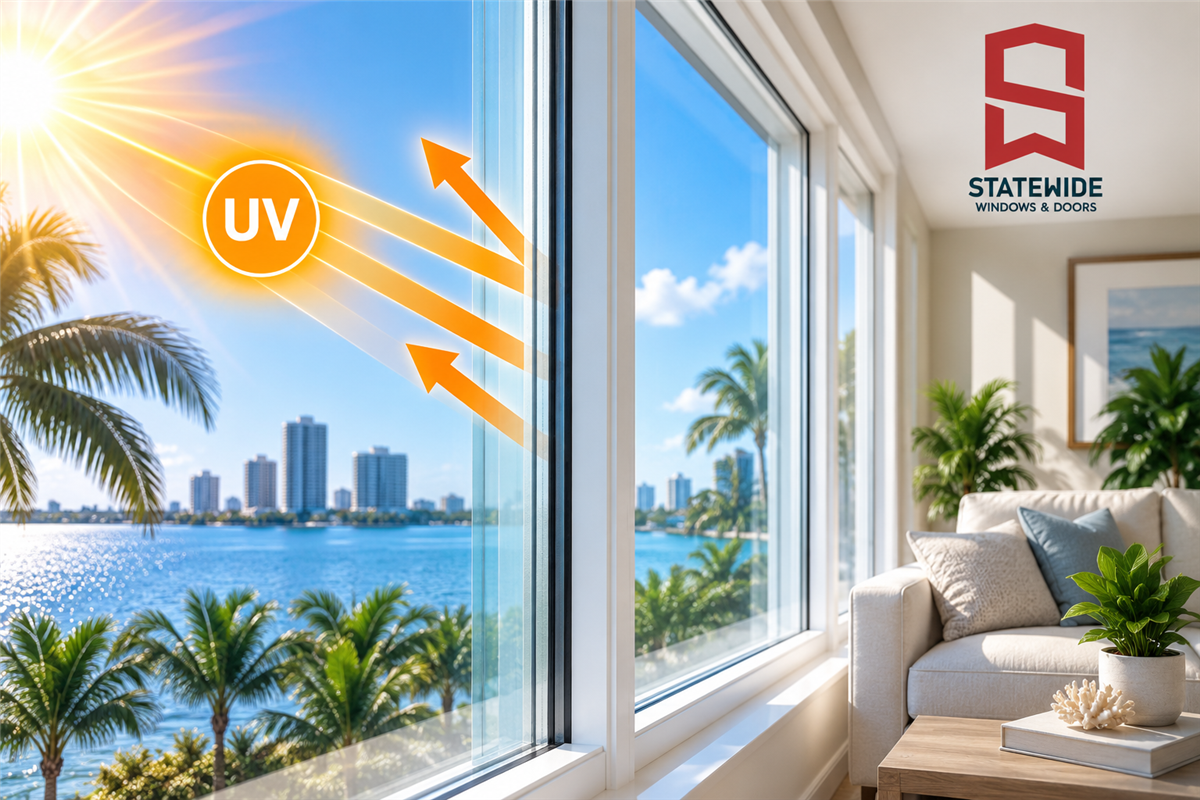
Florida homeowners often choose impact windows because of hurricane protection, but storm performance is not the only feature they may consider when replacing their windows.
Florida's strong sunlight can also affect flooring, furniture, artwork, curtains, cabinets, and other materials inside a home.
This leads to an important question: Do impact windows block UV rays?
Impact-resistant laminated glazing can reduce ultraviolet transmission, and additional glass features such as Low-E coatings may influence the overall solar performance of a window.
However, homeowners should not assume that every impact window provides exactly the same level of UV protection.
The amount of ultraviolet radiation transmitted through a window depends on the specific glass construction and complete window configuration.
Here is what Florida homeowners should understand about impact windows, UV exposure, fading, Low-E glass, and protecting the interior of their homes.
What Are UV Rays?
Ultraviolet radiation is part of the energy produced by the sun.
Although ultraviolet light is not visible to the human eye, long-term exposure can contribute to changes in many materials inside a home.
Sunlight entering through windows can affect:
- Hardwood flooring
- Furniture
- Fabric
- Rugs
- Artwork
- Photographs
- Cabinetry
- Interior finishes
UV exposure is not the only contributor to fading, but it is one factor homeowners may want to consider when selecting replacement windows.
Do Impact Windows Block UV Rays?
Impact-resistant laminated glazing can reduce ultraviolet transmission compared with certain standard glass configurations.
The laminated construction typically incorporates an interlayer between layers of glass.
That construction can influence how much ultraviolet radiation passes through the glazing.
However, the exact UV performance varies by product and glass configuration.
Homeowners should ask for documented information for the specific impact window they are considering rather than assuming all impact glass provides an identical percentage of UV reduction.
Why Does Laminated Glass Affect UV Transmission?
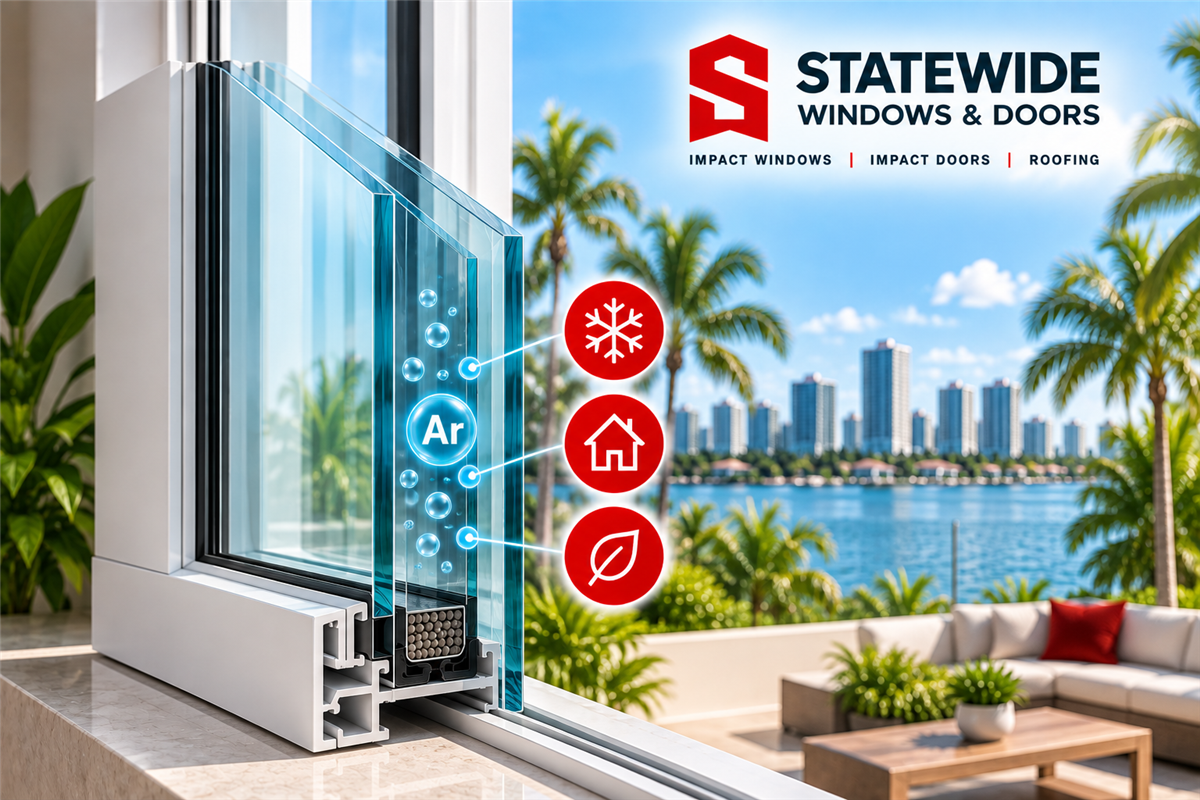
Laminated glass is constructed using layers of glass bonded with an interlayer.
That interlayer is an important part of the glazing system and is one reason laminated glass behaves differently from ordinary monolithic glass.
In an impact-resistant window, laminated glazing also plays an important role in the impact system.
If the glass cracks under sufficient force, the interlayer is designed to help keep broken glass bonded together.
UV performance is an additional characteristic that can vary depending on the specific laminated construction.
Does Impact Glass Block 100% of UV Rays?
Homeowners should be cautious about absolute claims that any window blocks every ultraviolet ray.
The appropriate approach is to review the documented performance information for the exact glass package.
Different products can use different:
- Glass thicknesses
- Interlayers
- Coatings
- Insulated glass configurations
- Low-E technologies
Those differences can influence the amount of ultraviolet radiation transmitted through the glazing.
Can Impact Windows Help Protect Furniture From Fading?
Reducing ultraviolet transmission can help reduce one contributor to fading, but homeowners should not expect impact windows to guarantee that furniture will never fade.
Fading can result from several factors, including:
- Ultraviolet radiation
- Visible light
- Heat
- Material quality
- Color and dye stability
- Length of exposure
- Window orientation
A window with improved solar and UV performance can be part of an interior-protection strategy, but no window can guarantee that furnishings will remain unchanged indefinitely.
Can Impact Windows Help Protect Flooring?
Flooring located near large windows or sliding glass doors can receive substantial sunlight throughout the day.
Over time, sunlight exposure can contribute to changes in certain flooring materials.
Homeowners with hardwood, luxury flooring, rugs, or other sun-sensitive materials may want to consider UV and solar performance when choosing their impact window glass package.
The exact benefit depends on the specific glazing and the flooring material.
What About Artwork and Photographs?
Artwork and photographs can also be sensitive to prolonged light exposure.
Replacing standard windows with impact-resistant glazing that reduces UV transmission may help reduce one source of exposure.
However, valuable or highly light-sensitive artwork may require additional preservation measures beyond replacement windows.
Homeowners should not rely on impact glass alone when protecting valuable collections.
Do Impact Windows Protect Curtains and Upholstery?
Fabric exposed to strong sunlight can experience fading or changes over time.
This can affect:
- Curtains
- Upholstered furniture
- Decorative pillows
- Rugs
- Other textiles
A glass package that reduces portions of UV and solar exposure may help, but the amount of protection depends on the product.
Window treatments can also provide another layer of light control when needed.
Impact Glass vs. Regular Glass for UV Protection
Impact-resistant laminated glass and ordinary non-laminated glass are constructed differently.
The laminated interlayer used in many impact systems can influence ultraviolet transmission.
However, homeowners should avoid comparing all impact windows with all standard windows as if each category contains only one type of glass.
Standard windows can also incorporate coatings, laminated glass, tint, or other features.
The best comparison is between the documented performance of the exact products being considered.
Does Low-E Glass Block UV Rays?
Low-E coatings are primarily designed to influence thermal and solar energy transfer through glass.
Depending on the specific coating and glass package, Low-E technology can also influence portions of solar and ultraviolet transmission.
However, homeowners should not assume every Low-E coating provides identical UV performance.
If UV reduction is an important priority, ask for the documented information associated with the exact glass configuration.
Impact Glass and Low-E Glass Are Not the Same Thing
Impact resistance and Low-E performance describe different characteristics.
Impact-resistant glazing is part of a window system designed and tested for specified impact-related conditions.
Low-E technology is primarily used to influence thermal and solar performance.
Depending on the manufacturer and product, an impact window can incorporate Low-E technology.
This can allow homeowners to address hurricane protection and energy-performance goals within the same window configuration.
Can Impact Windows Have Both Laminated Glass and Low-E?
Yes, depending on the available product configuration.
An impact window can potentially incorporate laminated impact glazing along with a Low-E coating.
Some insulated impact glass configurations can also combine multiple glazing features.
The exact construction varies by manufacturer and product series.
Homeowners should ask what is included rather than assuming every impact window uses the same glass package.
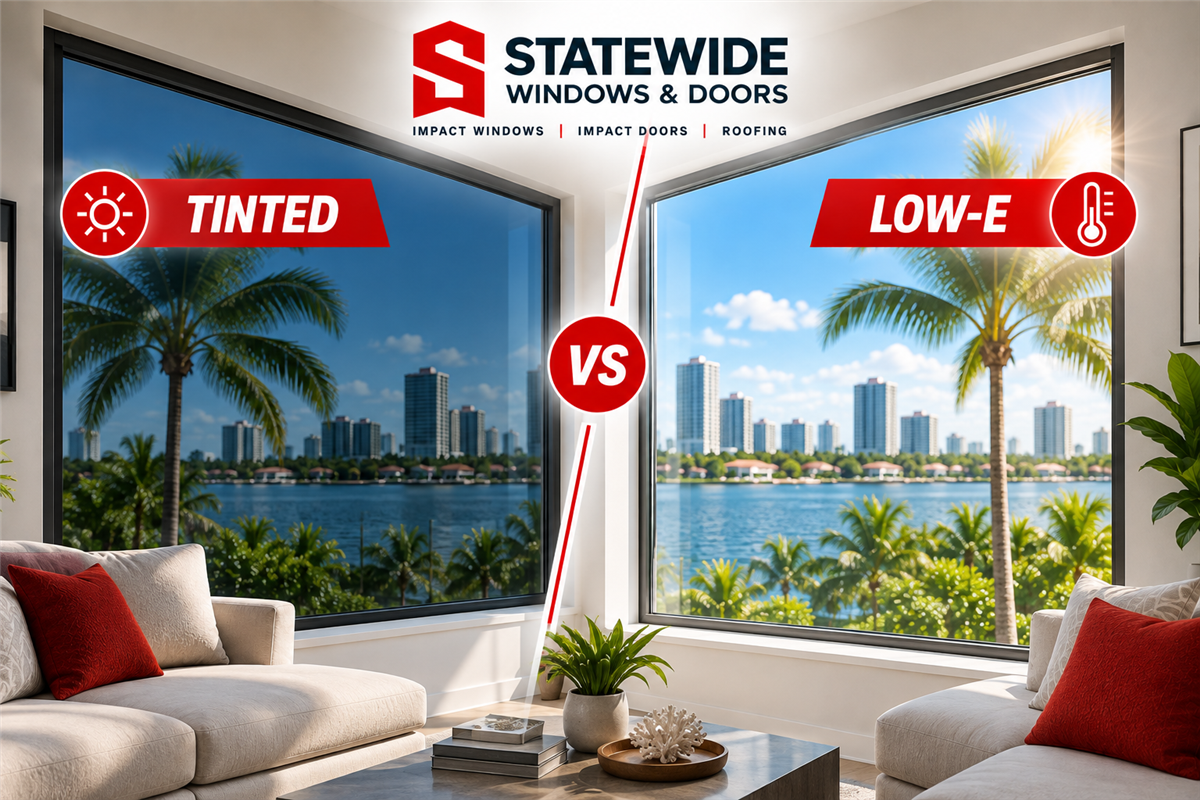
Does Tinted Impact Glass Provide More UV Protection?
A visible tint can influence light and solar transmission, but darker appearance alone should not be used to determine UV performance.
Two pieces of glass can look very different while having performance characteristics that are not obvious to the eye.
When comparing tinted impact glass, review documented information instead of assuming that the darkest glass automatically provides the most UV protection.
Darker Glass Does Not Automatically Mean Better Glass
Florida homeowners sometimes assume that darker windows must block more heat, more UV radiation, and provide better energy performance.
That is too simple.
Glass performance should be evaluated using actual specifications.
Depending on the homeowner's goals, useful information can include:
- UV transmission information
- Solar Heat Gain Coefficient
- U-factor
- Visible transmittance
- Low-E coating
- Glass construction
Appearance is important, but it should not replace documented performance when comparing windows.
What Is Visible Transmittance?
Visible transmittance relates to the amount of visible light passing through a window.
This is different from ultraviolet transmission.
A homeowner may want strong natural light while also wanting a glass package designed to reduce other portions of solar exposure.
Understanding visible transmittance can help homeowners compare how different glass options may affect the brightness of a room.
Can You Reduce UV Without Making Your Home Dark?
Depending on the available glass package, homeowners may be able to reduce portions of ultraviolet and solar transmission without choosing extremely dark glass.
Modern glazing technologies can address different parts of window performance separately.
This is one reason homeowners should compare specifications and physical glass samples rather than choosing based only on tint darkness.
Why UV Protection Matters for Large Florida Windows
The larger the glazed area, the more sunlight may enter a room depending on orientation and surrounding conditions.
This makes glass selection especially important for homes with:
- Large picture windows
- Floor-to-ceiling glass
- Wide window combinations
- Large sliding glass doors
- Waterfront views
For these openings, homeowners may want to balance natural light, view clarity, solar performance, UV exposure, and hurricane protection.
UV Protection for Picture Impact Windows
Picture windows are designed to provide a fixed view and can contain substantial areas of glass.
In a room with significant sun exposure, the glass package can make an important difference in how sunlight interacts with the interior.
When comparing picture impact windows, homeowners can ask about:
- Laminated glazing
- Low-E options
- Insulated glass options
- UV transmission
- Solar Heat Gain Coefficient
- Visible transmittance
- Tint options
UV Protection for Sliding Glass Doors
Sliding glass doors can create some of the largest glazed areas in a Florida home.
A large impact sliding door can provide beautiful outdoor views while also allowing significant sunlight into the room.
When comparing impact sliding glass doors, homeowners should consider both hurricane and solar-performance characteristics.
Ask about:
- Impact glazing configuration
- Low-E options
- Available insulated glass
- Tint options
- UV performance
- SHGC
- U-factor
- Visible transmittance
Explore sliding glass door options from Statewide Windows & Doors.
UV Protection for Waterfront Florida Homes
Waterfront homes frequently use large windows and doors to take advantage of outdoor views.
That can also create substantial glass exposure to Florida sunlight.
For these homes, homeowners may want to carefully compare:
- View clarity
- Natural light
- UV transmission
- Solar heat gain
- Glare
- Glass tint
- Low-E options
- Impact protection
The goal is often to preserve the view while choosing glass appropriate for the home's performance priorities.
Which Side of a Florida Home Gets the Most Sun?
The amount of sunlight entering a home varies based on orientation, time of day, season, landscaping, neighboring buildings, roof overhangs, and other factors.
West-facing openings can receive strong afternoon sunlight, making solar-performance considerations especially noticeable in some homes.
However, homeowners should evaluate the actual exposure of their property rather than applying a universal rule to every opening.
Can Different Windows Use Different Glass Packages?
Potentially, depending on product availability, approvals, homeowner preferences, and HOA requirements.
A homeowner may have different performance priorities on different elevations of the property.
For example, one side may receive significantly more direct sunlight than another.
However, different glass packages can also create differences in exterior appearance.
Homeowners should consider both performance and visual consistency before using different glass options around the home.
UV Protection and Florida Condominiums
Condominium owners may have additional restrictions when selecting replacement impact windows.
An association may regulate characteristics such as:
- Glass appearance
- Tint
- Reflectivity
- Frame color
- Window style
- Approved configurations
A homeowner should not order a visibly different glass package before understanding applicable condominium requirements.
Association approval and building permit approval are separate considerations.
Does UV Protection Affect Hurricane Performance?
UV performance and hurricane impact performance are different characteristics.
A window should not be considered impact-resistant simply because its glass blocks or reduces UV radiation.
Hurricane performance depends on the complete approved system, which can include:
- Impact-resistant glazing
- Frame
- Hardware where applicable
- Anchoring
- Window dimensions
- Design pressure
- Installation
Homeowners should evaluate impact approval and UV performance separately.
Impact Windows Are Not Unbreakable
The term "impact-resistant" does not mean that the glass can never crack or break.
Impact systems are designed and tested for specified conditions.
The laminated construction is designed to help the glazing remain together after breakage rather than behaving like certain ordinary glass configurations.
UV reduction is an additional characteristic and should not be confused with the structural or impact performance of the window.
UV Protection in Miami-Dade and Broward County
Miami-Dade and Broward County are located within Florida's High-Velocity Hurricane Zone.
Homeowners in these counties may want enhanced solar and UV performance, but those features do not replace HVHZ product requirements.
The exact window, dimensions, glass configuration, and installation need to be appropriate for the intended application.
A Miami-Dade Notice of Acceptance is one recognized approval pathway, while qualifying Florida Product Approvals specifically approved for HVHZ use can also apply.
The important question is whether the specific product and configuration are approved for the intended application.
Statewide Windows & Doors has completed thousands of projects across Miami-Dade and Broward County and has substantial experience with impact window and door projects in these markets.
Product Approval Still Matters When Choosing Upgraded Glass
Homeowners should not assume that any preferred glass package can simply be placed into an impact window.
Impact products are approved as specific systems and configurations.
Applicable product documentation can address:
- Window type
- Dimensions
- Glass construction
- Frame
- Design-pressure information
- Installation requirements
- Conditions or limitations of use
The contractor should confirm that the selected glass configuration is appropriate for the product and application.
For more information, read our guide to Miami-Dade NOA vs. Florida Product Approval.
Do You Need Low-E Glass for UV Protection?
Not necessarily.
Laminated glazing itself can influence UV transmission, while Low-E coatings can provide additional solar and thermal performance characteristics depending on the glass package.
The better question is what performance the specific proposed window provides.
Ask for documentation rather than assuming that one named feature is always required.
Is a UV Upgrade Worth Paying More For?
That depends on the available products and homeowner priorities.
Additional glass features may be particularly attractive when a home has:
- Expensive flooring
- Large windows
- Substantial direct sunlight
- Valuable furnishings
- Artwork
- Large sliding doors
- Strong glare
- Energy-performance goals
Homeowners should compare the actual performance difference and price difference before deciding whether an upgraded glass package is worth the cost.
Can Window Treatments Still Help?
Yes.
Impact windows and interior window treatments can serve different purposes.
Depending on homeowner preferences, blinds, shades, curtains, or other treatments can provide additional control over:
- Visible light
- Privacy
- Glare
- Interior appearance
Homeowners do not necessarily need to choose between high-quality impact glass and window treatments. The two can work together.
Questions to Ask About UV Protection Before Buying Impact Windows
Before choosing an impact window glass package, ask your contractor:
- What is the exact glass construction?
- Is the glazing laminated?
- What UV performance information is available?
- Does this configuration include Low-E?
- Is insulated glass available?
- What is the Solar Heat Gain Coefficient?
- What is the U-factor?
- What is the visible transmittance?
- Are tint options available?
- Can I see a physical glass sample?
- Is this exact configuration impact-resistant?
- What product approval applies?
- Is it appropriate for the HVHZ if applicable?
- Does the upgraded glass change the price?
- What documented performance benefit does the upgrade provide?
Common Myths About Impact Windows and UV Rays
"Every Impact Window Blocks Exactly the Same Amount of UV"
False. Glass configurations and documented performance can vary between products.
"Impact Windows Guarantee Furniture Will Never Fade"
False. UV exposure is only one contributor to fading.
"The Darkest Glass Provides the Best UV Protection"
Not necessarily. Visible darkness alone does not establish UV performance.
"Low-E and Impact Glass Are the Same Thing"
False. Low-E relates primarily to thermal and solar performance, while impact resistance involves the complete tested window system.
"UV Protection Makes a Window Hurricane-Resistant"
False. UV performance and hurricane impact performance are separate characteristics.
"You Have to Make Your Home Dark to Reduce UV Exposure"
Not necessarily. Different glass technologies can provide different combinations of visible-light, solar, and UV performance.
How Statewide Windows & Doors Helps Homeowners Compare Impact Glass
Statewide Windows & Doors helps Florida homeowners compare impact windows based on the needs of their property rather than relying on broad marketing claims.
Depending on the project and available products, our team can help homeowners evaluate:
- Impact-resistant glazing
- Laminated glass configurations
- Available Low-E options
- Available insulated glass configurations
- Tint options
- Energy-performance information
- Aluminum and vinyl frames
- Window styles
- Design-pressure considerations
- Applicable product documentation
- Permitting and installation requirements
Statewide has more than 25 years of combined industry experience and has completed thousands of projects across Miami-Dade and Broward County while serving homeowners throughout Florida.
Explore our impact window options, impact doors, completed projects, and Florida service areas.
Why Choose Statewide Windows & Doors?
Choosing impact windows involves more than hurricane protection alone.
Glass construction, UV performance, solar heat gain, energy efficiency, frame material, product approval, design pressure, permitting, installation, warranty, and appearance can all influence the final decision.
Statewide Windows & Doors helps homeowners understand these differences and compare available impact window options based on their property and priorities.
Our team also works across project management, permitting coordination, installation, inspections, and customer service to help manage the complete replacement process.
Final Words
Impact windows can help reduce ultraviolet transmission, particularly because of the laminated glazing used in many impact-resistant systems.
However, homeowners should not assume that every impact window provides identical UV protection or that impact glass will completely eliminate fading.
If UV exposure is important to you, compare the exact glass packages available and review documented information for UV transmission, Low-E coatings, Solar Heat Gain Coefficient, visible transmittance, and other relevant performance characteristics.
For Florida homes with large windows, sliding glass doors, valuable furnishings, or significant sun exposure, glass selection can be an important part of the overall impact window decision.
The goal is to choose a complete approved impact window system that provides the hurricane protection, natural light, solar performance, appearance, and interior protection that make sense for your home.
Subscribe to Statewide Windows & Doors's Blog



Comments