 Free Estimate
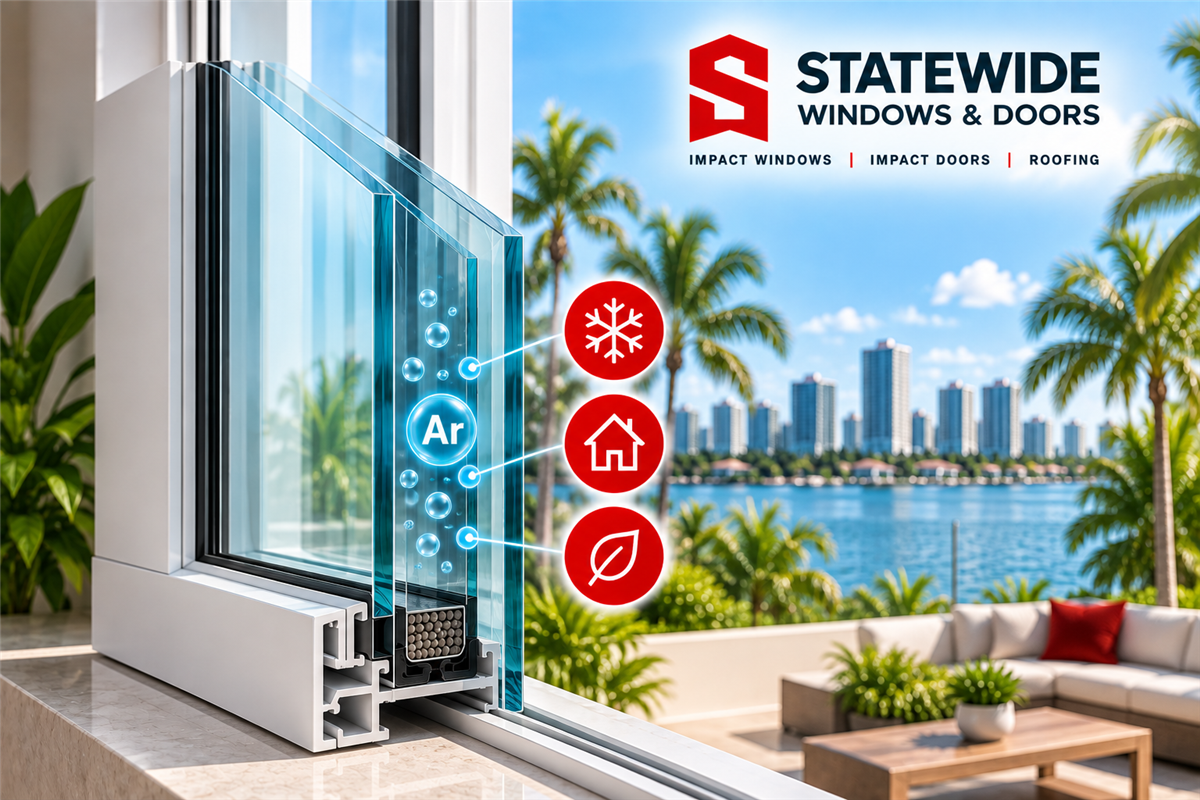
When comparing impact window quotes in Florida, homeowners may come across terms such as argon gas, insulated glass, Low-E glass, laminated glass, and double-pane impact windows.
With so many features listed on a proposal, it can be difficult to understand which ones provide hurricane protection and which ones are primarily related to energy performance.
Argon gas falls into the second category.
Argon can be used inside certain insulated glass units to help improve thermal performance, but it does not make a window impact-resistant.
For Florida homeowners, the important question is not simply whether a window contains argon gas. It is whether the complete window configuration provides the impact protection, energy performance, product approval, and other characteristics appropriate for the home.
Here is what homeowners should know before paying for an argon-filled impact window upgrade.
What Is Argon Gas in Windows?
Argon is a gas that can be used in the sealed space between panes of certain insulated glass units.
Instead of that space containing ordinary air alone, the manufacturer can use argon as part of the insulating glass design.
Homeowners generally cannot see the argon gas.
It does not create a visible tint, and it should not be confused with the laminated interlayer used in impact-resistant glazing.
Why Is Argon Gas Used Between Window Panes?
Argon is primarily used to help improve the thermal performance of an insulated glass unit.
Heat moves differently through argon than it does through ordinary air, allowing the gas-filled space to contribute to the insulating performance of the glass system.
However, argon is only one part of the complete window.
Overall energy performance can also depend on:
- Glass construction
- Low-E coatings
- Number of panes
- Spacing between panes
- Frame design
- Window style
- Installation
Does Argon Gas Make a Window Impact-Resistant?
No.
This is one of the most important distinctions Florida homeowners should understand.
Argon gas is associated with the thermal performance of certain insulated glass units.
Impact resistance depends on the complete tested and approved window system.
An impact-resistant system can involve:
- Impact-resistant laminated glazing
- Frame construction
- Glazing components
- Hardware where applicable
- Anchoring
- Installation method
- Applicable product configuration
A window does not become a hurricane impact window simply because argon gas is present between its panes.
Can Impact Windows Have Argon Gas?
Yes, depending on the manufacturer and glass configuration.
Certain impact windows can use insulated glass configurations that include an argon-filled space.
This allows a window to combine impact-resistant components with features intended to improve thermal performance.
The exact glass construction varies by product, so homeowners should verify what is actually included in the window being quoted.
Argon Gas vs. Laminated Impact Glass
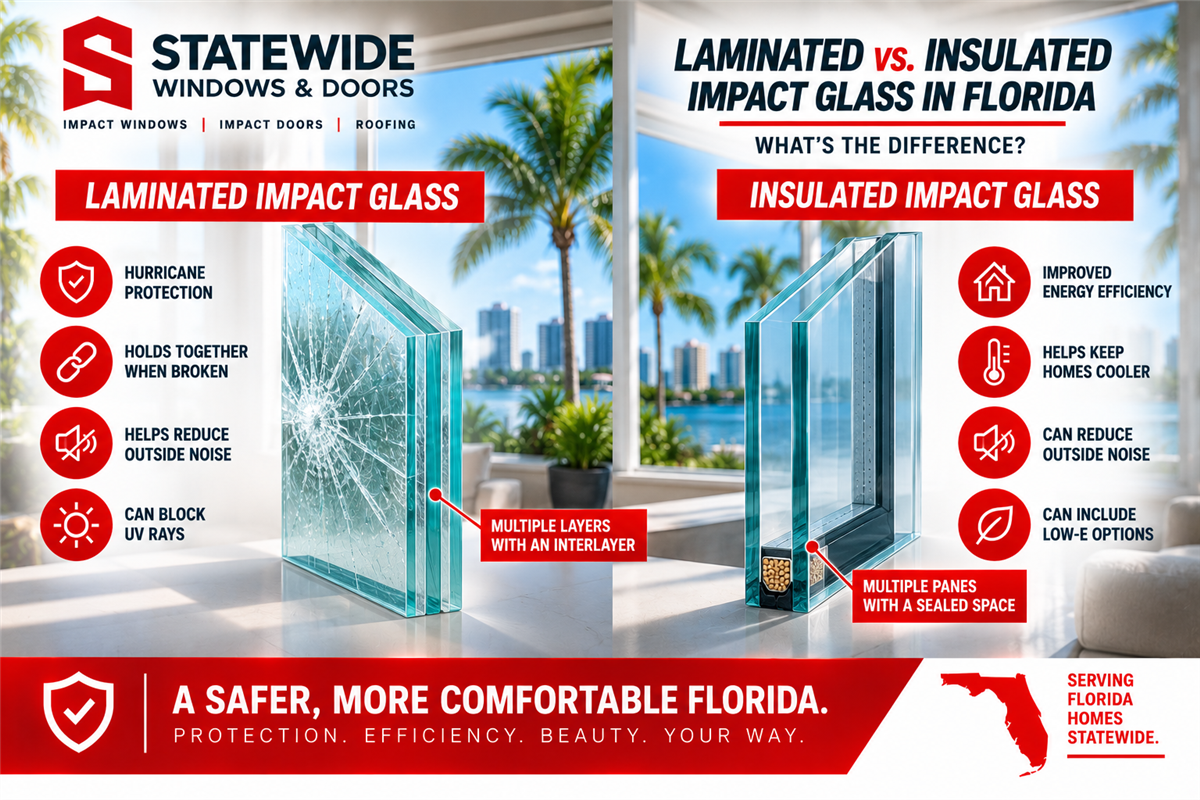
Argon gas and laminated glass serve very different purposes.
Laminated glazing generally uses multiple layers of glass bonded with an interlayer and is commonly part of impact-resistant window systems.
Argon gas can be placed inside the sealed space of an insulated glass unit to contribute to thermal performance.
They should not be treated as competing technologies.
Depending on the product, an impact window may incorporate laminated glazing as well as an insulated glass configuration containing argon.
Argon Gas vs. Insulated Impact Glass
Insulated impact glass describes a glass configuration that combines insulating construction with impact-resistant components.
Argon is one feature that may be used inside the sealed space of certain insulated glass units.
Therefore, an insulated impact window may contain argon, but homeowners should not assume every insulated impact window uses the same gas fill or glass construction.
Ask for the specifications of the exact product being proposed.
Argon Gas vs. Low-E Glass
Argon gas and Low-E glass can both contribute to energy performance, but they work differently.
Argon occupies the sealed space between panes in certain insulated glass units.
Low-E technology uses a specialized coating designed to influence thermal and solar energy transfer through the glazing.
Depending on the product, a window can potentially include both Low-E technology and argon gas.
Homeowners do not necessarily need to choose one instead of the other.
Does Argon Gas Make Impact Windows More Energy Efficient?
Argon can contribute to improved thermal performance when it is properly incorporated into an insulated glass system.
However, homeowners should compare the documented performance of the complete window rather than assuming that the word "argon" automatically means a window is highly energy efficient.
Useful measurements can include:
- U-factor
- Solar Heat Gain Coefficient
- Visible transmittance
- Other applicable energy-performance information
These measurements provide more useful comparison information than a single feature listed on a proposal.
Why U-Factor Matters When Comparing Argon-Filled Windows
U-factor relates to heat transfer through the complete window assembly.
If a contractor is presenting argon gas as an energy-efficiency upgrade, homeowners can ask how the proposed glass package affects the documented U-factor of the window.
This makes it easier to compare actual performance rather than relying only on marketing terminology.
Two windows that both contain argon gas can still have different overall performance characteristics.
Does Argon Gas Affect Solar Heat Gain?
Argon is primarily associated with insulating performance rather than being the only factor controlling solar heat gain.
For Florida homeowners concerned about intense sunlight, Solar Heat Gain Coefficient is another important measurement to review.
Glass coatings, glass construction, tint, orientation, and other characteristics can influence solar performance.
That is why homeowners should consider both U-factor and SHGC when comparing energy-efficient impact window options.
Why This Matters in Florida
Florida homes can experience long periods of hot weather, strong sunlight, high humidity, and substantial air-conditioning use.
Because of these conditions, energy-performance features can be an important part of an impact window comparison.
However, not every home has identical needs.
The importance of a particular glass upgrade can depend on:
- Window orientation
- Amount of direct sunlight
- Total glass area
- Home design
- Existing insulation
- HVAC system
- Homeowner priorities
- Budget
Will Argon-Filled Impact Windows Keep Your Home Cooler?
An energy-efficient glass package can contribute to the thermal performance of the building envelope, but homeowners should avoid expecting one feature to control indoor temperature by itself.
The temperature inside a Florida home can also be affected by:
- Roof and attic insulation
- HVAC efficiency
- Thermostat settings
- Air leakage
- Doors
- Wall construction
- Home orientation
- Shade
Argon-filled glazing should be viewed as one component of a complete energy-performance strategy.
Will Argon Gas Lower Your Electric Bill?
No contractor should guarantee a specific reduction in electricity costs simply because a homeowner chooses argon-filled windows.
Window upgrades can influence home energy performance, but utility bills depend on many variables.
If energy savings are a priority, compare the documented performance ratings of the available windows rather than relying on a promised percentage of savings.
Can You See Argon Gas Inside a Window?
No. Argon is not a visible window treatment.
A properly manufactured argon-filled insulated glass unit should not look like it contains a visible gas.
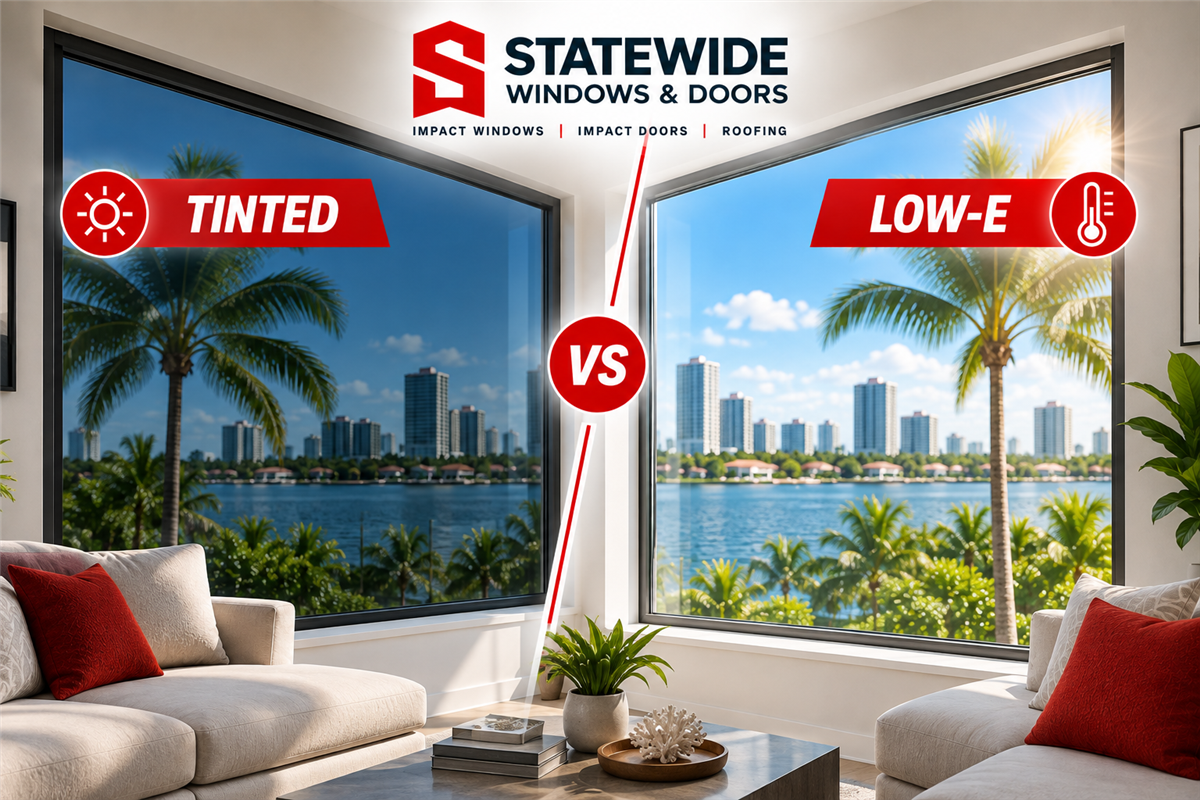
If homeowners want to compare the appearance of different glass packages, characteristics such as tint, Low-E coating, reflectivity, and visible transmittance are more relevant.
Does Argon Gas Make Windows Look Darker?
Argon itself does not create the type of visible tint homeowners may associate with darker glass.
If an argon-filled window appears darker or more reflective than another product, that difference can be related to other parts of the glass package.
Those may include:
- Low-E coatings
- Tint
- Glass color
- Reflectivity
- Multiple glazing layers
Homeowners who care about appearance should review actual glass samples whenever possible.
Does Argon Gas Improve Noise Reduction?
Argon gas should not be treated primarily as a soundproofing feature.
The acoustic performance of a window depends on the complete assembly and can be influenced by:
- Laminated glass
- Glass thickness
- Different pane thicknesses
- Airspace
- Frame construction
- Installation
- Other parts of the building envelope
If exterior noise is a major concern, homeowners should ask about documented acoustic performance for the specific window rather than assuming argon gas will make the home quiet.
Does Argon Gas Block UV Rays?
Argon gas should not be confused with technologies designed to influence ultraviolet or solar transmission.
UV performance depends more directly on the glass construction, laminated interlayers, coatings, and other glazing characteristics.
If reducing UV exposure is important, homeowners should ask for documented information about the specific glass package.
Does Argon Gas Affect Hurricane Protection?
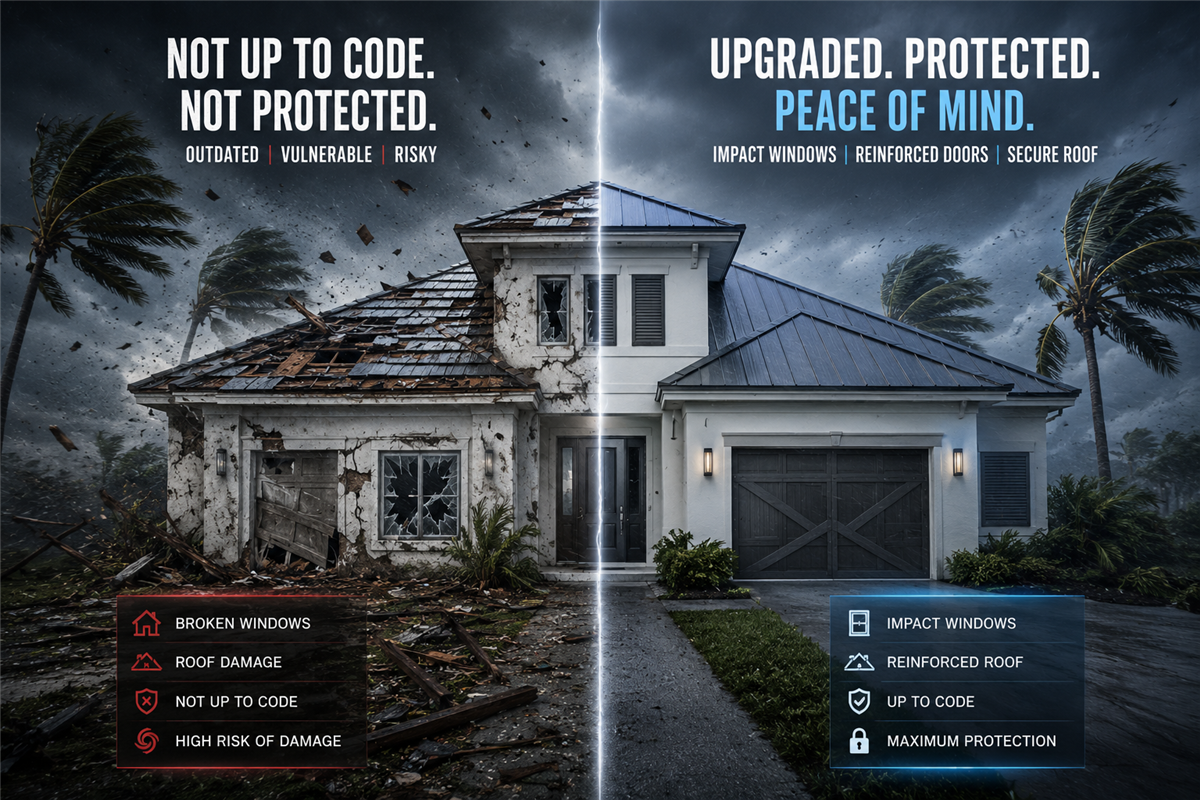
Argon gas should not be used as a measure of hurricane protection.
For Florida homeowners, hurricane-related product evaluation should focus on the complete approved impact window system.
Relevant factors can include:
- Impact-resistant glazing
- Applicable product approval
- Window dimensions
- Design pressure
- Frame
- Anchoring
- Installation
An argon-filled window can still be either an impact or non-impact product depending on the complete system.
Can Argon Gas Leak Out of a Window?
Argon is contained within a sealed insulated glass unit.
The long-term performance of that gas-filled space depends on the construction and condition of the sealed glass unit.
Homeowners should review the manufacturer's warranty for information related to insulated glass and seal performance.
If an insulated glass unit develops a seal-related problem, it should be evaluated according to the applicable warranty and service procedures.
What Happens if an Insulated Glass Seal Fails?
A seal problem in an insulated glass unit can affect the insulating space between the panes.
One possible sign of an insulated glass issue can be moisture or fogging between panes, although homeowners should have the condition evaluated rather than diagnosing the cause themselves.
The applicable remedy depends on the product, cause, age, and warranty coverage.
This is one reason homeowners should understand the glass warranty before purchasing impact windows.
Can Argon Gas Be Refilled?
Homeowners should not assume an installed insulated glass unit can simply be opened and refilled with argon like a tire.
Insulated glass units are manufactured as sealed assemblies.
If there is a problem with the sealed unit, the appropriate solution depends on the manufacturer, product design, warranty, and service evaluation.
How Long Does Argon Gas Last in Windows?
There is no responsible universal lifespan that applies to every argon-filled window.
Long-term performance depends on the insulated glass construction, seal system, manufacturing quality, environmental exposure, and other product-specific factors.
Homeowners should review manufacturer documentation and warranty terms for the exact product they are considering.
Does Florida Heat Affect Argon-Filled Windows?
Impact windows installed in Florida need to function in a demanding climate that can involve strong sunlight, heat, humidity, heavy rain, and coastal exposure.
Homeowners should choose products designed for the intended environment and follow manufacturer maintenance recommendations.
Rather than focusing only on whether argon gas is present, compare the performance and warranty of the complete window system.
Argon-Filled Windows for Waterfront Homes
Waterfront homes often contain large areas of glass designed to maximize views.
When a property has large picture windows or sliding glass doors, energy-performance characteristics can become an important consideration.
Homeowners should evaluate:
- Impact resistance
- U-factor
- Solar Heat Gain Coefficient
- Low-E options
- Insulated glass options
- Argon availability
- Visible transmittance
- Frame material
- Design pressure
No single feature should determine the entire window selection.
Argon Gas in Large Picture Impact Windows
Large picture windows can contain a substantial amount of glass and may receive significant solar exposure.
Depending on the available product, an insulated glass package may be worth considering for these openings.
However, homeowners should compare the actual energy-performance numbers and price difference before deciding whether a particular upgrade makes sense.
Large windows should also be evaluated for design pressure, product approval, dimensions, and installation requirements.
Argon Gas in Impact Sliding Glass Doors
Sliding glass doors can represent some of the largest glazed openings in a Florida home.
Depending on the product, homeowners may encounter different glass configurations and energy-efficiency options.
When comparing impact sliding glass doors, ask about:
- Laminated impact glazing
- Insulated glass options
- Argon gas availability
- Low-E options
- U-factor
- Solar Heat Gain Coefficient
- Design pressure
- Applicable product approval
Explore sliding glass door options from Statewide Windows & Doors.
Argon Gas in Aluminum vs. Vinyl Impact Windows
Statewide Windows & Doors offers both aluminum and vinyl impact window options depending on the project.
Argon availability depends on the specific glass configuration and product rather than simply whether the frame is aluminum or vinyl.
When comparing frame systems, homeowners should look at the complete product, including:
- Frame construction
- Glass package
- Energy-performance ratings
- Available dimensions
- Design pressure
- Appearance
- Maintenance
- Warranty
Argon-Filled Impact Windows in Miami-Dade and Broward County
Miami-Dade and Broward County are located within Florida's High-Velocity Hurricane Zone.
An energy-efficiency feature such as argon gas does not establish that a window is appropriate for an HVHZ project.
Homeowners should verify that the exact impact window and glass configuration are approved for the intended application.
A Miami-Dade Notice of Acceptance is one recognized approval pathway, while qualifying Florida Product Approvals specifically approved for HVHZ use can also apply.
The important question is whether the specific product, dimensions, glazing configuration, and installation are appropriate for the intended application.
Statewide Windows & Doors has completed thousands of projects across Miami-Dade and Broward County and has substantial experience with impact window and door projects in these markets.
Product Approval Still Matters With Energy-Efficient Glass
Homeowners should not assume that an upgraded glass package can automatically be substituted into any impact window.
The applicable product documentation can address specific configurations involving:
- Window type
- Dimensions
- Glass construction
- Frame
- Design-pressure information
- Installation requirements
- Conditions or limitations of use
The contractor should confirm that the proposed glass package is available within the appropriate product configuration.
For more information, read our guide to Miami-Dade NOA vs. Florida Product Approval.
Do Argon-Filled Impact Windows Cost More?
An upgraded insulated glass package can affect the cost of an impact window, but pricing varies by product.
Factors affecting the final price can include:
- Manufacturer
- Product series
- Window style
- Window dimensions
- Frame material
- Glass construction
- Low-E options
- Insulated glass options
- Installation conditions
- Overall project scope
Homeowners should compare the actual installed price difference rather than assuming argon gas has a standard upgrade cost.
Is Argon Gas Worth the Extra Cost in Florida?
It can be, depending on the specific product and homeowner's priorities.
If the argon-filled glass package provides documented thermal-performance improvements that matter to the homeowner, it may be worth considering.
However, the decision should be based on the performance of the complete window and the actual price difference.
Homeowners should avoid paying for an upgrade simply because the word "argon" sounds more advanced.
What Should You Compare Instead of Marketing Terms?
When comparing impact window quotes, homeowners should look beyond individual buzzwords.
Compare information such as:
- Exact window product
- Impact-resistant configuration
- Glass construction
- U-factor
- Solar Heat Gain Coefficient
- Low-E options
- Argon gas where applicable
- Frame material
- Design pressure
- Product approval
- Installation
- Warranty
- Total installed price
This creates a much more useful comparison between competing window proposals.
Questions to Ask About Argon-Filled Impact Windows
Before paying for an upgraded glass package, ask your contractor:
- Does this exact window contain argon gas?
- Is the window insulated?
- What is the complete glass construction?
- Does the glass include Low-E?
- What is the U-factor?
- What is the Solar Heat Gain Coefficient?
- How does this compare with the standard glass option?
- What documented performance improvement does the upgrade provide?
- Is this complete window impact-resistant?
- What product approval applies?
- Is the exact configuration appropriate for the HVHZ if applicable?
- What warranty applies to the insulated glass unit?
- What is the price difference?
Common Myths About Argon Gas in Impact Windows
"Argon Gas Makes a Window Hurricane-Resistant"
False. Argon is an energy-performance feature. Impact resistance depends on the complete approved window system.
"Every Double-Pane Impact Window Contains Argon"
Not necessarily. Glass construction and gas fill vary by product.
"Argon Gas Is the Same as Low-E"
False. Argon occupies the space between certain panes, while Low-E is a specialized coating.
"You Can See Argon Gas in the Window"
False. Argon itself does not create a visible tint.
"Argon Guarantees Lower Electric Bills"
False. Window performance can influence home energy use, but electricity costs depend on many factors.
"The Window With Argon Is Automatically the Better Window"
False. The complete window configuration, performance ratings, approval, installation, warranty, and cost all matter.
How Statewide Windows & Doors Helps Homeowners Compare Glass Packages
Statewide Windows & Doors helps Florida homeowners evaluate impact windows based on the needs of their property rather than relying on individual marketing terms.
Depending on the project and available products, our team can help homeowners compare:
- Impact-resistant glazing
- Laminated glass configurations
- Available insulated glass options
- Available argon-filled configurations
- Low-E options
- Aluminum and vinyl frames
- Window styles
- Energy-performance information
- Design-pressure considerations
- Applicable product documentation
- Permitting and installation requirements
Statewide has more than 25 years of combined industry experience and has completed thousands of projects across Miami-Dade and Broward County while serving homeowners throughout Florida.
Explore our impact window options, impact doors, completed projects, and Florida service areas.
Why Choose Statewide Windows & Doors?
Choosing impact windows involves more than finding a proposal with the longest list of glass upgrades.
Impact protection, glass construction, energy performance, product approval, design pressure, frame material, installation, permitting, warranty, and service should all be considered together.
Statewide Windows & Doors helps homeowners understand these differences and compare available options based on their property and priorities.
Our team also works across project management, permitting coordination, installation, inspections, and customer service to help manage the complete replacement process.
Final Words
Argon gas can be a useful component of certain energy-efficient impact window configurations, but it is important to understand what it actually does.
Argon is used within certain insulated glass units to contribute to thermal performance. It does not make a window impact-resistant, replace laminated impact glazing, or guarantee lower electricity bills.
For Florida homeowners, the better approach is to compare the complete window system.
Look at impact resistance, glass construction, U-factor, Solar Heat Gain Coefficient, Low-E options, product approval, design pressure, warranty, installation, and total cost.
Argon gas may be worth including when the complete glass package provides meaningful performance benefits for your home—but it should be one factor in the decision, not the entire reason for choosing a window.
Tags
Subscribe to Statewide Windows & Doors's Blog





Comments