 Free Estimate
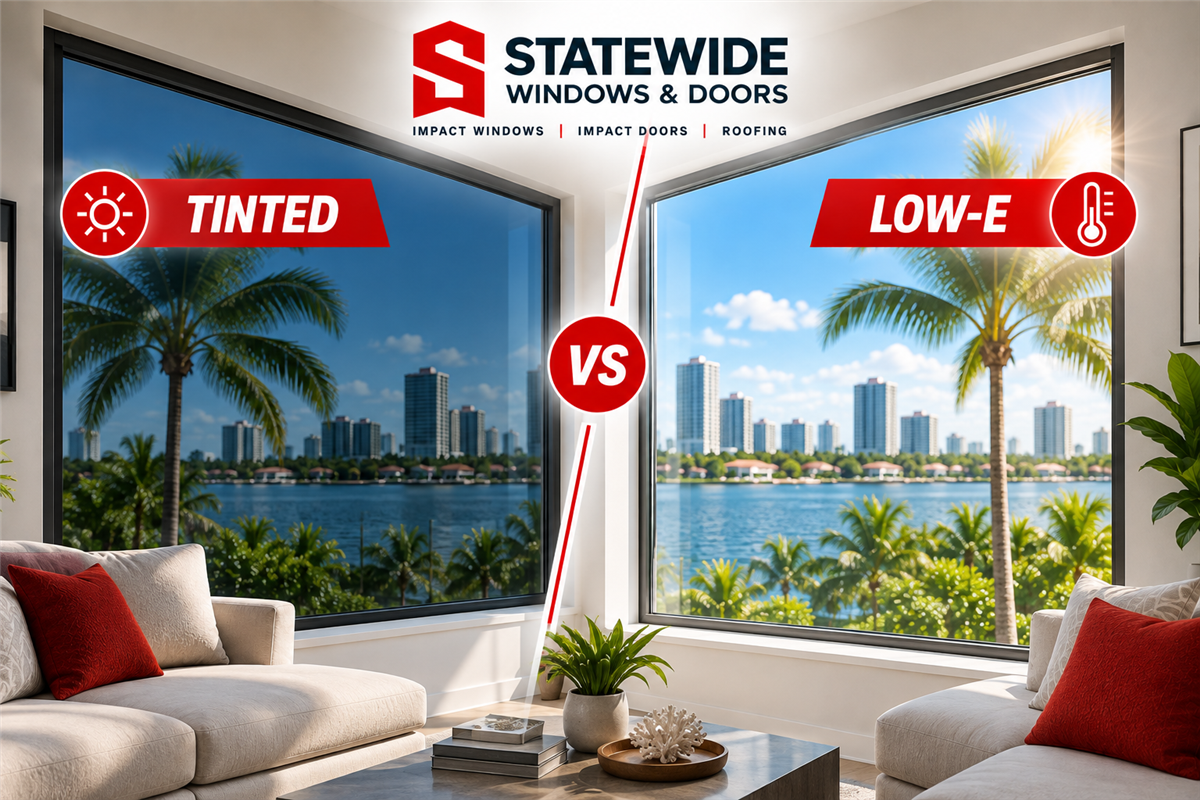
Florida homeowners comparing impact windows often focus on hurricane protection first, but glass options can also affect comfort, appearance, natural light, privacy, and energy performance.
Two options homeowners may encounter while comparing impact window quotes are tinted glass and Low-E glass.
Although both can influence how sunlight interacts with a window, they are not the same thing.
Tinted glass primarily changes the amount and appearance of light passing through the glazing, while Low-E technology uses a specialized coating designed to influence thermal and solar performance.
Depending on the specific product, an impact window may offer tint options, Low-E options, or a glass configuration incorporating multiple features.
So which option makes more sense for a Florida home?
Here is what homeowners should understand before choosing.
What Is Tinted Window Glass?
Tinted glass is designed to alter the amount or appearance of light passing through the window.
Depending on the specific product, tint can affect:
- Visible light entering the home
- Glass appearance
- Glare
- Privacy during certain lighting conditions
- Solar performance
Tint options vary significantly between manufacturers and glass packages.
Homeowners should review actual samples and product information rather than assuming all tinted impact windows look or perform the same.
What Is Low-E Glass?
Low-E stands for low emissivity.
Low-E glass incorporates a specialized coating designed to influence the transfer of heat energy through the glazing.
Depending on the coating and glass configuration, Low-E technology can be used as part of a window system designed to improve thermal or solar performance.
The coating can be difficult to see compared with a visibly dark tint, which sometimes causes homeowners to underestimate its importance.
Is Low-E Glass the Same as Tinted Glass?
No.
This is one of the most important distinctions homeowners should understand.
A visible tint changes the appearance and light transmission characteristics of the glass.
A Low-E coating is designed around thermal and solar performance.
Although both can affect solar energy entering a home, they accomplish that through different glass technologies.
Homeowners should not use the terms interchangeably.
Does Darker Glass Automatically Block More Heat?
Not necessarily.
It is easy to look at two windows and assume the darker one must provide better energy performance.
Appearance alone does not tell homeowners enough.
Instead, compare documented performance information such as:
- Solar Heat Gain Coefficient
- U-factor
- Visible transmittance
- Glass construction
- Low-E coating
A relatively clear-looking glass package may have energy-performance characteristics that cannot be determined simply by looking at it.
Why Glass Selection Matters So Much in Florida
Florida homes can receive intense sunlight throughout much of the year.
Windows facing strong sun exposure can influence indoor comfort and the amount of solar heat entering the home.
Glass selection can be especially important for:
- Large picture windows
- Sliding glass doors
- West-facing openings
- South-facing openings
- Waterfront homes with large areas of glass
- Rooms with substantial direct sunlight
The best glass package can vary from one property—and even one side of the same property—to another.
What Is Solar Heat Gain Coefficient?
Solar Heat Gain Coefficient, commonly abbreviated as SHGC, relates to the amount of solar radiation that passes through a window.
This is an important number for Florida homeowners to understand when comparing energy-performance options.
Rather than assuming that a particular tint or coating is better, homeowners can compare the documented SHGC of the complete window configuration.
This provides more useful information than appearance alone.
What Is U-Factor?
U-factor relates to heat transfer through a window assembly.
It is another performance measurement homeowners may encounter when comparing window products.
U-factor and SHGC measure different aspects of window performance.
Neither should be confused with impact resistance.
An impact window should be evaluated for hurricane-related requirements separately from its energy-performance characteristics.
What Is Visible Transmittance?
Visible transmittance relates to the amount of visible light that passes through a window.
This can matter when homeowners want to balance energy performance with natural daylight.
A homeowner may want to reduce solar heat without making a room feel unnecessarily dark.
Comparing visible transmittance alongside SHGC can help homeowners better understand that tradeoff.
Which Is Better for Reducing Glare?
Tinted glass can be useful when glare is an important concern because it can reduce the amount of visible light entering through the glazing depending on the tint.
However, the exact result depends on:
- Tint type
- Tint darkness
- Window orientation
- Time of day
- Outdoor conditions
- Interior finishes
Low-E coatings can also influence solar performance, but homeowners should not assume every Low-E option provides the same visible-light characteristics as tinted glass.
Which Is Better for Keeping a Florida Home Cooler?
There is no responsible universal answer based only on the words "tinted" or "Low-E."
The better comparison is between the documented performance of the specific glass packages available.
For Florida homeowners, SHGC can be particularly useful when evaluating how a window addresses solar heat gain.
The complete window also matters, including the frame, glass construction, coatings, and installation.
Will Low-E Windows Lower Your Electric Bill?
Energy-efficient windows can influence the thermal performance of a home, but homeowners should be cautious about guaranteed utility-bill savings.
Electricity use depends on many factors beyond windows, including:
- HVAC efficiency
- Thermostat settings
- Roof and attic insulation
- Home size
- Window area
- Air leakage
- Occupancy
- Appliances
- Weather
A contractor should not promise a specific percentage reduction in electric bills simply because Low-E glass is installed.
Can Tinted Impact Windows Improve Privacy?
Tinted glass can affect visibility through a window, particularly depending on lighting conditions.
However, homeowners should not treat tint as a complete privacy solution.
During the daytime, certain glass may make it more difficult to see inside from a brighter exterior environment.
At night, when interior lights are on and the exterior is dark, that relationship can change significantly.
Homeowners who require privacy should consider window treatments or other appropriate privacy solutions rather than relying entirely on tint.
Does Low-E Glass Provide Privacy?
Low-E glass is not primarily a privacy product.
Some Low-E glass configurations may have a slightly different appearance or reflectivity, but homeowners should not assume the coating prevents people from seeing into the home.
If privacy is a priority, ask about the appearance of the actual glass package and consider additional privacy options.
Can Impact Windows Have Both Tint and Low-E?
Depending on the manufacturer and product configuration, homeowners may encounter glass packages that incorporate multiple characteristics.
A glass configuration may potentially combine impact-resistant laminated glazing with energy-performance coatings and other available glass features.
The exact construction varies by product.
This is why homeowners should ask for the specific glass makeup instead of treating "tinted," "Low-E," and "impact" as mutually exclusive categories.
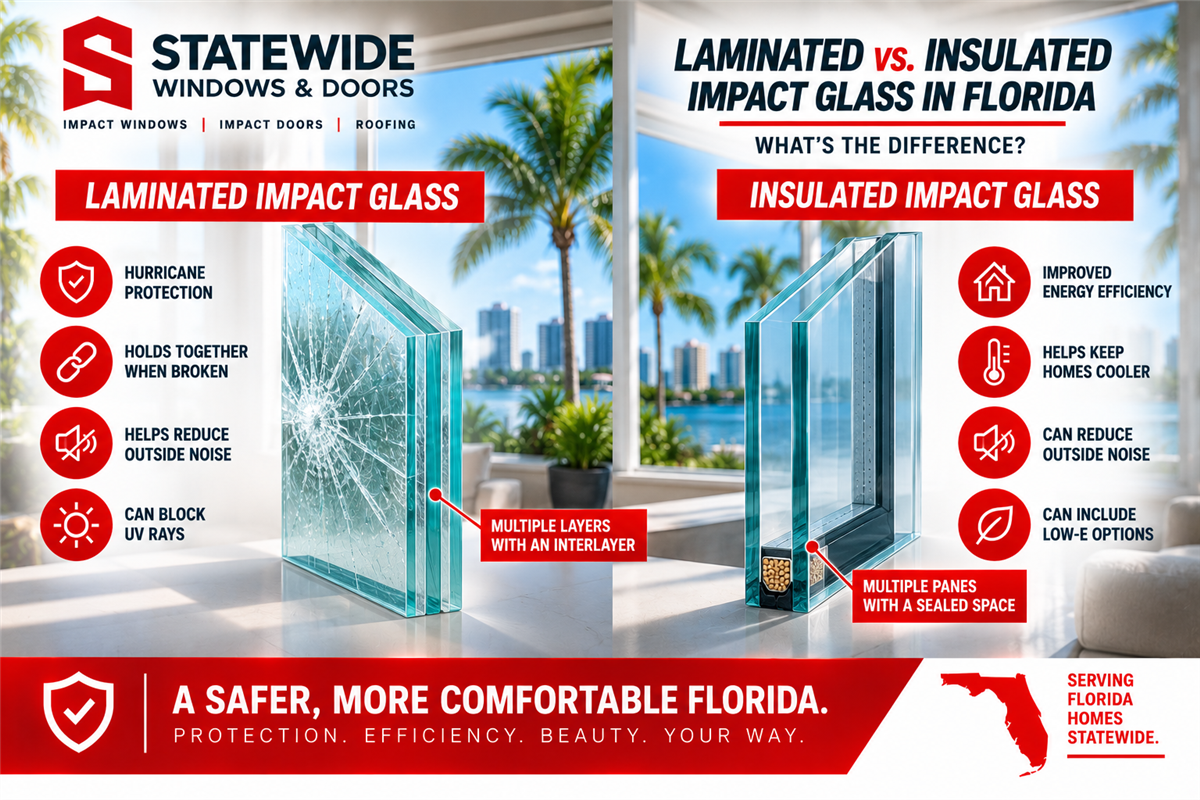
Low-E and Laminated Impact Glass
Laminated glazing is commonly used as part of impact-resistant window systems.
Low-E technology addresses a different performance characteristic.
Depending on the product, a laminated impact glass configuration may also incorporate a Low-E coating.
The availability and location of that coating within the glass assembly depend on the manufacturer's design.
Low-E and Insulated Impact Glass
Insulated impact glass configurations can also potentially incorporate Low-E technology.
This allows the window system to combine impact-resistant glazing with features designed to address thermal and solar performance.
Homeowners interested in both hurricane protection and energy performance should ask which configurations are available for the specific windows being proposed.
Tinted Glass and Laminated Impact Glass
Tint can also be incorporated into certain laminated impact glazing configurations depending on the product.
The exact appearance can vary considerably.
Before ordering tinted impact windows for an entire home, homeowners should review actual samples whenever possible.
Glass viewed in a small sample can also appear different once installed across a large opening, so consider the overall appearance of the home.
What Tint Colors Are Available?
Available glass colors and tint options depend on the manufacturer and product series.
Options may vary in tone, darkness, reflectivity, and visible-light transmission.
Homeowners should never assume a particular tint is available with every impact window product.
The selected glass configuration also needs to remain within the applicable approved product options.
Does Tinted Glass Change the Exterior Appearance of a Home?
Yes, it can.
Tinted or reflective-looking glass may noticeably influence a home's exterior appearance, especially when used across many openings.
Before choosing a tint, consider:
- Exterior paint color
- Roof color
- Frame color
- Architectural style
- Existing windows
- HOA or condominium requirements
Replacing only some windows with noticeably different glass can also create an inconsistent exterior appearance.
Does an HOA Need to Approve Tinted Impact Windows?
Possibly.
Some Florida HOAs and condominium associations regulate exterior appearance, which may include:
- Glass color
- Reflectivity
- Frame color
- Window style
- Grid patterns
Homeowners should review applicable association requirements before ordering a visibly different glass package.
HOA approval and building permit approval are separate processes.
Tinted vs. Low-E Glass for Condominiums
Condominium projects can require additional coordination because exterior uniformity may be important to the association.
Before selecting tinted or Low-E impact windows, condominium owners should determine whether the association has requirements for:
- Glass appearance
- Color
- Reflectivity
- Frame material
- Frame color
- Approved window configurations
The glass package should be selected only after applicable project and association requirements are understood.
Which Glass Is Better for Waterfront Homes?
Florida waterfront homes frequently have large windows and sliding glass doors designed to maximize outdoor views.
This can create a balancing act between:
- Natural light
- View clarity
- Solar heat gain
- Glare
- Appearance
- Energy performance
A very dark tint may change the appearance of a waterfront view, while a carefully selected Low-E glass package may provide different solar-performance characteristics without necessarily creating the same visual effect.
The best option depends on the actual products and homeowner's priorities.
Which Glass Is Better for Large Picture Windows?
Large picture windows can expose a substantial glass area to sunlight.
For these openings, homeowners should pay close attention to the complete glass package.
Useful information can include:
- SHGC
- U-factor
- Visible transmittance
- Low-E coating
- Tint appearance
- Impact glazing configuration
Large windows can make relatively small differences in glass appearance much more noticeable once installed.
Tinted vs. Low-E Glass for Sliding Glass Doors
Sliding glass doors can represent some of the largest glazed areas in a Florida home.
Because of their size, glass selection can have a noticeable effect on both appearance and solar exposure.
When comparing impact sliding glass doors, homeowners should ask about:
- Impact glazing
- Available tint options
- Low-E options
- Insulated glass options
- SHGC
- U-factor
- Visible transmittance
- Applicable product approval
Explore sliding glass door options from Statewide Windows & Doors.
Which Glass Is Better for West-Facing Windows?
West-facing windows can receive intense afternoon sunlight in Florida.
For these openings, solar-performance characteristics can be especially relevant.
Instead of simply choosing the darkest tint available, homeowners should compare the SHGC, visible transmittance, and other documented information for the available glass packages.
This can help balance solar performance with natural light and appearance.
Can You Use Different Glass Options on Different Sides of a Home?
Potentially, depending on the products, homeowner preferences, exterior appearance, and applicable HOA or condominium requirements.
Different elevations of a home can experience different amounts of sunlight.
However, using visibly different glass can affect exterior consistency.
If homeowners are considering different glass packages by elevation, they should discuss both performance and appearance with their contractor before ordering.
Does Low-E Glass Look Green or Blue?
Different coatings and glass constructions can produce subtle differences in color, reflectivity, or appearance.
The exact appearance varies by product and lighting conditions.
Homeowners who care strongly about glass color should review physical samples when available rather than relying solely on online photographs.
Outdoor lighting, interior lighting, sky reflection, landscaping, and viewing angle can all influence how installed glass appears.
Does Low-E Glass Affect Houseplants?
Different glass packages transmit different amounts of visible light and other portions of solar energy.
Homeowners with indoor plants near large windows should consider the actual visible transmittance and glass characteristics of the proposed product.
The effect on a particular plant can also depend on the plant species, window orientation, distance from the glass, and indoor conditions.
A window contractor should not make guaranteed claims about how a particular plant will respond.
Can Tint Protect Furniture and Flooring From Fading?
Different glass configurations can reduce portions of solar and ultraviolet exposure that contribute to fading, but fading is influenced by multiple factors.
Homeowners concerned about interior furnishings should ask about the documented glass performance of the exact product.
No window should be described as guaranteeing that furniture, flooring, artwork, or fabrics will never fade.
Does Low-E Glass Block UV?
Low-E coatings and laminated glazing can influence portions of solar and ultraviolet transmission depending on the glass construction.
The exact performance varies.
If UV reduction is important, homeowners should ask for documented information for the specific glass package rather than relying on a generic claim about all Low-E windows.
Which Glass Is Better for Noise Reduction?
Tint and Low-E coatings are not primarily acoustic technologies.
Noise reduction depends more heavily on factors such as:
- Laminated glazing construction
- Glass thicknesses
- Insulated glass configuration
- Frame construction
- Installation
- Other parts of the building envelope
Homeowners concerned about exterior noise should compare the complete window system rather than choosing between tint and Low-E based on noise alone.
Tinted and Low-E Impact Windows in Miami-Dade and Broward County
Miami-Dade and Broward County are located within Florida's High-Velocity Hurricane Zone.
Energy-performance upgrades do not replace the need to verify that the complete impact window configuration is appropriate for its intended HVHZ application.
The glass option needs to be part of the applicable approved product configuration.
A Miami-Dade Notice of Acceptance is one recognized approval pathway, while qualifying Florida Product Approvals specifically approved for HVHZ use can also apply.
The key question is whether the exact window, dimensions, glazing configuration, and installation are approved for the intended application.
Statewide Windows & Doors has completed thousands of projects across Miami-Dade and Broward County and has substantial experience with impact window and door projects in these markets.
Product Approval Still Matters When Choosing Glass
Homeowners should not assume that every available-looking glass option can simply be substituted into an impact window.
Impact windows are approved as specific products and configurations.
Applicable documentation can address:
- Window type
- Dimensions
- Glass configuration
- Frame
- Design-pressure information
- Installation requirements
- Conditions or limitations of use
The contractor should confirm that the selected glass package is available within the appropriate product configuration.
For more information, read our guide to Miami-Dade NOA vs. Florida Product Approval.
Does Choosing Low-E or Tint Affect Design Pressure?
Homeowners should avoid assuming that glass options can be changed independently without considering the approved configuration.
The applicable performance information should be reviewed for the exact product and glazing option being proposed.
Window dimensions, glass construction, frame, and other product details can all be relevant.
This is another reason a detailed quote should identify more than simply "impact windows."
Do Tinted or Low-E Impact Windows Cost More?
Glass upgrades can affect window pricing, but there is no universal price difference that applies to every product.
Cost can depend on:
- Manufacturer
- Product series
- Window dimensions
- Window style
- Frame material
- Glass construction
- Low-E coating
- Tint selection
- Insulated glass options
- Installation conditions
Homeowners should compare the actual price difference between available configurations and understand what performance characteristics they receive for the additional cost.
Is Low-E Glass Worth It in Florida?
Low-E glass can be worth considering in Florida because solar and thermal performance are important concerns in a hot, sunny climate.
However, the value of a specific upgrade depends on the product, home, orientation, amount of glass, price difference, and homeowner's goals.
Rather than assuming every home needs the most expensive Low-E package, compare the documented performance of the available options.
Is Tinted Impact Glass Worth It?
Tinted impact glass may appeal to homeowners who value reduced visible light, glare control, a particular exterior appearance, or other characteristics of the specific tint.
Whether it is worth the additional cost depends on the homeowner's priorities.
Homeowners should also make sure they are comfortable with how the glass looks from both inside and outside the home.
Questions to Ask Before Choosing Impact Window Glass
Before selecting tinted or Low-E impact glass, ask your contractor:
- What exact glass packages are available?
- Does this option include Low-E?
- Does it have a visible tint?
- Can I see a glass sample?
- What is the Solar Heat Gain Coefficient?
- What is the U-factor?
- What is the visible transmittance?
- Is the glass laminated, insulated, or both?
- Is this exact configuration impact-resistant?
- Is it appropriate for my location?
- Is it approved for the HVHZ if applicable?
- Will the glass noticeably change the exterior appearance?
- Does my HOA need to approve the glass color?
- How much does the upgrade cost?
- What documented benefit am I receiving for that additional cost?
Common Myths About Tinted and Low-E Impact Windows
"Tinted Glass and Low-E Glass Are the Same"
False. They are different glass technologies and should not be used as interchangeable terms.
"The Darkest Window Is Always the Most Energy Efficient"
False. Appearance alone does not determine overall energy performance.
"Low-E Makes a Window Impact-Resistant"
False. Low-E relates to thermal and solar performance. Impact resistance depends on the complete approved window system.
"Tint Gives You Complete Privacy"
False. Visibility through tinted glass changes depending on interior and exterior lighting conditions.
"Low-E Windows Guarantee Lower Electric Bills"
False. Windows can influence home energy performance, but actual utility costs depend on many factors.
"Every Impact Window Has the Same Low-E Option"
False. Available glass packages vary by manufacturer, product series, window style, dimensions, and configuration.
Tinted or Low-E Impact Glass: Which Is Better?
Neither option is universally better because they address different homeowner priorities.
Tinted glass may be worth considering when visible-light reduction, glare, privacy characteristics, or a particular appearance are important.
Low-E glass may be worth considering when homeowners are focused on documented thermal and solar-performance characteristics.
In some products, homeowners may not need to choose one or the other because the available glass package can incorporate multiple features.
The better approach is to compare the exact glass configurations available for the impact window being proposed.
How Statewide Windows & Doors Helps Homeowners Compare Glass Options
Statewide Windows & Doors helps Florida homeowners compare impact window and door options based on their property, performance priorities, and design preferences.
Depending on the project and available products, our team can help homeowners evaluate:
- Impact-resistant glazing
- Available Low-E options
- Available tint options
- Laminated glass configurations
- Available insulated glass configurations
- Aluminum and vinyl frames
- Window styles
- Energy-performance information
- Design-pressure considerations
- Applicable product documentation
- Permitting and installation requirements
Statewide has more than 25 years of combined industry experience and has completed thousands of projects across Miami-Dade and Broward County while serving homeowners throughout Florida.
Explore our impact window options, impact doors, completed projects, and Florida service areas.
Why Choose Statewide Windows & Doors?
Impact window selection involves much more than choosing the darkest glass or the option with the most technical features.
Hurricane protection, glass construction, energy performance, frame material, product approval, design pressure, permitting, installation, warranty, appearance, and service should all be considered together.
Statewide Windows & Doors helps homeowners understand these differences and compare available products based on the needs of their property.
Our team also works across project management, permitting coordination, installation, inspections, and customer service to help manage the complete replacement process.
Final Words
Tinted and Low-E impact glass can both be useful options for Florida homes, but they are not the same thing.
Tinted glass primarily changes visible-light and appearance characteristics, while Low-E technology is designed to influence thermal and solar performance.
Rather than judging glass by how dark or reflective it looks, compare documented information such as Solar Heat Gain Coefficient, U-factor, visible transmittance, glass construction, and applicable product approval.
For many Florida homeowners, the best solution may be a glass package that balances hurricane protection, solar performance, natural light, appearance, comfort, and budget.
The goal is not simply to choose tinted or Low-E glass. It is to choose the complete approved impact window configuration that makes sense for your home.
Tags
Subscribe to Statewide Windows & Doors's Blog



Comments