 Free Estimate
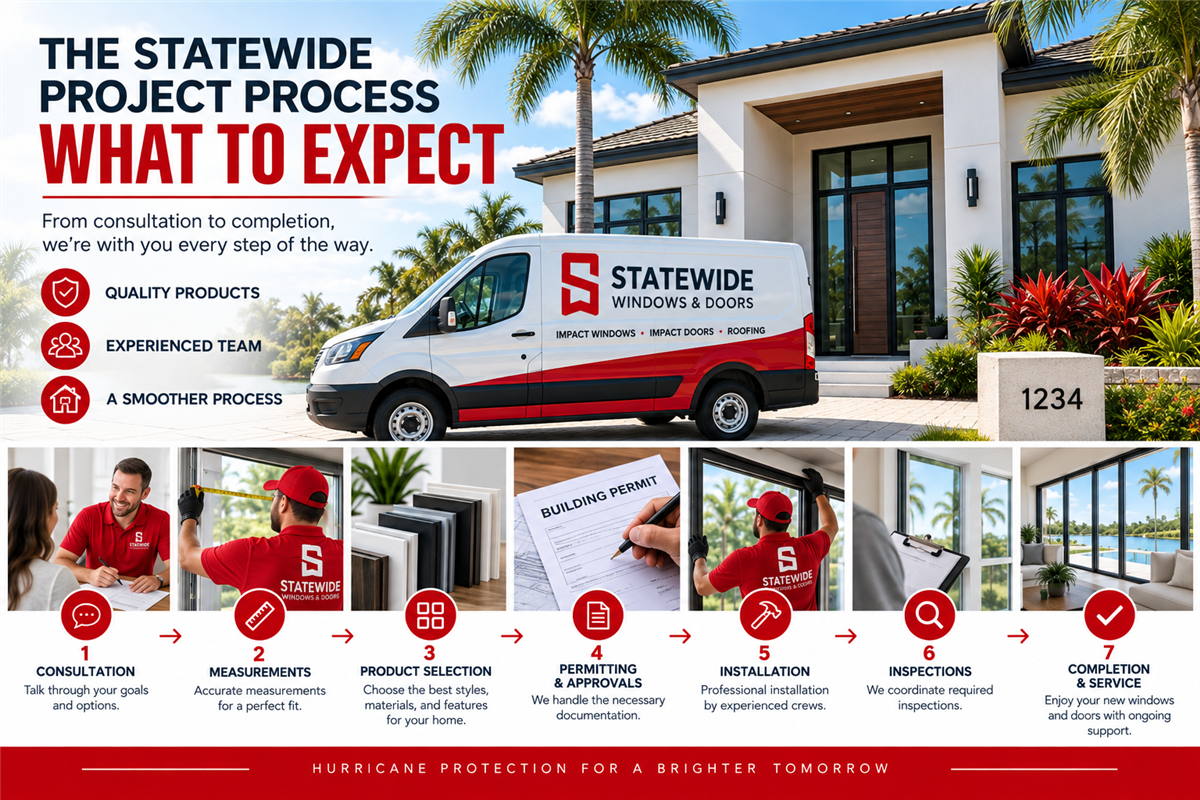
If you're considering Statewide Windows & Doors for impact windows or doors, you may be wondering what actually happens after you decide to move forward.
Replacing windows and doors is not a one-day transaction. Depending on the project, there can be several steps between the initial consultation and final completion.
Those steps may include product selection, measurements, project documentation, HOA approval where applicable, permitting, production, scheduling, installation, inspections, and final service or adjustments.
Understanding this process before signing a contract can help Florida homeowners know what to expect and which questions to ask along the way.
At Statewide Windows & Doors, different departments and team members help coordinate the various stages of a project from the initial consultation through installation and completion.
Here is a closer look at what homeowners can generally expect during a Statewide impact window and door project.
Step 1: Initial Consultation
The process begins with understanding what the homeowner wants to accomplish.
Some homeowners contact Statewide because their existing windows are old or difficult to operate. Others are primarily interested in hurricane protection, energy performance, noise reduction, security, appearance, or replacing several exterior openings at the same time.
During the initial consultation, the goal is to understand the property and discuss potential options.
Depending on the project, that conversation may include:
- How many windows need replacement
- Whether doors are included
- Existing window styles
- Preferred replacement styles
- Frame material
- Glass options
- Homeowner priorities
- Budget considerations
- Potential financing options
- General project expectations
This is also an opportunity for homeowners to ask questions about Statewide, the installation process, project management, permitting, and service.
Step 2: Evaluating the Existing Windows and Doors
Before replacement products can be ordered, the existing openings need to be evaluated.
Every home is different.
Even homes that appear similar from the outside can have different opening sizes, construction conditions, window configurations, and project requirements.
Existing openings may include:
- Single-hung windows
- Horizontal roller windows
- Picture windows
- Casement windows
- Architectural windows
- Sliding glass doors
- Entry doors
- French doors
Understanding the existing conditions helps determine what replacement options may be appropriate.
Step 3: Choosing Your Window and Door Options
Impact windows are not one universal product.
Homeowners may have several decisions to make depending on the project.
Window Style
Different window styles provide different combinations of ventilation, appearance, operation, and available opening sizes.
Common options can include:
- Single-hung windows
- Horizontal rollers
- Casement windows
- Picture windows
- Fixed windows
- Specialty or architectural windows
Frame Material
Statewide offers both vinyl and aluminum impact window options depending on the project.
Each material has different characteristics, and the appropriate choice depends on the homeowner's priorities and the requirements of the opening.
Glass Options
Depending on the product selected, homeowners may also have different glass packages available.
Options can potentially include:
- Laminated impact glass
- Insulated glass configurations
- Low-E coatings
- Tinted glass options
- Other available performance or appearance options
The exact options available depend on the product being proposed.
Step 4: Understanding the Exact Product Being Proposed
Before signing a window or door contract, homeowners should understand exactly what they are purchasing.
Do not rely only on a general description such as "hurricane windows" or "impact glass."
Ask for details about the complete system.
Useful questions include:
- Who manufactures the product?
- What product series is being proposed?
- What frame material is included?
- What glass configuration is included?
- What color and finish are included?
- What product approval applies?
- What warranty applies?
- What is included in the installation?
These details also make it easier to compare proposals from different contractors accurately.
Step 5: Final Measurements
Accurate measurements are critical to a successful window and door replacement project.
Replacement windows are selected and ordered based on the dimensions and conditions of the openings where they will be installed.
Final measurements help confirm the information needed for the project before products move into production or ordering.
This stage can also help identify conditions that may require additional consideration before installation.
Because openings can vary throughout a home, each one should be evaluated individually rather than assuming every window of the same general appearance has identical dimensions.
Step 6: HOA or Condominium Approval When Required
Some Florida homeowners live in communities where an HOA or condominium association has rules governing exterior modifications.
Association approval is separate from a government building permit.
Depending on the community, the association may have requirements involving:
- Frame colors
- Window styles
- Exterior appearance
- Door designs
- Architectural applications
- Product documentation
- Contractor information
Statewide's organization includes personnel who assist with HOA coordination for applicable projects.
However, requirements differ between associations, so homeowners should also review their own community documents and understand any responsibilities they may have.
Step 7: Permitting
Permitting is an important part of many Florida impact window and door projects.
Requirements vary depending on the property, project, and local jurisdiction.
The permitting process can involve submitting information about the contractor, property, proposed products, installation, and applicable product approvals.
Statewide has dedicated personnel involved in permitting and project coordination.
Depending on the project, permitting may involve:
- Preparing permit documentation
- Providing applicable product information
- Submitting required paperwork
- Responding to requests for additional documentation
- Coordinating required inspections
- Following the permit toward completion
Permit processing time can vary between jurisdictions and projects.
Homeowners should be cautious of anyone who promises that every permit will be approved within an exact number of days.
Why Permitting Can Affect the Project Timeline
Once paperwork is submitted, parts of the process may depend on the local permitting authority.
Some applications may move quickly, while others can require additional review or documentation.
Timing can also be affected by:
- Municipality workload
- Project complexity
- Documentation requirements
- Corrections or revisions
- HOA requirements
- Property-specific conditions
A permitting delay does not necessarily mean that windows have been forgotten or that installation has been abandoned.
Understanding where the project is in the process can help homeowners distinguish between permitting, production, scheduling, and installation.
Step 8: Product Approval Review
Impact windows and doors used in Florida need to be evaluated based on the requirements applicable to the project.
Product approval documentation can contain important information about approved configurations, sizes, pressures, anchoring, and installation requirements.
For homeowners in Miami-Dade and Broward County, this deserves particular attention because both counties are within Florida's High-Velocity Hurricane Zone (HVHZ).
A Miami-Dade Notice of Acceptance, commonly called a Miami-Dade NOA, is one recognized approval pathway.
A qualifying Florida Product Approval specifically approved for HVHZ use may also be applicable.
The important question is whether the specific product and configuration proposed for the project is approved for its intended application.
Step 9: Production and Ordering
Once the necessary project details are established, the windows and doors move into the ordering and production stage.
Impact windows and doors are not always products that can simply be taken from a warehouse shelf.
Products may need to be manufactured or configured for the specific openings.
Production timing can be affected by:
- Manufacturer schedules
- Product type
- Window dimensions
- Door dimensions
- Frame material
- Glass configuration
- Custom options
- Seasonal demand
For this reason, homeowners should treat project timelines as estimates rather than guaranteed manufacturing dates unless their contract specifically provides otherwise.
Step 10: Project Management and Communication
As a project moves from the initial sale toward installation, homeowners may begin communicating with different members of the Statewide team.
This is because Statewide uses dedicated departments for different stages of the project.
Depending on the project, homeowners may interact with personnel involved in:
- Sales
- Measurements
- Production
- Permitting
- HOA coordination
- Project management
- Scheduling
- Installation
- Customer service
The person who initially helped select the windows may not be the same person coordinating the installation.
That is normal for a larger organization with dedicated project departments.
Step 11: Scheduling Installation
Once the project reaches the appropriate stage and the products are ready, installation can be scheduled.
The timing depends on the individual project.
Scheduling can be influenced by:
- Product availability
- Permit status
- HOA approval where applicable
- Installation crew availability
- Project size
- Weather
- Property access
Florida weather can occasionally affect installation scheduling, particularly when heavy rain or severe weather would interfere with safely opening exterior areas of the home.
Step 12: Preparing Your Home for Installation
Before installation day, homeowners may be asked to prepare the areas surrounding the windows and doors.
Preparation may include:
- Moving furniture away from windows
- Removing fragile objects
- Removing window treatments when instructed
- Clearing access to doors
- Securing pets
- Providing access to necessary areas
Your project team can provide instructions based on the scope of your particular installation.
Taking time to prepare can help installation crews work more efficiently and protect belongings near the work areas.
Step 13: Removing the Existing Windows and Doors
Installation begins with removing the existing products from the openings being replaced.
The exact removal process depends on the existing window or door, surrounding materials, and construction of the home.
Crews may work through the property in stages rather than removing every opening at once.
Once an existing product is removed, the opening can be prepared for the replacement system.
Step 14: Preparing the Openings
The condition of the opening matters.
After an old window or door is removed, installers can evaluate the exposed area and prepare it for the replacement product.
This can involve cleaning the opening and addressing conditions necessary for the approved installation.
Occasionally, previously hidden conditions may become visible only after an existing product is removed.
If unexpected damage or another condition is discovered, the appropriate next step depends on the specific situation.
Step 15: Installing the New Impact Windows and Doors
The new impact products are then positioned and installed according to the requirements applicable to the specific system and opening.
A properly installed impact window involves more than placing glass into an opening.
The complete installation can involve:
- Window or door frame
- Laminated impact glass
- Anchors
- Fasteners
- Hardware
- Sealants
- Opening conditions
- Required installation spacing
These components need to work together as a complete system.
That is why professional installation is such an important part of an impact window or door project.
Step 16: Sealing and Finishing
After the new products are installed, the openings need to be properly sealed and finished according to the project's requirements.
Depending on the installation, finishing work may involve:
- Exterior sealant
- Interior sealant
- Caulking
- Trim work
- Minor finishing around openings
- Cleaning the installed products
The exact finishing included should be described in the project's scope of work.
Homeowners should review their proposal before installation so they understand which finishing services are included.
Step 17: Cleanup
Window replacement is construction work, so some dust and debris should be expected during installation.
Professional crews should take reasonable steps to protect the property and clean the work areas after installation.
Cleanup may include:
- Removing old window materials
- Collecting installation debris
- Cleaning work areas
- Removing protective materials
- Basic cleaning of newly installed products
Statewide customer reviews frequently discuss installation crews, cleanliness, protection of furniture, and cleanup as part of their project experiences.
Step 18: Required Inspections
For permitted projects, installation may be followed by one or more required inspections.
The exact inspection process depends on the jurisdiction and project.
An inspector may review aspects of the completed work for compliance with applicable permit requirements.
Homeowners should ask:
- What inspection is required?
- Who schedules the inspection?
- Does someone need to be home?
- What happens if a correction is requested?
- How is final permit completion confirmed?
Inspection requirements can vary, so homeowners should rely on project-specific information rather than assuming every installation follows the same process.
What Happens If an Inspection Requires a Correction?
A requested correction does not automatically mean an entire installation is defective.
Construction inspections can identify items that require additional work, documentation, or adjustment before the permit can move toward completion.
If a correction is required, the specific issue should be reviewed and addressed appropriately.
Homeowners should ask their project contact what was requested and what the next step will be.
Step 19: Final Project Completion
Once installation and applicable inspection requirements are complete, the project moves toward final completion.
At this stage, homeowners should become familiar with their new windows and doors.
Check:
- How windows open and close
- How locks operate
- How sliding doors operate
- How screens are removed or adjusted
- Any maintenance recommendations
- Warranty documentation
- Who to contact for future service
If you have questions about operating a new product, ask before the project team leaves or contact customer service afterward.
Step 20: Service After Installation
A window or door project does not necessarily end forever when installation is complete.
Over time, homeowners may need assistance with:
- Window adjustments
- Door adjustments
- Hardware
- Screens
- Glass concerns
- Warranty questions
- Service requests
Statewide maintains a dedicated customer service process for existing customers who need assistance after installation.
When choosing any contractor, homeowners should ask how post-installation service is handled before signing the original contract.
How Long Does the Entire Statewide Window Project Take?
There is no single timeline that applies to every impact window and door project.
The total time can depend on multiple factors.
These can include:
- Number of windows and doors
- Product selection
- Manufacturing lead times
- Custom configurations
- Permit processing
- HOA or condominium approval
- Scheduling availability
- Inspection requirements
- Weather
- Unexpected property conditions
For this reason, homeowners should be cautious about comparing contractors based only on an unusually short promised timeline.
Ask what the estimated timeline includes and which stages could affect it.
Why Impact Window Projects Can Take Longer Than Homeowners Expect
One of the most common misunderstandings about replacement windows is assuming that the installation date represents the entire project.
The physical installation may take only a portion of the overall timeline.
Before installation can happen, the project may need to move through:
- Measurements
- Product selection
- HOA approval
- Permitting
- Manufacturing
- Delivery
- Scheduling
After installation, required inspections or final project items may still remain.
Understanding these stages can give homeowners more realistic expectations from the beginning.
What Homeowners Can Do to Help Keep the Project Moving
Although many parts of the project are handled by the contractor, homeowners can also help prevent avoidable delays.
Homeowners can:
- Respond promptly when information is requested
- Submit HOA paperwork when homeowner participation is required
- Make product selections carefully
- Confirm access for measurements
- Prepare the home before installation
- Be available for inspections when required
- Ask questions when something is unclear
Clear communication between the homeowner and project team can make the process easier for everyone involved.
Questions to Ask Before Your Project Begins
Before signing a contract for impact windows or doors, homeowners should understand the overall process.
Consider asking:
- What exact products are included?
- Who manufactures them?
- What glass package am I purchasing?
- What frame material is included?
- What product approval applies?
- Who handles final measurements?
- Who handles permitting?
- Will my HOA need to approve the project?
- What is the estimated manufacturing timeline?
- Who will be my project contact?
- Who performs the installation?
- What finishing work is included?
- Who schedules inspections?
- What warranty applies?
- How do I request service after installation?
A contractor should be able to explain these stages clearly before work begins.
Why Communication Matters Throughout the Project
Impact window and door projects involve multiple stages, which means communication can be just as important as the products themselves.
Homeowners should know which stage their project is in and who to contact with questions.
Statewide's organizational structure includes different departments responsible for permitting, production, project management, installation, HOA coordination, customer service, and other project functions.
This allows different specialists to focus on their areas of the project while helping move the installation toward completion.
Why Choose Statewide Windows & Doors?
Statewide Windows & Doors provides professional impact window and door installation for homeowners throughout Florida.
Our team brings more than 25 years of combined industry experience across different areas of window and door projects.
Statewide also has substantial experience in South Florida, including thousands of completed projects across Miami-Dade and Broward County.
Depending on the project, our team includes professionals involved in:
- Consultation and product selection
- Measurements
- Production
- Permitting
- HOA coordination
- Project management
- Scheduling
- Professional installation
- Customer service
We offer both vinyl and aluminum impact window options depending on the requirements and goals of the project.
Homeowners can learn more about our Impact Windows, Impact Doors, Customer Reviews, and Statewide Windows & Doors.
Final Words
An impact window or door replacement project involves much more than installation day.
From the first consultation through measurements, product selection, HOA coordination where applicable, permitting, production, installation, inspections, and post-installation service, there can be several important stages.
Understanding those stages gives homeowners a better idea of what is happening behind the scenes and what questions they should ask throughout the project.
It also helps explain why project timelines can vary from one home to another.
If you're considering Statewide Windows & Doors, ask about the process before signing. Understand the products being proposed, who will manage each stage, how permitting will be handled, what installation includes, and what happens after the work is complete.
A well-informed homeowner is better prepared for the project from beginning to end.
Tags
Subscribe to Statewide Windows & Doors's Blog






Comments