 Free Estimate
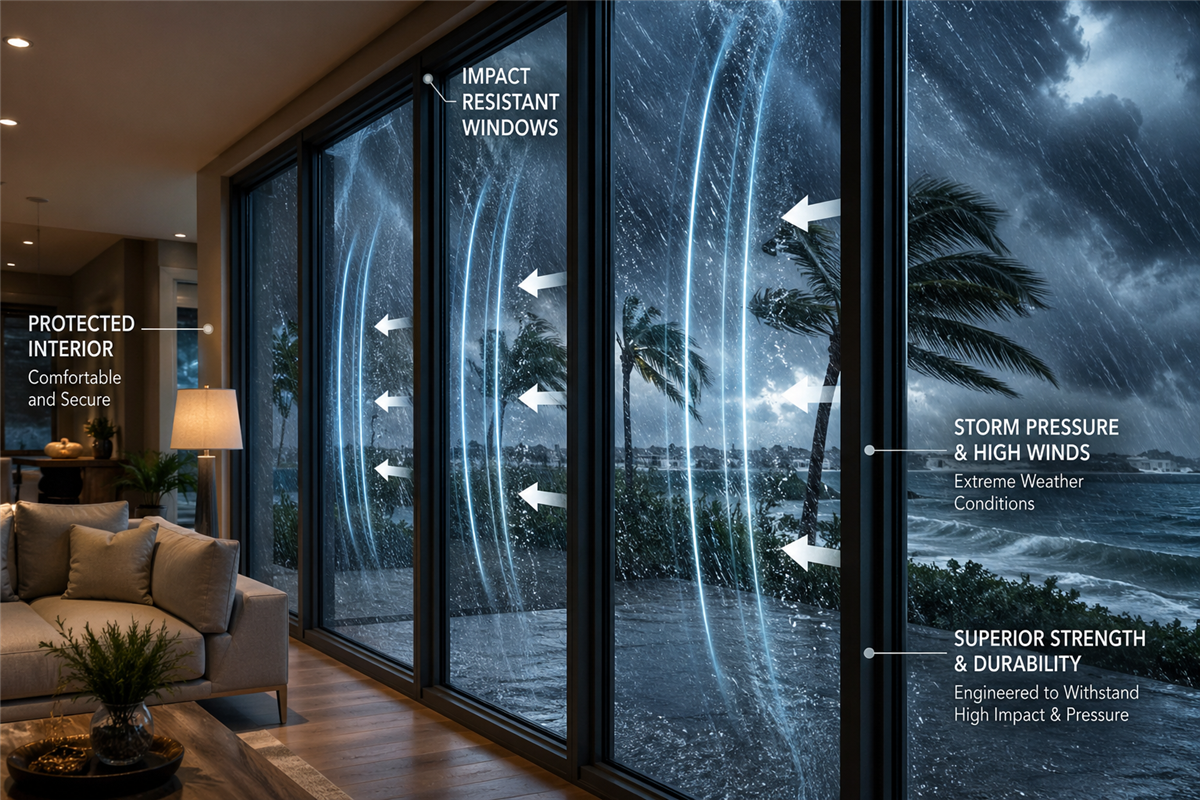
How Impact Windows Handle Pressure Changes During Storms
During a hurricane or severe storm, it’s not just flying debris that threatens your home—pressure changes can be just as dangerous. In fact, sudden pressure shifts are one of the main reasons homes suffer catastrophic damage during storms.
This leads many homeowners to ask: How do impact windows handle pressure changes?
If you're considering impact windows, understanding this is key to knowing how they protect your home.
Quick Answer: How Do Impact Windows Handle Pressure?
- They are engineered to withstand high wind pressure
- They prevent sudden internal pressure buildup
- Laminated glass stays intact even when cracked
Bottom line: Impact windows help maintain your home’s structural integrity by controlling pressure changes during storms.
1. Why Pressure Changes Are Dangerous
During a hurricane, strong winds create pressure differences between the outside and inside of your home.
If a window breaks:
- Wind rushes inside
- Internal pressure increases rapidly
- This can push the roof upward and outward
This chain reaction is a major cause of structural failure during storms.
2. How Impact Windows Prevent Pressure Buildup
Impact windows are designed to remain intact—even under extreme conditions.
They help by:
- Preventing openings where air can rush in
- Maintaining a sealed building envelope
- Reducing the risk of internal pressurization
This is one of their most important safety benefits.
3. Laminated Glass Holds Everything Together
Impact windows use laminated glass made of multiple layers bonded together.
If struck:
- The outer layer may crack
- The inner layer holds the glass in place
- The window remains sealed
This prevents the sudden pressure shift that occurs when traditional windows shatter.
4. Designed to Withstand Wind Pressure (DP Ratings)
Impact windows are tested for Design Pressure (DP), which measures how much wind force they can handle.
Higher DP ratings mean:
- Better resistance to strong winds
- Improved structural performance
- Greater protection during severe storms
Choosing the right DP rating is critical in hurricane-prone areas like Florida.
5. The Role of Proper Installation
Even the strongest window won’t perform properly without correct installation.
Professional installation ensures:
- Secure anchoring to the home’s structure
- Airtight sealing
- Resistance to pressure infiltration
This is essential for maintaining pressure control during storms.
6. What Happens With Standard Windows?
Traditional windows are much more vulnerable.
When they break:
- Air rapidly enters the home
- Pressure builds inside
- Roof and walls may fail under stress
This is why upgrading to impact windows is such a critical safety improvement.
7. Added Benefits Beyond Pressure Protection
Impact windows don’t just handle pressure—they provide multiple advantages.
They also offer:
- Hurricane debris protection
- Noise reduction
- UV blocking
- Energy efficiency
This makes them a complete solution for Florida homeowners.
What Most Homeowners Don’t Realize
Pressure—not just debris—causes major damage
Even without broken glass, pressure changes can weaken a home’s structure.
Sealing is everything
A fully sealed window system is key to preventing internal pressurization.
It’s a system, not just glass
Frames, installation, and ratings all work together to handle pressure effectively.
What This Means for Your Home
Impact windows play a critical role in protecting your home during storms—not just from debris, but from dangerous pressure changes.
By staying intact and maintaining a sealed barrier, they help prevent the internal pressure buildup that can lead to severe structural damage.
In a hurricane-prone state like Florida, that level of protection makes impact windows one of the smartest investments you can make for your home’s safety and long-term durability.
Call Statewide Windows & Doors at (561) 816-4010 or request a free estimate.
Subscribe to Statewide Windows & Doors's Blog




Comments