 Free Estimate
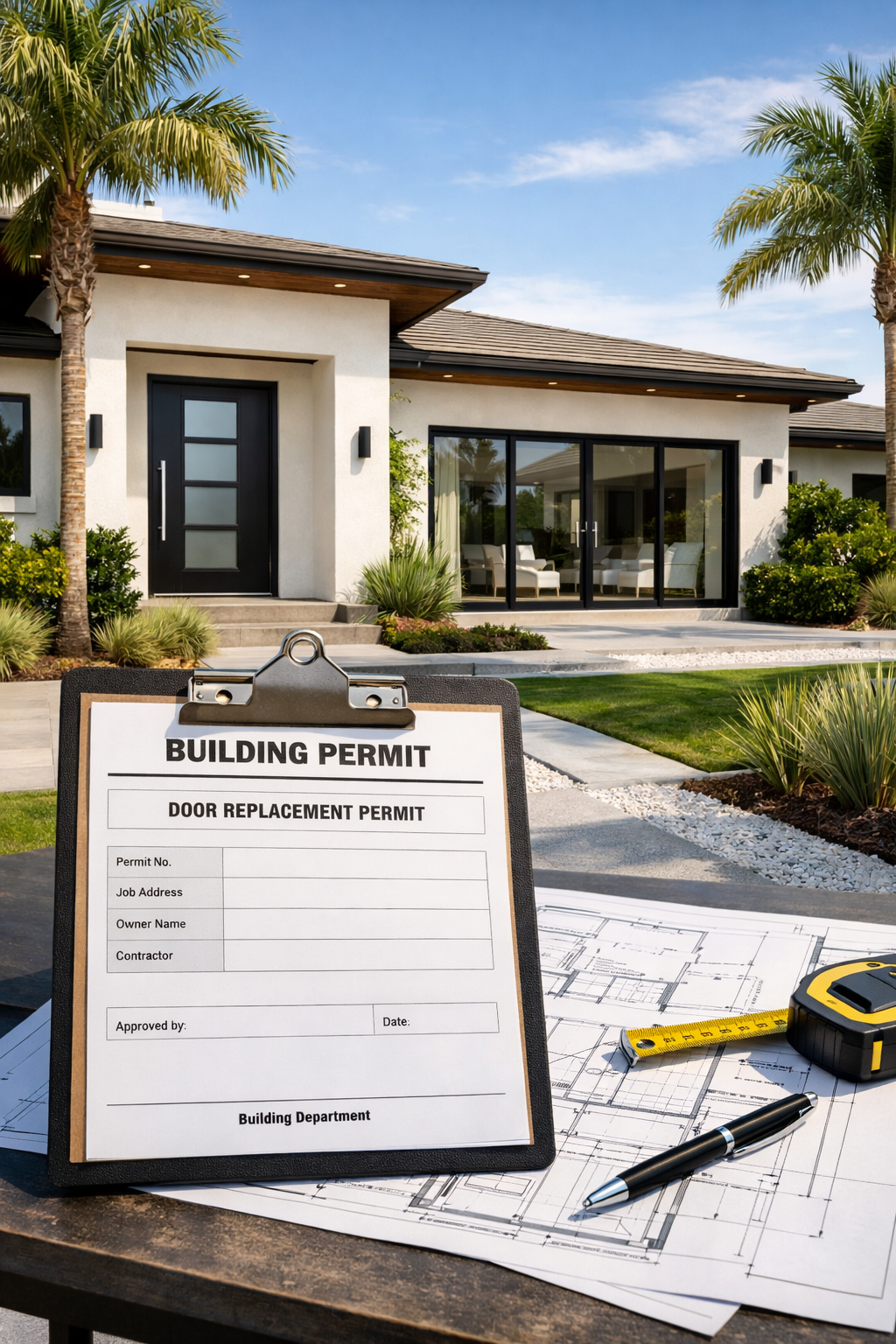
Do You Need a Permit for Door Replacement in Florida?
If you’re planning to replace a door in your Florida home—especially in South Florida—you might be asking: Do I need a permit?
The answer is yes, in most cases, a permit is required. Florida’s strict building codes are designed to protect homes from hurricanes, and exterior door replacements fall under those regulations.
If you're upgrading to impact doors, understanding permit requirements is essential to ensure your home stays compliant and protected.
Why Permits Are Required for Door Replacement
Exterior doors play a critical role in your home’s structural integrity during storms. Permits ensure that:
- The door meets Florida wind and impact standards
- Installation follows approved building methods
- Your home remains sealed against pressure and water intrusion
Without proper permitting, there’s no guarantee your door will perform during a hurricane.
When a Permit Is Required
You will typically need a permit if you are:
- Replacing an exterior door (front, back, or patio)
- Upgrading to an impact-rated door
- Changing the size or type of the door opening
- Installing new doors where none existed before
In Florida, most exterior door replacements require permits, even if the project seems simple.
Are There Any Exceptions?
Minor repairs—such as replacing hardware or adjusting an existing door—may not require a permit.
However, full replacements almost always do, especially in hurricane-prone regions like South Florida.
Local city or county regulations may vary slightly, so it’s always best to confirm.
What Happens During the Permit Process?
The process usually includes:
- Submitting a permit application to your local building department
- Providing product approvals (especially for impact doors)
- Scheduling inspections during and after installation
Once approved, the installation can move forward legally.
Who Pulls the Permit?
In most cases, your contractor is responsible for obtaining the permit.
A professional contractor will:
- Handle all paperwork and submissions
- Provide approved product documentation
- Schedule required inspections
Tip: If a contractor asks you to pull the permit yourself, it may be a red flag.
Why Permits Matter More Than You Think
1. Code Compliance
Ensures your door meets Florida’s strict hurricane standards.
2. Insurance Eligibility
Proper permits may be required for wind mitigation credits.
3. Home Resale
Unpermitted work can delay or complicate selling your home.
4. Safety
Proper installation helps prevent door failure during storms.
What Happens If You Skip the Permit?
Not pulling a permit can lead to:
- Fines and penalties
- Failed inspections
- Insurance claim issues
- Problems during resale
In some cases, you may be required to remove and redo the installation.
What Most Homeowners Don’t Realize
Doors are part of your home’s pressure system
If a door fails during a storm, it can increase internal pressure and lead to roof damage.
Product approval is required
Impact doors must meet Florida Product Approval or Miami-Dade NOA standards.
Installation matters as much as the door
Even a high-quality door won’t pass inspection if installed incorrectly.
Why Professional Installation Is Key
Working with experienced professionals ensures:
- Permits are handled correctly
- Doors are installed to code
- Inspections are passed without issues
This is especially important in High-Velocity Hurricane Zones (HVHZ).
What This Means for Your Home
In Florida, replacing an exterior door is more than a simple upgrade—it’s a regulated improvement tied to your home’s safety and storm protection.
In most cases, you will need a permit to replace a door. Working with a licensed contractor ensures the process is handled properly and your home remains compliant with Florida building codes.
When done right, your new door won’t just look better—it will help protect your home when it matters most.
Subscribe to Statewide Windows & Doors's Blog





Comments