 Free Estimate
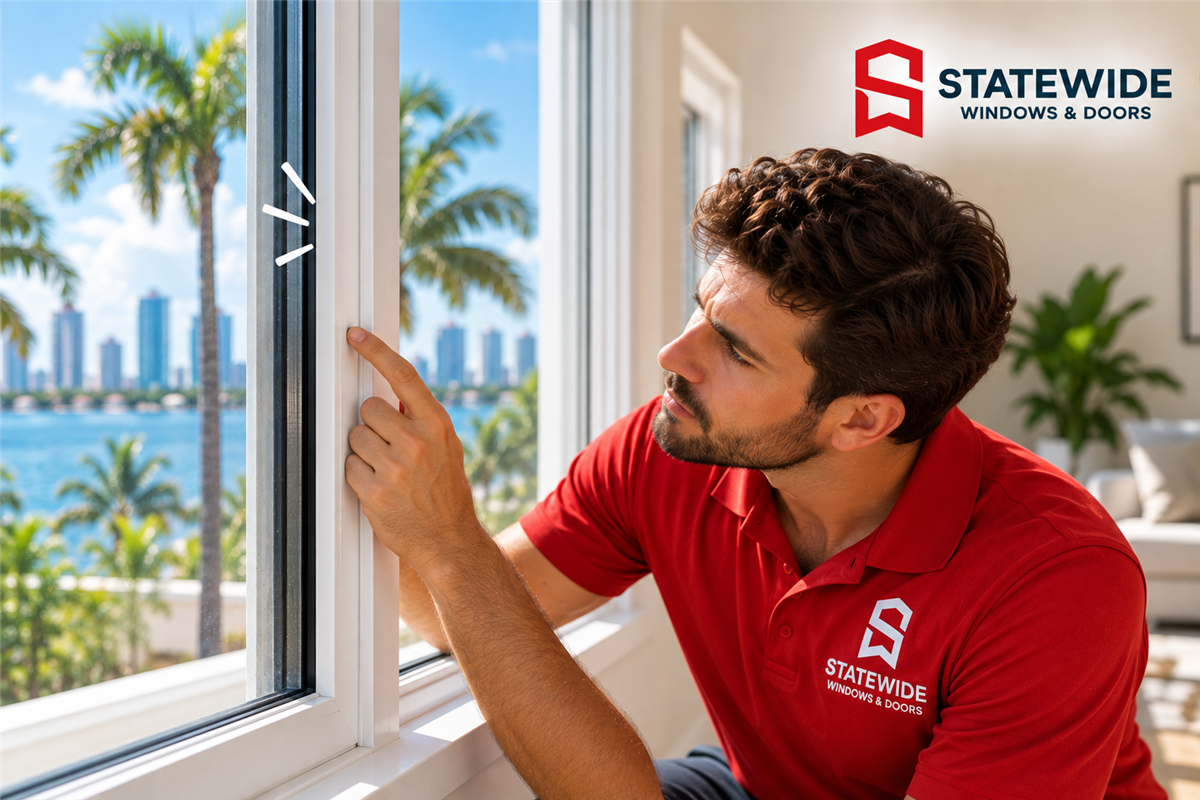
Florida homeowners sometimes hear a sudden pop, click, creak, or cracking sound coming from their impact windows and immediately worry that the glass is breaking.
In many cases, however, a sound coming from a window does not necessarily mean the impact glass has cracked or the window has failed.
Windows are made from multiple materials and components that can respond to temperature changes, sunlight, wind, building movement, and normal operation.
Florida's strong sun and frequent temperature changes between hot outdoor conditions and air-conditioned interiors can make some of these sounds especially noticeable.
At the same time, unusual or persistent noises should not automatically be ignored.
Here is what Florida homeowners should know about popping, clicking, creaking, and cracking sounds around impact windows.
Is It Normal for Impact Windows to Make Noise?
Occasional sounds can occur as different parts of a window and the surrounding building respond to changing conditions.
An impact window system can include:
- Glass
- Frames
- Glazing components
- Weatherstripping
- Locks
- Hardware
- Fasteners
- Sealants
- Tracks
- Other product-specific components
These materials do not necessarily respond to temperature and movement in exactly the same way.
A sound by itself does not identify the cause.
Why Do Windows Make Popping Sounds?
There are several possible reasons a homeowner may hear a popping or clicking sound near a window.
Potential factors can include:
- Temperature changes
- Direct sunlight
- Frame expansion and contraction
- Glass temperature changes
- Hardware movement
- Weatherstripping
- Wind pressure
- Building movement
- Surrounding construction materials
The timing and location of the sound can provide useful clues.
Florida Heat Can Create Large Temperature Changes
Exterior windows in Florida can become very warm when exposed to direct sunlight.
At the same time, the interior of the home may be cooled by air conditioning.
This means different portions of the window assembly can experience different temperatures.
Building materials naturally expand and contract as temperatures change.
Small movements can sometimes create audible popping, ticking, or creaking sounds.
Why Does My Window Pop When the Sun Hits It?
If a sound consistently occurs when direct sunlight reaches a particular window, temperature change may be one factor worth considering.
For example, a window facing east may heat rapidly in the morning, while a west-facing window may experience stronger afternoon solar exposure.
The frame, glass, surrounding wall materials, and finishes can all respond to those temperature changes.
That does not automatically mean anything is broken.
Why Does My Window Make Noise After the Sun Goes Down?
The opposite process can occur in the evening.
After being heated by direct sunlight during the day, exterior building materials begin cooling as outdoor temperatures fall.
Cooling materials can contract and shift slightly.
Homeowners may therefore notice occasional noises after sunset even when no one is touching the window.
Can Aluminum Impact Window Frames Expand and Contract?
Yes. Aluminum, like other building materials, responds to temperature changes.
Aluminum is commonly used in Florida impact window and door systems because of its structural characteristics.
When exposed to significant temperature changes, small dimensional changes can occur.
The complete window system is designed with material behavior in mind, but movement can sometimes create audible sounds.
Can Vinyl Impact Window Frames Make Noise?
Vinyl also responds to changes in temperature.
Depending on the product, installation, color, sun exposure, and surrounding conditions, homeowners may occasionally notice sounds as materials warm or cool.
A sound does not automatically mean the vinyl frame is damaged.
Visible distortion, cracking, or persistent operating problems are separate conditions that deserve evaluation.
Does a Popping Sound Mean the Impact Glass Is Cracking?
Not necessarily.
A popping sound can originate from many parts of the window or surrounding structure.
After hearing a significant sound, visually inspect the accessible glass.
Look for:
- Visible cracks
- Chips
- Star-shaped impact marks
- Changes along glass edges
- Other obvious damage
If the glass appears intact and the window continues to operate normally, the sound may have originated somewhere else.
What Does Cracked Impact Glass Look Like?
Actual glass damage should generally produce visible evidence.
The appearance depends on which portion of the glazing has been damaged and the construction of the specific product.
Impact-resistant laminated glazing is designed differently from ordinary monolithic residential glass.
If you see a crack, do not assume the window remains in its original condition simply because the glass stays in place.
Have the damaged glazing evaluated.
Impact-Resistant Does Not Mean Unbreakable
One of the most important distinctions homeowners should understand is that impact-resistant glass is not the same as unbreakable glass.
Impact systems are designed and tested for specified performance requirements.
Under sufficient impact or other damaging conditions, glass can still crack or break.
The laminated construction is intended to help the glazing remain together rather than behaving like ordinary glass under certain impact conditions.
Can Impact Glass Crack Without Being Hit?
Glass damage can have different causes, and a professional should evaluate unexplained cracking rather than assuming a cause based solely on appearance.
Possible considerations can include:
- Physical impact
- Edge damage
- Installation conditions
- Thermal conditions
- Existing damage
- Other stresses affecting the glazing
A visible crack deserves evaluation regardless of whether the homeowner remembers something striking the glass.
What Is Thermal Stress in Glass?
Glass can experience stress when different areas are at different temperatures.
For example, part of a pane may receive strong direct sunlight while another portion remains shaded.
The specific glass product, coatings, size, edge condition, installation, shading, and other factors can influence how the glazing responds.
Homeowners should not automatically diagnose a crack as thermal stress without professional evaluation.
Can Window Tint Affect Glass Temperature?
Aftermarket films can change how solar energy interacts with glass.
Not every film is appropriate for every glazing configuration.
Before applying aftermarket window film to impact glass, homeowners should verify compatibility with the specific glass manufacturer and product.
Improper modifications can also affect warranty coverage depending on the manufacturer's terms.
Why Does My Window Click When I Open or Close It?
If the sound occurs only during operation, the cause may involve a moving component rather than temperature.
Depending on the window style, possible sources can include:
- Locks
- Balances
- Rollers
- Hinges
- Operators
- Handles
- Weatherstripping
- Tracks
Observe exactly when the sound occurs.
Can Window Locks Make Clicking Sounds?
Locks and keepers are designed to engage with one another.
A normal engagement sound may occur when a lock reaches its intended position.
However, if the lock suddenly begins making a new sound, requires excessive force, or no longer aligns properly, it may need evaluation.
Do not force the lock to compensate for an alignment problem.
Why Does My Impact Window Creak When Opening?
A creaking or rubbing sound during operation can indicate that components are contacting one another differently than before.
Possible causes can include:
- Dirt in tracks
- Salt buildup
- Weatherstripping contact
- Hardware wear
- Alignment changes
- Debris
Cleaning accessible tracks according to manufacturer recommendations can be a reasonable first maintenance step when debris is visible.
Florida Salt Air Can Affect Moving Components
Coastal homes can experience airborne salt exposure.
Salt residue can accumulate on:
- Frames
- Tracks
- Locks
- Rollers
- Hinges
- Fasteners
- Other hardware
Regular maintenance can be particularly important for windows and doors near Florida's coastline.
Follow the manufacturer's cleaning and maintenance recommendations for the specific product.
Can Weatherstripping Make Noise?
Weatherstripping contacts moving portions of operable windows and helps manage air and water.
Depending on the material and condition, homeowners may sometimes hear rubbing, squeaking, or slight sticking noises during operation.
If weatherstripping is torn, displaced, or damaged, it should be evaluated rather than removed.
Do Not Remove Weatherstripping to Stop a Noise
Weatherstripping serves an important function within the window system.
Removing it may create other problems involving air or water performance.
If weatherstripping appears to be causing abnormal resistance or noise, determine whether it is damaged or incorrectly positioned.
Can Wind Make Impact Windows Make Noise?
Wind creates pressure on exterior building surfaces.
During Florida thunderstorms and tropical weather, windows and surrounding construction can experience changing pressure conditions.
Homeowners may hear sounds involving:
- Windows
- Doors
- Roofing
- Soffits
- Exterior finishes
- Other building components
The fact that a sound seems to come from a window does not always prove the window itself is the source.
Should Impact Windows Move in Strong Wind?
Window systems are engineered for specified structural performance, but homeowners should not attempt to judge structural performance based solely on sound or subtle visual movement during a storm.
If a window shows obvious frame damage, cracked glazing, failed hardware, or another significant change after severe weather, have it evaluated.
Why Does My Window Make Noise During a Thunderstorm?
A thunderstorm can create several conditions at the same time:
- Strong wind
- Rapid pressure changes
- Heavy rain
- Temperature changes
- Movement in surrounding building components
This can make it difficult to identify the source of an occasional sound while the storm is occurring.
Once conditions are safe, inspect the window for visible changes.
Can the House Make a Noise That Sounds Like the Window?
Yes.
Windows are installed within walls, so noises from nearby building materials can appear to come from the window opening.
Potential sources can include:
- Framing
- Stucco
- Drywall
- Exterior finishes
- Roof components
- Trim
- Other materials around the opening
Accurately locating an intermittent sound can sometimes be difficult.
Can Normal Building Movement Create Window Sounds?
Buildings experience small movements as materials respond to temperature, moisture, wind, and other environmental conditions.
Windows are connected to those building openings.
Occasional sounds do not automatically indicate a structural problem.
However, a new noise accompanied by visible cracking, shifting, or significant alignment changes deserves closer evaluation.
When Should a Popping Sound Be Investigated?
Consider requesting service if the sound occurs along with other symptoms such as:
- Visible cracked glass
- Frame damage
- Difficulty opening or closing
- A lock that no longer aligns
- Recurring water intrusion
- Visible gaps
- A sash that appears uneven
- Significant changes after a storm
The combination of symptoms can provide more useful information than the sound alone.
What If the Window Is Brand New?
If a recently installed impact window is making unusual or persistent sounds, document when the noise occurs and contact the installer if you are concerned.
Useful observations include:
- Time of day
- Whether the sun is hitting the window
- Whether the window is being operated
- Whether wind is present
- Whether the noise occurs repeatedly
- Whether there is any visible damage
Those details can help determine whether service is appropriate.
What If an Older Window Suddenly Starts Making Noise?
A new sound from an older window may deserve more attention than a sound that has been present consistently since installation.
Older windows can develop changes involving:
- Hardware
- Balances
- Rollers
- Locks
- Weatherstripping
- Sealants
- Other components
Inspect the window for other changes in operation or condition.
Do Impact Sliding Glass Doors Make Similar Sounds?
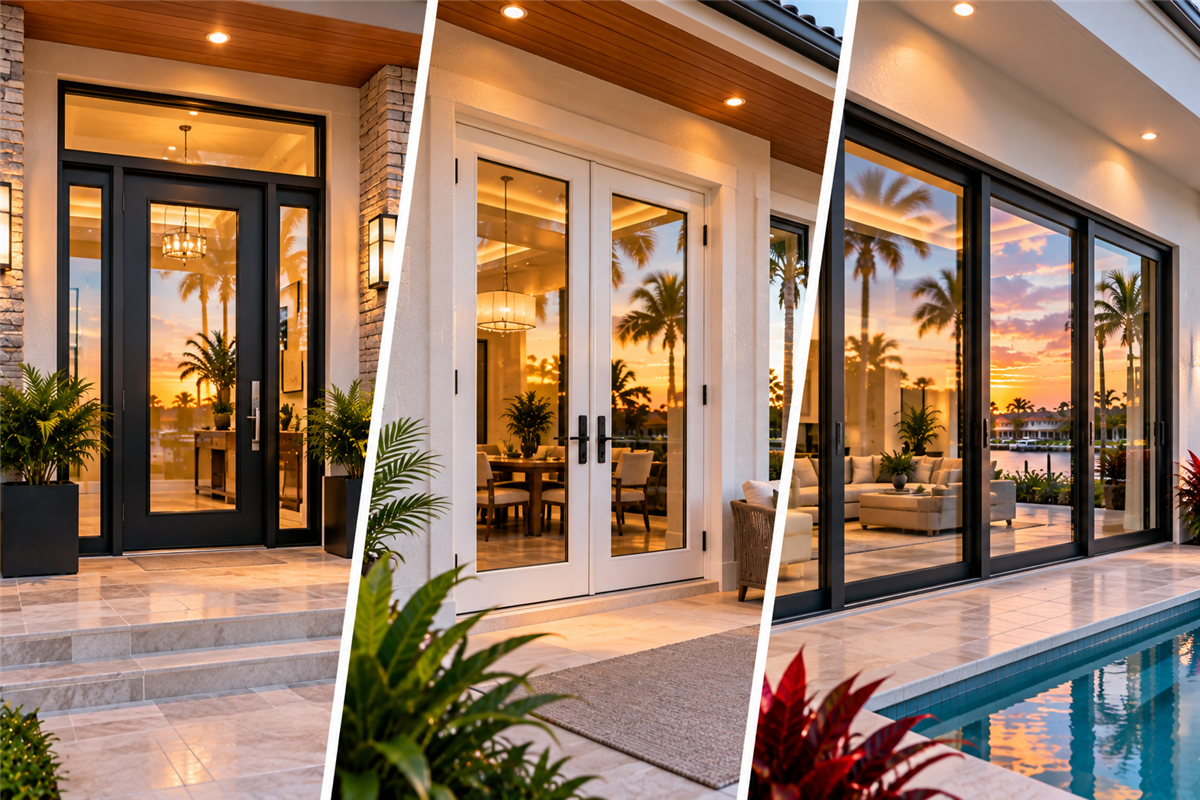
Yes. Impact sliding glass doors contain large glass panels, frames, rollers, locks, tracks, and other components.
Homeowners may notice sounds during operation or temperature changes.
If a sliding door becomes unusually difficult to move, starts grinding, or develops a new recurring sound, the rollers, track, alignment, or hardware may need evaluation.
Explore impact sliding glass doors from Statewide Windows & Doors.
Why Does My Sliding Glass Door Pop When It Opens?
If a popping sound occurs when movement begins, possible considerations can include roller movement, track debris, weatherstripping contact, lock components, or other hardware.
Do not repeatedly jerk or force a heavy impact sliding door to overcome resistance.
If operation has changed significantly, have the door evaluated.
Can Dirt and Debris Cause Window Noises?
Yes.
Debris in tracks and around moving components can cause scraping, grinding, clicking, or other sounds.
Florida windows can collect:
- Sand
- Dirt
- Dust
- Salt residue
- Insects
- Pet hair
- Landscaping debris
Keeping accessible tracks clean can help moving components operate as intended.
Should I Lubricate a Noisy Impact Window?
Do not automatically apply a household lubricant simply because a window is making noise.
Different products can have different maintenance requirements.
Some lubricants may attract debris or may not be appropriate for certain finishes or components.
Follow the manufacturer's maintenance recommendations for the specific window.
Do Not Use Heavy Grease to Silence the Window
Heavy oils and grease can collect dirt and sand, particularly in Florida's coastal environment.
This can create additional buildup in tracks and moving components.
If lubrication is appropriate, use the type and method recommended for the window system.
Can Exterior Sealant Make Popping Sounds?
Sealants around window openings can experience movement as temperatures and surrounding materials change.
While an occasional sound does not automatically identify a sealant problem, homeowners can visually inspect accessible perimeter areas for:
- Cracking
- Separation
- Gaps
- Missing material
- Visible deterioration
Do not add more sealant simply because you heard a noise.
What If the Sound Comes From Between the Glass Panes?
It can be difficult to identify the precise origin of a sound by ear.
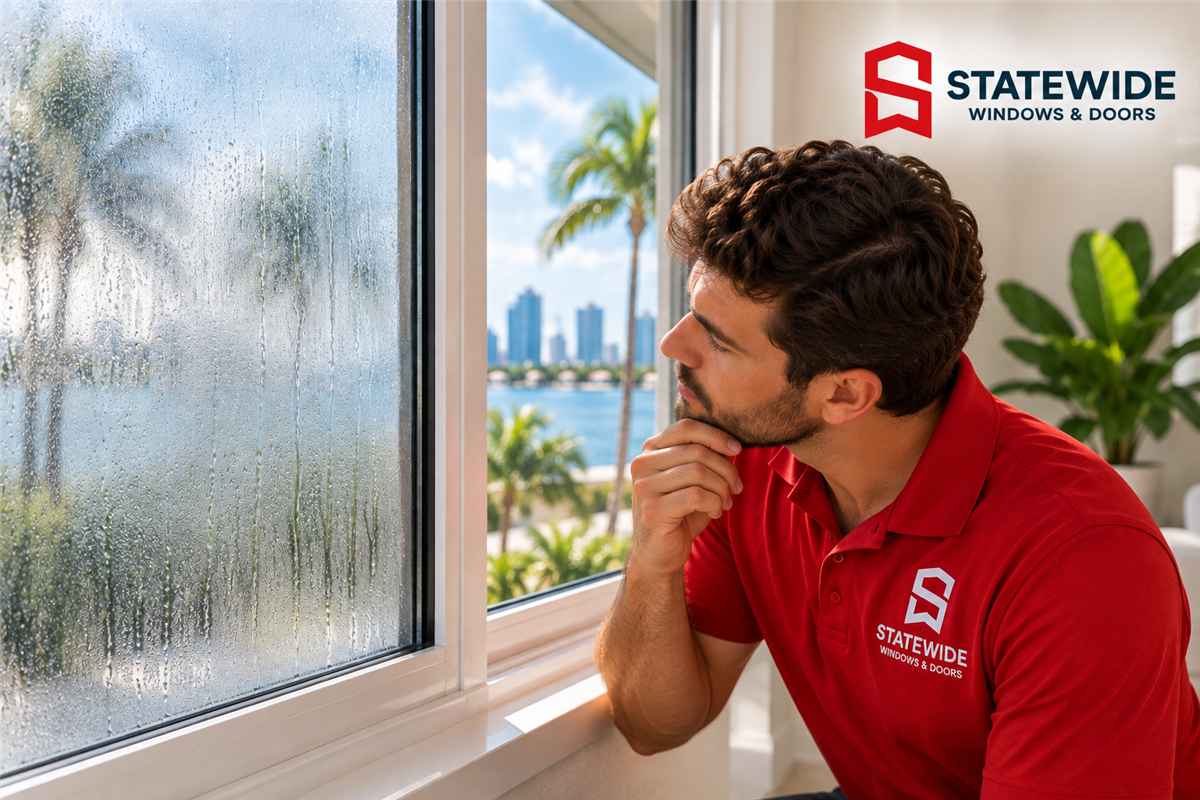
If the window uses insulated glazing and you also notice persistent fogging or moisture between panes, the glass assembly may deserve evaluation.
Fogging and popping are separate symptoms, however, and one does not automatically prove the cause of the other.
Does Fogging Mean the Glass Is About to Crack?
Not necessarily.
Persistent moisture between panes can indicate a condition involving an insulated glass unit.
That is different from a visible crack in the glazing.
Homeowners should evaluate each condition based on what is actually present rather than assuming one automatically causes the other.
Can Impact Windows Make Noise During Installation?
Window replacement involves removing existing products, preparing openings, positioning new frames, fastening systems, installing glazing where applicable, sealing, and completing surrounding work.
Construction activity naturally produces noises during the project.
After installation is complete, homeowners should become familiar with how each operable window normally sounds and functions.
Check Window Operation During the Final Walkthrough
When new impact windows are installed, check that operable units:
- Open normally
- Close completely
- Lock correctly
- Move without unusual resistance
- Do not show visible damage
If something seems unusual, ask the installation team about it before the project is completed.
Impact Window Sounds in Miami-Dade and Broward County
Miami-Dade and Broward County are within Florida's High-Velocity Hurricane Zone.
Impact windows and doors used for applicable projects in these areas should use specific products and configurations approved for their intended applications.
If a window develops damage or requires repair, homeowners should avoid unverified modifications to the glazing, frame, locks, hardware, or other important components.
A Miami-Dade Notice of Acceptance is one recognized product-approval pathway, while qualifying Florida Product Approvals specifically approved for HVHZ use can also apply.
The important question is whether the exact product and configuration are appropriate for the intended application.
Statewide Windows & Doors has completed thousands of projects across Miami-Dade and Broward County and has substantial experience with impact window and door projects in these markets.
Inspect Windows After a Major Storm
After severe weather has passed and conditions are safe, homeowners can visually inspect their impact windows and doors.
Look for:
- Cracked glass
- Impact marks
- Frame damage
- Operating problems
- Locking problems
- Water intrusion
- Changes in alignment
If a window began making a new sound during the storm and now shows another symptom, professional evaluation may be appropriate.
Do Not Take Apart an Impact Window to Find a Noise
Homeowners should avoid dismantling impact glazing, removing structural components, drilling into frames, or altering hardware simply to investigate a sound.
Impact windows are complete systems made from product-specific components.
Unverified modifications can create additional problems.
A Simple Checklist for a Noisy Impact Window
If your impact window begins popping, clicking, or creaking, start with these steps:
- Determine when the sound occurs.
- Note whether direct sunlight is hitting the window.
- Check whether the sound occurs only while opening or closing.
- Look for visible cracks in the glass.
- Inspect the frame for obvious damage.
- Check whether the window opens and closes normally.
- Confirm that the lock works correctly.
- Look for debris in accessible tracks.
- Document any new symptoms after severe weather.
- Request professional evaluation if the sound is persistent or accompanied by damage.
Questions to Ask a Window Professional
If a noisy window needs evaluation, homeowners can ask:
- Is the glass damaged?
- Is the frame in suitable condition?
- Is the sound related to window operation?
- Are the locks or hardware functioning correctly?
- Is the sash properly aligned?
- Are the balances or rollers functioning correctly?
- Is the weatherstripping damaged?
- Is any repair necessary?
- Can the issue be serviced without replacing the window?
Common Myths About Noisy Impact Windows
"Every Pop Means the Glass Is Cracking"
False. Window and building materials can make sounds for several reasons. Check for actual visible damage before assuming the glass cracked.
"Impact Glass Cannot Crack"
False. Impact-resistant does not mean unbreakable.
"A Noisy Window Always Needs Replacement"
Not necessarily. The sound may involve temperature changes, maintenance, hardware, or another serviceable condition.
"Just Add Lubricant Until the Noise Stops"
Not recommended. Use maintenance products appropriate for the specific window.
"All Sounds Come From the Window"
Not necessarily. Surrounding building materials can produce noises that appear to come from the window opening.
"If the Glass Stayed Together, It Isn't Damaged"
Not necessarily. Laminated impact glazing can remain together even when glass layers have cracked. Visible damage should still be evaluated.
How Statewide Windows & Doors Helps Florida Homeowners
Statewide Windows & Doors helps Florida homeowners with impact window and door projects from product selection and project coordination through permitting, installation, inspections, and customer service.
If an existing window develops unusual noises, operating problems, cracked glass, water intrusion, or another concern, identifying the actual condition can help determine whether maintenance, service, or replacement is appropriate.
Statewide has more than 25 years of combined industry experience and has completed thousands of projects across Miami-Dade and Broward County while serving homeowners throughout Florida.
Explore our impact window options, impact sliding glass doors, customer service information, completed projects, and Florida service areas.
Why Choose Statewide Windows & Doors?
Impact windows are complete systems involving glazing, frames, hardware, locks, weatherstripping, installation, and other components.
When a window begins behaving differently, identifying the actual cause is more useful than assuming the entire window needs replacement.
Statewide Windows & Doors helps Florida homeowners navigate impact window and door replacement with an experienced team serving communities throughout the state.
Final Words
A popping, clicking, creaking, or cracking sound from an impact window does not automatically mean the glass has broken.
Temperature changes, direct sunlight, frame movement, hardware, weatherstripping, wind, and surrounding building materials can all potentially create sounds.
Pay attention to when the noise occurs and whether it is accompanied by visible damage or changes in window operation.
If you hear a significant sound, inspect the glass and frame, confirm that the window still opens, closes, and locks correctly, and look for other changes.
If the glass is visibly cracked, the frame appears damaged, or the window no longer operates normally, have the window professionally evaluated.
Understanding the difference between normal material movement and a genuine window problem can help Florida homeowners respond appropriately without assuming every sound means their impact windows have failed.
Tags
Subscribe to Statewide Windows & Doors's Blog






Comments