 Free Estimate
Florida homeowners replacing their windows often expect new impact windows to improve hurricane protection, comfort, energy performance, and the overall condition of their home.
After installation, however, some homeowners may notice moisture or condensation on the glass and wonder whether something is wrong.
This leads to an important question: Do impact windows prevent condensation?
Impact windows can improve several aspects of a home's building envelope, but they do not guarantee that condensation will never appear.
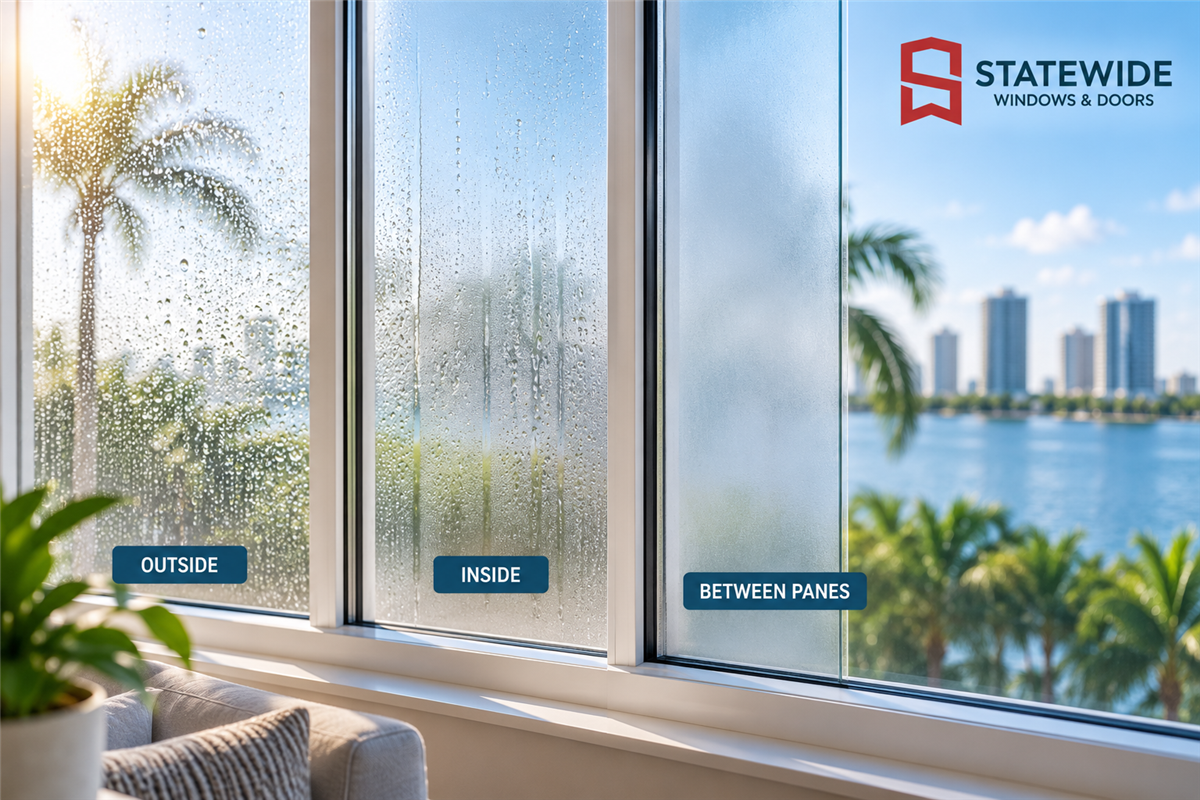
Where the moisture appears matters. Condensation on the exterior surface, condensation on the interior surface, and moisture trapped between panes can indicate very different conditions.
Florida's humidity also makes understanding condensation especially important.
Here is what homeowners should know about impact windows, humidity, fogging, insulated glass, and condensation in Florida homes.
What Causes Condensation on Windows?
Condensation can form when moisture in the air encounters a surface with a temperature that causes water vapor to change into liquid droplets.
Windows are one place where homeowners may notice this because glass surfaces can experience temperature differences between indoor and outdoor conditions.
Whether condensation appears can depend on factors such as:
- Indoor humidity
- Outdoor humidity
- Indoor temperature
- Outdoor temperature
- Glass temperature
- Air-conditioning settings
- Window location
- Ventilation
- Weather conditions
Condensation alone does not automatically mean a window has failed.
Do Impact Windows Stop Condensation?
Not completely.
Impact windows are primarily designed to provide impact-resistant performance as part of a complete tested and approved system.
Depending on the product, they can also offer energy-performance features that influence the temperature of the glass surfaces.
However, no responsible contractor should promise that installing impact windows will eliminate all condensation.
Humidity and temperature conditions inside and outside the home still matter.
There Are Different Types of Window Condensation
One of the most important things homeowners can do is determine where the moisture is located.
Condensation may appear:
- On the exterior surface of the window
- On the interior room-side surface
- Between panes of an insulated glass unit
These conditions should not automatically be treated as the same problem.
What Does Condensation on the Outside of an Impact Window Mean?
Exterior condensation can occur when the outside surface of the glass becomes cool enough for moisture in humid outdoor air to condense on it.
In Florida, this can sometimes occur during humid weather when indoor air conditioning keeps the window surface relatively cool.
Exterior condensation does not necessarily mean the window is leaking or defective.
It can be a temporary result of environmental conditions.
Is Exterior Condensation Normal in Florida?
It can be.
Florida frequently experiences high outdoor humidity, particularly during warmer months.
Depending on temperature, humidity, shade, wind, and other conditions, moisture may temporarily appear on the outside surface of a window.
Homeowners may notice it more during certain times of day, such as early morning.
As conditions change, the exterior moisture may disappear naturally.
What Does Condensation on the Inside of a Window Mean?
Interior condensation occurs on the room-side surface of the glass.
This can happen when indoor air contains enough moisture and the interior glass surface becomes cool enough for condensation to form.
Possible contributing factors include:
- High indoor humidity
- Very low air-conditioning settings
- Limited air circulation
- Cooking
- Showers
- Drying clothes indoors
- Large numbers of occupants
- Other indoor moisture sources
Interior condensation should be evaluated in the context of the home's overall humidity conditions.
Does Interior Condensation Mean the Impact Window Is Bad?
Not necessarily.
Moisture on the room-side surface can be related to indoor humidity and surface temperature rather than a defect in the impact-resistant system.
If condensation is persistent, excessive, or accompanied by other concerns, homeowners may want the window and indoor conditions evaluated.
But seeing water droplets on the interior glass does not by itself prove that the window has failed.
What Does Fogging Between Window Panes Mean?
Moisture or fogging that appears between panes of an insulated glass unit is different from condensation that can simply be wiped from the interior or exterior surface.
Insulated glass units are manufactured as sealed assemblies.
If moisture appears inside the sealed space between panes, the unit should be evaluated.
A problem with the insulated glass seal is one possible cause, although homeowners should have the condition properly inspected rather than assuming the cause.
How Can You Tell if Condensation Is Between the Panes?
A simple first step is to determine whether the moisture can be reached from either side of the window.
If the moisture can be wiped from the interior or exterior surface, it is surface condensation.
If the fogging appears trapped inside an insulated glass unit and cannot be wiped away from either accessible surface, it may be occurring between the panes.
Persistent between-pane fogging should be evaluated by the appropriate window professional or service provider.
Does Fogging Between Panes Mean the Impact Protection Is Gone?
Homeowners should not automatically make that conclusion.
Impact resistance and insulated-glass seal performance are related to different aspects of the window system.
If a sealed glass unit develops a problem, the exact condition should be evaluated according to the manufacturer, product configuration, and applicable warranty.
Do not assume that every cosmetic or insulated-glass issue means the entire impact window has lost all hurricane-related performance.
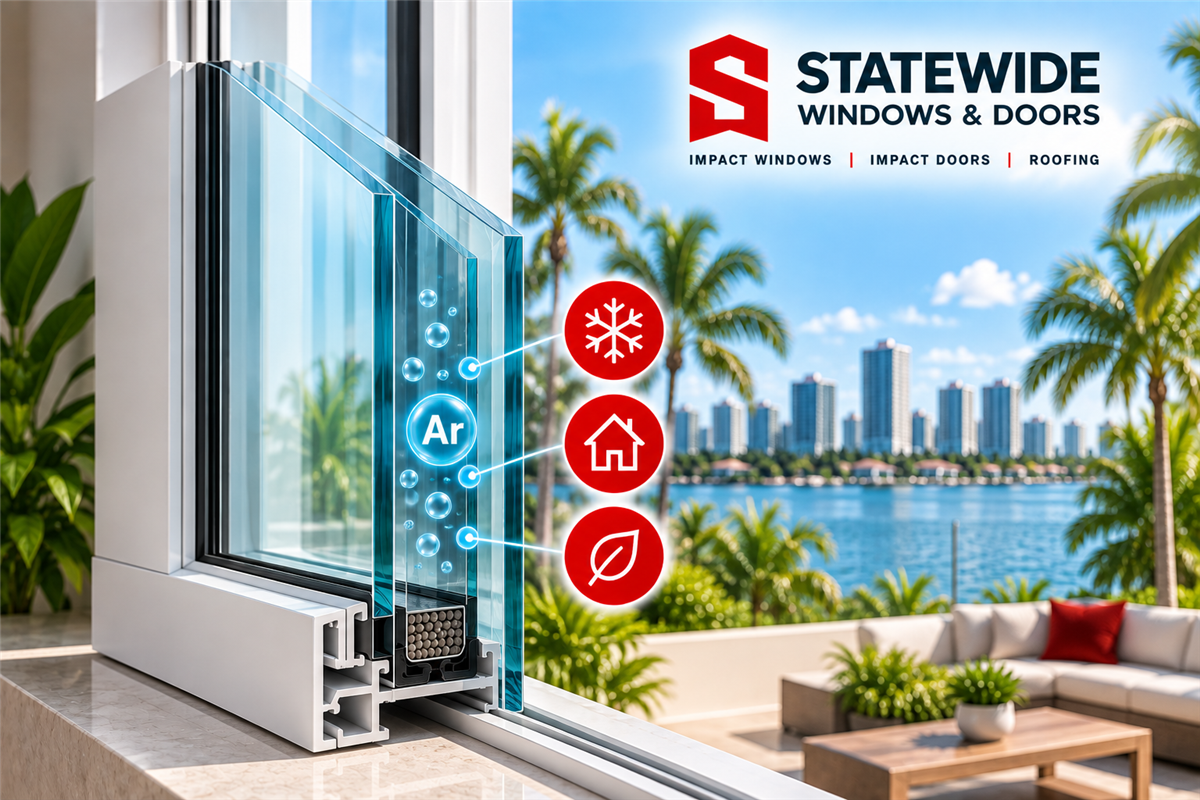
What Is an Insulated Glass Unit?
An insulated glass unit generally contains multiple panes separated by a sealed space.
Depending on the product, that space may contain air or a gas such as argon.
Insulated glass is primarily associated with thermal performance.
In an impact window, the complete glazing configuration can combine insulated construction with impact-resistant laminated components.
The exact construction varies by manufacturer and product.
Do All Impact Windows Have Insulated Glass?
No.
Impact resistance does not automatically mean a window uses an insulated glass unit.
Different impact products can use different glazing configurations.
Homeowners comparing quotes should ask whether the proposed product uses:
- Laminated impact glazing
- Insulated impact glazing
- Low-E glass
- Argon-filled insulated glass where available
- Other available glass options
The complete configuration matters more than a single marketing term.
Can Insulated Impact Glass Help With Condensation?
An insulated glass configuration can influence the temperature of the interior glass surface, which can affect the conditions under which condensation develops.
However, this does not mean insulated impact glass guarantees a condensation-free window.
Indoor humidity, outdoor conditions, air-conditioning settings, and other factors still play an important role.
Homeowners should compare the documented thermal performance of available products rather than expecting one glass feature to eliminate moisture in every situation.
What Does Argon Gas Have to Do With Condensation?
Argon gas may be used in the sealed space of certain insulated glass units to contribute to thermal performance.
It does not directly "absorb" condensation or remove humidity from a home.
An argon-filled glass configuration can influence thermal performance, but condensation still depends on temperature and moisture conditions.
For a deeper explanation, homeowners can review the differences between argon-filled, insulated, laminated, and Low-E impact glass when comparing window options.
Does Low-E Glass Help With Condensation?
Low-E coatings are designed to influence thermal and solar energy transfer through glazing.
Depending on the complete glass configuration, Low-E technology can affect window thermal performance.
However, Low-E should not be marketed as a guarantee against condensation.
The likelihood of condensation still depends on the interaction between glass temperature, indoor humidity, outdoor conditions, and the rest of the home.
Why Florida Humidity Matters
Florida's climate can involve high humidity for extended periods.
Warm outdoor air can contain substantial moisture, while many homes maintain much cooler indoor temperatures with air conditioning.
That combination can create conditions where condensation becomes visible on certain surfaces.
This is why Florida homeowners should understand that moisture on glass is not automatically evidence of a defective impact window.
Can New Impact Windows Make Condensation More Noticeable?
In some situations, replacing older windows can change the way air moves through a home.
Older windows may have allowed more uncontrolled air leakage around the openings.
New properly installed windows can create a tighter building envelope.
If a home also has significant indoor moisture, changes in air leakage can make humidity management more important.
This does not mean the new windows are creating moisture. It means the home's ventilation, air conditioning, and humidity conditions should be considered as a complete system.
Why Indoor Humidity Matters After Window Replacement
A home's indoor humidity level affects more than windows.
Excessive moisture can influence comfort and other parts of the home as well.
Potential indoor moisture sources can include:
- Cooking
- Showers
- Laundry
- Air infiltration
- HVAC operation
- Ventilation
- Plumbing issues
- Other building conditions
If a homeowner experiences persistent humidity problems after replacing windows, the entire home should be considered rather than assuming the glass is the sole cause.
Can Air Conditioning Cause Window Condensation?
Air conditioning itself is not necessarily a problem, but temperature differences can influence condensation.
For example, very cool indoor conditions combined with warm, humid outdoor air can contribute to exterior condensation on some windows.
Indoor HVAC operation also plays a major role in controlling interior humidity.
If humidity remains unusually high indoors, homeowners may want to have their HVAC system and other potential moisture sources evaluated.
Should You Worry About Water on the Window Frame?
Homeowners should distinguish between condensation forming on a surface and water entering through the window assembly.
If water appears during or after rain and seems to be entering around the frame, sill, wall, or other components, that condition may require evaluation.
Possible water intrusion should not automatically be dismissed as ordinary condensation.
The timing, location, and conditions surrounding the moisture are important.
Condensation vs. a Window Leak
Condensation and water intrusion are not the same thing.
Condensation forms because of moisture in the air and surface temperature.
A leak involves water entering through or around part of the building envelope.
Some clues homeowners can observe include:
- Whether moisture appears only during rain
- Whether droplets cover the glass surface
- Whether water appears around the frame or wall
- Whether moisture can be wiped away
- Whether fogging is trapped between panes
- Whether staining or damage is developing nearby
If the source is unclear, professional evaluation is preferable to guessing.
What About Condensation on Impact Sliding Glass Doors?
Impact sliding glass doors contain large glazed surfaces, so condensation can be especially noticeable when it occurs.
The same basic principles apply.
Homeowners should determine whether moisture is:
- On the indoor surface
- On the outdoor surface
- Between panes
- Around the frame or track
Moisture around a sliding door track during rain should be evaluated differently from temporary condensation across the glass surface.
Explore sliding glass door options from Statewide Windows & Doors.
Can Impact Windows Fog Up in the Morning?
Yes, exterior glass can sometimes develop temporary condensation during morning conditions.
Outdoor humidity, overnight temperatures, clear skies, shade, and changes in glass temperature can all contribute.
If the moisture is on the accessible exterior surface and disappears as conditions change, it may simply be environmental condensation.
Persistent moisture between panes is a different condition and should be evaluated separately.
Why Some Windows Condense While Others Do Not
Homeowners may notice condensation on one window while another nearby window remains clear.
That can happen because individual openings experience different conditions.
Differences can include:
- Sun exposure
- Shade
- Wind
- Indoor airflow
- Window orientation
- Nearby landscaping
- Interior curtains or blinds
- Room temperature
The presence of condensation on one opening does not automatically prove that window is defective.
Can Curtains and Blinds Affect Condensation?
Window treatments can influence airflow around the interior glass surface.
Heavy curtains, tightly closed blinds, furniture placement, or other obstructions can change how conditioned air circulates near a window.
This does not mean homeowners should avoid window treatments.
It simply means airflow around the glass is another factor that can influence surface conditions.
How Can Florida Homeowners Reduce Interior Window Condensation?
If condensation is occurring on the room-side surface, homeowners can begin by evaluating indoor moisture and airflow.
Depending on the home, helpful steps may include:
- Monitoring indoor humidity
- Using bathroom exhaust ventilation during showers
- Using kitchen ventilation while cooking
- Keeping HVAC equipment properly maintained
- Allowing reasonable airflow around windows
- Investigating unusual indoor moisture sources
Persistent humidity problems may require evaluation by an appropriate HVAC, building, or moisture professional.
Should You Use a Dehumidifier?
A dehumidifier can be useful in some homes with elevated indoor humidity, but it should not automatically be treated as the solution to every condensation problem.
The first goal should be understanding why indoor humidity is high.
Depending on the situation, HVAC operation, ventilation, air leakage, plumbing, or other building conditions may need attention.
If a dehumidifier is being considered, homeowners should choose equipment appropriate for the space and conditions.
Does Condensation Mean Your Home Is Too Humid?
Not always.
Condensation depends on both moisture levels and surface temperature.
Even outdoor air with normal Florida humidity can produce condensation on a sufficiently cool exterior glass surface.
However, frequent interior condensation can be a reason to investigate indoor humidity levels and other contributing conditions.
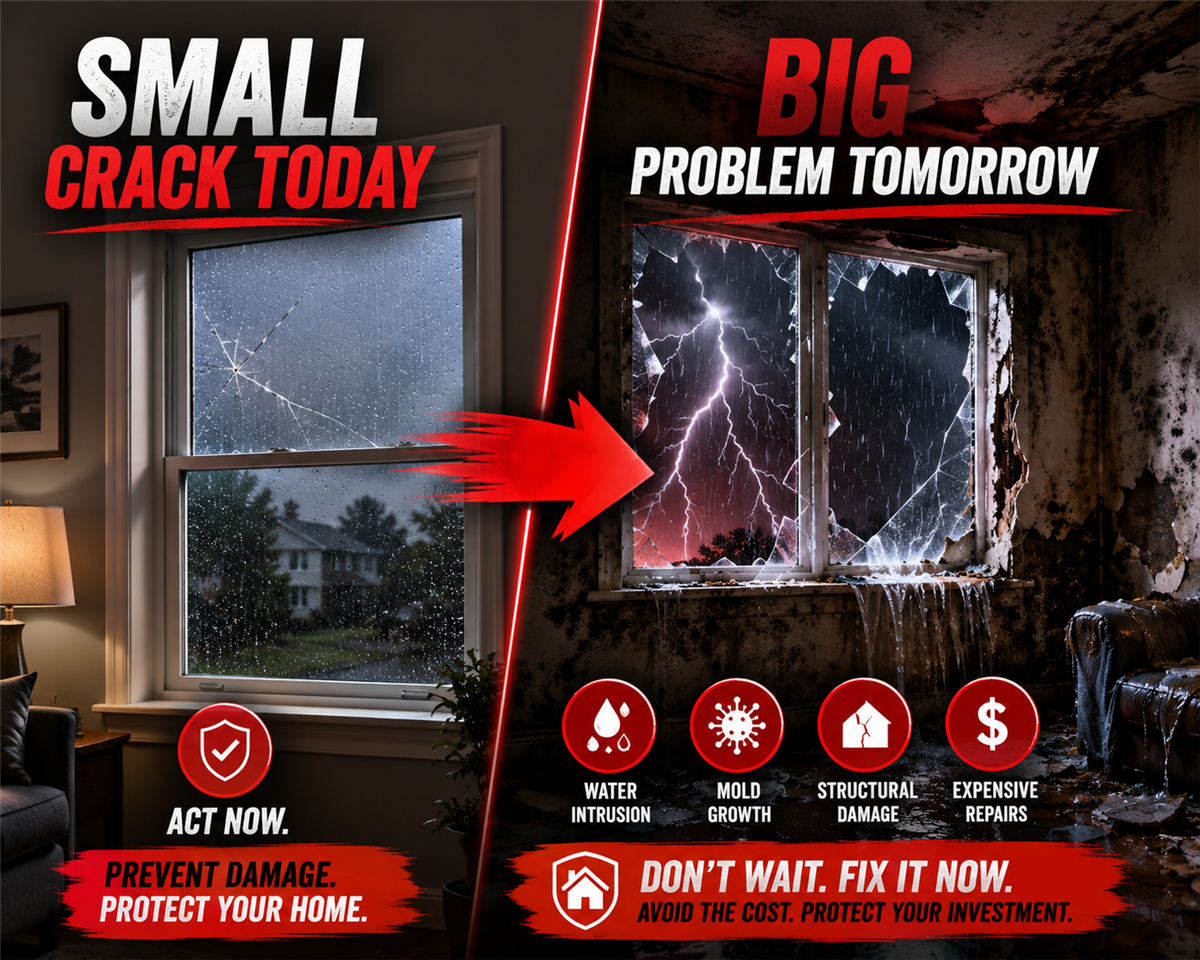
Can Condensation Damage a Home?
Occasional temporary moisture on glass is different from persistent water accumulation.
If moisture repeatedly collects on frames, sills, drywall, wood, or other surrounding materials, it may contribute to deterioration over time.
Homeowners should not ignore persistent moisture simply because they believe it is condensation.
The source should be identified and addressed appropriately.
What Should You Do if a New Impact Window Is Foggy?
First, determine where the fogging is located.
If it is on an accessible surface, gently wiping the glass can help determine whether it is ordinary surface condensation.
If the fogging appears trapped between panes and persists, document the condition and contact the appropriate service provider or contractor.
Photos can be useful when explaining when and where the condition appears.
Why the Window Warranty Matters
Impact window warranties can contain different terms for different components.
Coverage may distinguish between:
- Frame components
- Glass
- Insulated glass seals
- Hardware
- Finish
- Labor or installation-related items
Coverage varies by manufacturer and contract.
Homeowners should review warranty documentation before purchasing rather than assuming every component has identical coverage.
Condensation in Miami-Dade and Broward Impact Windows
Miami-Dade and Broward County are located within Florida's High-Velocity Hurricane Zone.
Condensation performance should not be confused with HVHZ impact requirements.
A window can be appropriate for an HVHZ application and still experience surface condensation when environmental conditions allow it.
For hurricane-related requirements, homeowners should verify that the exact product and configuration are approved for the intended application.
A Miami-Dade Notice of Acceptance is one recognized approval pathway, while qualifying Florida Product Approvals specifically approved for HVHZ use can also apply.
Statewide Windows & Doors has completed thousands of projects across Miami-Dade and Broward County and has substantial experience with impact window and door projects in these markets.
Does Better Impact Glass Mean No Condensation?
No glass package can responsibly be described as completely immune to condensation under every possible environmental condition.
Insulated glass, Low-E coatings, argon-filled configurations, laminated glazing, and frame design can all affect different aspects of window performance.
But moisture still depends on the interaction between indoor conditions, outdoor conditions, and surface temperature.
The goal should be choosing the appropriate complete window system rather than looking for a product advertised as "condensation-proof."
Questions to Ask When Comparing Impact Windows
If condensation and energy performance are concerns, homeowners can ask:
- Is this an insulated impact window?
- What is the exact glass construction?
- Does the glass include Low-E?
- Is argon available in this configuration?
- What is the U-factor?
- What is the Solar Heat Gain Coefficient?
- What warranty applies to the glass?
- What warranty applies to insulated glass seals?
- Who should I contact if fogging develops between panes?
- Is this exact configuration impact-resistant?
- What product approval applies?
- Is the configuration appropriate for the HVHZ if applicable?
These questions help homeowners evaluate the complete product rather than focusing only on whether condensation might occur.
Common Myths About Impact Windows and Condensation
"Impact Windows Never Condense"
False. Surface condensation can occur when temperature and humidity conditions allow it.
"Water on the Outside Means the Window Is Leaking"
Not necessarily. Exterior condensation can form on the glass during humid conditions.
"Any Fogging Means the Window Is Defective"
Not necessarily. Surface condensation and between-pane fogging are different conditions.
"Argon Gas Prevents Condensation"
False. Argon can contribute to thermal performance in certain insulated glass units, but it does not guarantee that condensation will never form.
"Low-E Glass Cannot Fog"
False. Low-E is a coating technology and does not eliminate every possible cause of condensation or insulated-glass problems.
"Condensation Means the Window Is Not Impact-Rated"
False. Condensation and impact approval address different aspects of window performance.
How Statewide Windows & Doors Helps Florida Homeowners
Statewide Windows & Doors helps homeowners evaluate impact window and door products based on the needs of their property and the complete window system.
Depending on the project and available products, our team can help homeowners compare:
- Impact-resistant glazing
- Laminated glass configurations
- Available insulated glass options
- Available Low-E options
- Available argon-filled configurations
- Aluminum and vinyl frames
- Window styles
- Energy-performance information
- Design-pressure considerations
- Applicable product documentation
- Permitting and installation requirements
Statewide has more than 25 years of combined industry experience and has completed thousands of projects across Miami-Dade and Broward County while serving homeowners throughout Florida.
Explore our impact window options, impact doors, completed projects, and Florida service areas.
Why Choose Statewide Windows & Doors?
Impact window replacement involves more than selecting hurricane-resistant glass.
Glass construction, frame material, energy performance, product approval, design pressure, installation, permitting, warranty, and post-installation service all matter.
Statewide Windows & Doors helps Florida homeowners understand these considerations and compare available impact window options based on their property and priorities.
Our team also works across project management, permitting coordination, installation, inspections, and customer service to help manage the complete replacement process.
Final Words
Impact windows do not guarantee that condensation will never appear.
In Florida's humid climate, temporary moisture can form on interior or exterior glass surfaces when temperature and humidity conditions allow it.
The most important distinction is where the moisture appears.
Exterior surface condensation, interior surface condensation, and persistent fogging between panes can have very different explanations.
If moisture can be wiped from the glass surface, environmental conditions may be responsible. If fogging remains trapped between panes of an insulated glass unit, the window should be evaluated.
Understanding the difference can help Florida homeowners avoid unnecessary concern while also recognizing when a window may actually need service.
Tags
Subscribe to Statewide Windows & Doors's Blog






Comments