 Free Estimate
What Is Underlayment and Why It Matters in Florida Roofs
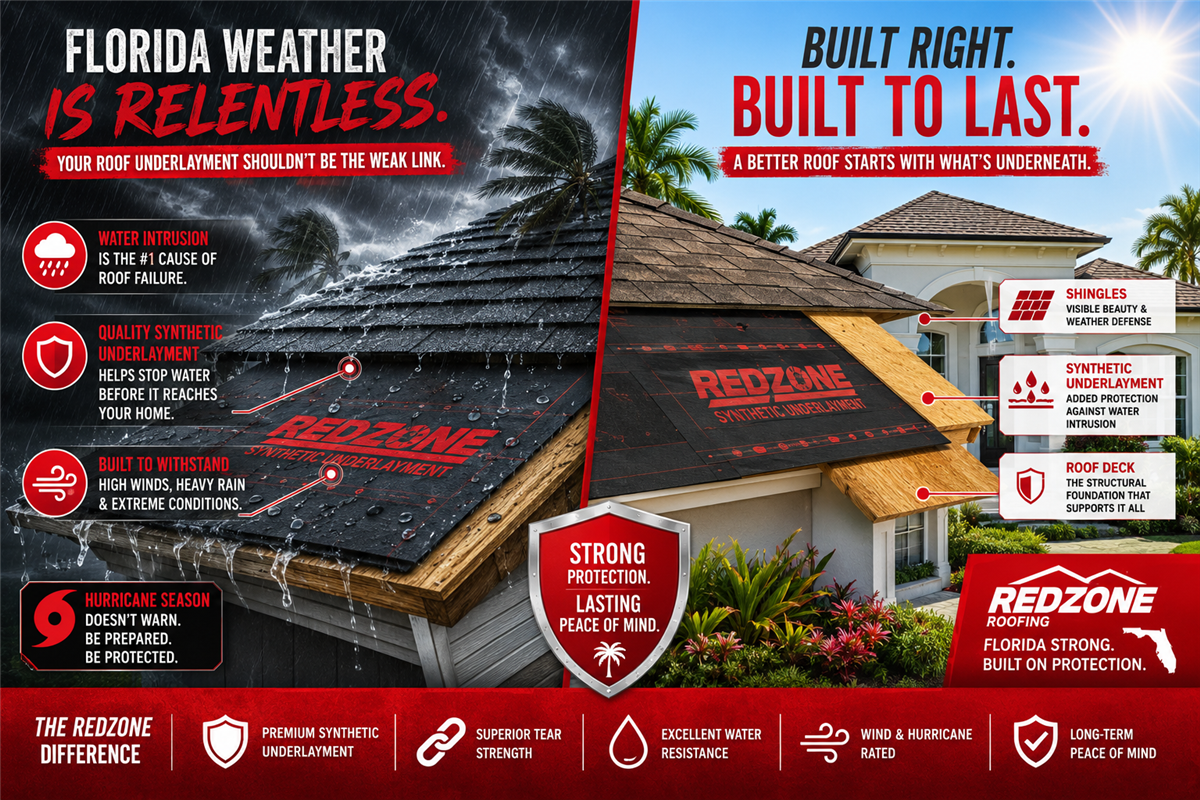
When most homeowners think about their roof, they focus on what they can see—shingles, tiles, or metal panels. But one of the most important components is actually hidden underneath: roof underlayment.
In Florida’s harsh climate, underlayment plays a critical role in protecting your home from water intrusion, wind-driven rain, and hurricane damage.
If you're upgrading your home along with impact windows, understanding your roof system—including underlayment—is essential for long-term protection.
Quick Answer: What Is Roof Underlayment?
- A protective layer installed between your roof deck and outer roofing material
- Acts as a secondary barrier against water and moisture
- Critical for hurricane and storm protection in Florida
Bottom line: Underlayment is your roof’s last line of defense if the outer layer fails.
1. What Does Roof Underlayment Do?
Underlayment serves as a protective shield beneath your visible roofing material.
Its main functions include:
- Preventing water from reaching the roof deck
- Providing an extra layer of leak protection
- Improving overall roof durability
In Florida storms, this layer can make the difference between minor damage and major interior issues.
2. Why Underlayment Is Critical in Florida
Florida roofs face unique challenges:
- Heavy rain and humidity
- Hurricane-force winds
- Wind-driven rain that can get under roofing materials
If shingles or tiles are lifted during a storm, underlayment helps keep water out of your home.
3. Types of Roof Underlayment
There are several types of underlayment used in Florida:
Felt Underlayment (Traditional)
- Made from asphalt-saturated paper
- Less durable in extreme weather
Synthetic Underlayment
- More durable and tear-resistant
- Better performance in high winds and moisture
Peel-and-Stick (Self-Adhered)
- Creates a waterproof seal
- Often required by Florida building code in certain areas
Modern systems often use synthetic or peel-and-stick for maximum protection.
4. Secondary Water Barrier Protection
In Florida, many homes are required to have a secondary water barrier.
This means:
- Even if the roof covering is damaged, water won’t easily enter
- The home has an extra layer of storm protection
This is especially important during hurricanes when roofs are exposed to extreme conditions.
5. How Underlayment Impacts Roof Lifespan
High-quality underlayment can extend the life of your roof by:
- Reducing moisture damage
- Protecting the roof deck
- Preventing long-term deterioration
It helps your entire roofing system perform better over time.
6. Installation Matters Just as Much
Even the best underlayment won’t work if it’s installed incorrectly.
Proper installation ensures:
- Full coverage with no gaps
- Correct sealing and overlap
- Compliance with Florida building codes
This is critical for real-world performance during storms.
7. What Happens If Underlayment Fails?
If underlayment is damaged or missing, your home becomes vulnerable to:
- Roof leaks
- Water damage inside the home
- Mold and structural issues
This is why it’s considered one of the most important hidden components of your roof.
What Most Homeowners Don’t Realize
You can’t see it—but it protects everything
Underlayment works behind the scenes to keep your home dry.
It’s often required for insurance and code compliance
Especially in hurricane-prone areas like Florida.
It can prevent major damage during storms
Even if your outer roof layer is compromised.
What This Means for Your Home
Roof underlayment is one of the most important parts of your roofing system—especially in Florida’s extreme weather conditions.
It provides a critical layer of protection that helps prevent leaks, extends your roof’s lifespan, and protects your home during hurricanes.
When combined with proper installation and a strong overall system, underlayment plays a key role in keeping your home safe, dry, and protected year-round.
Subscribe to Statewide Windows & Doors's Blog




Comments