 Free Estimate
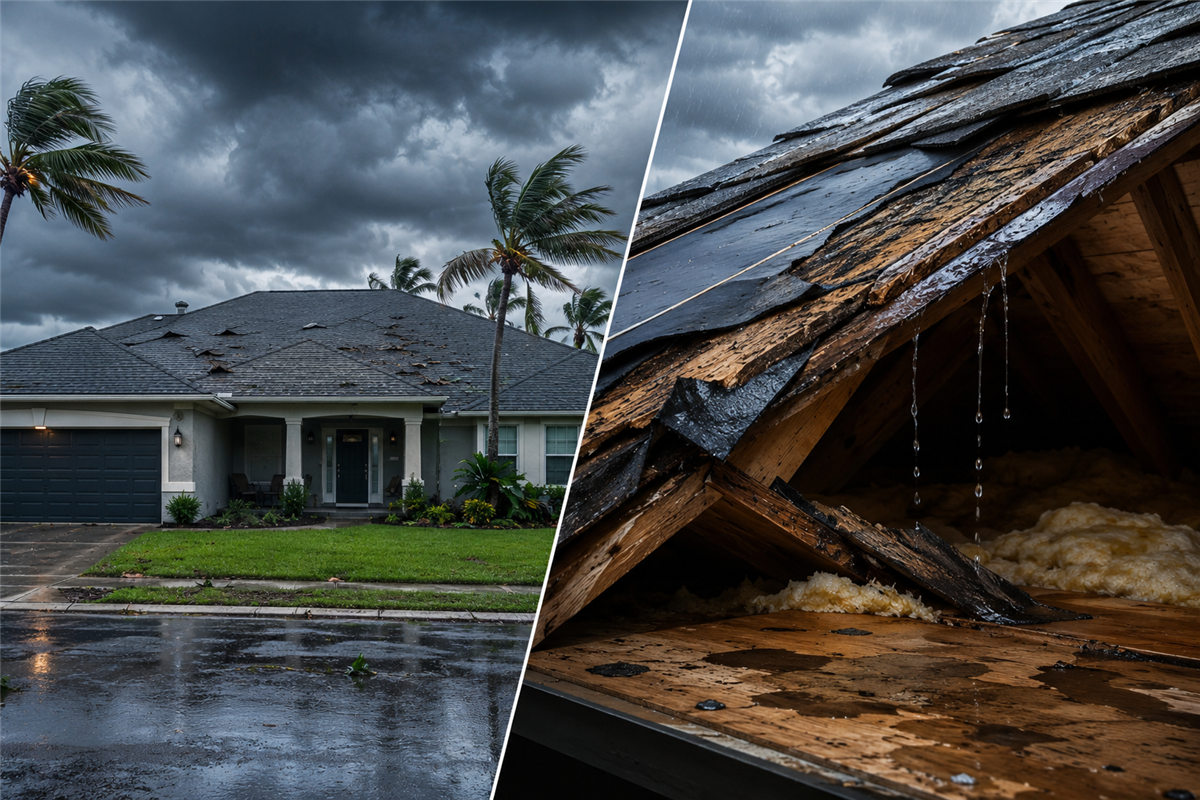
Signs Your Roof Was Damaged After a Storm
After a storm passes, many homeowners step outside, take a quick look at their roof, and assume everything is fine. But here’s the reality: roof damage isn’t always visible from the ground.
In Florida, storms can cause hidden issues that worsen over time—leading to costly repairs if left unaddressed.
If you're protecting your home with impact windows and other upgrades, it’s just as important to know what to look for on your roof.
Quick Answer: Can a Roof Be Damaged Without Visible Signs?
- Yes: Storm damage is often hidden
- Issues may not appear until weeks or months later
- Early detection can prevent major repairs
Bottom line: Just because your roof looks fine doesn’t mean it is.
1. Missing or Lifted Shingles
High winds can loosen shingles without completely tearing them off.
Look for:
- Shingles that appear uneven or misaligned
- Edges that are slightly lifted
- Small gaps where shingles used to be
These issues can allow water to seep underneath your roof.
2. Granules in Gutters or Around Your Home
If you notice sand-like particles in your gutters, it could be a sign of roof wear.
This happens when:
- Shingles lose their protective coating
- Storm impact weakens the surface layer
Over time, this reduces your roof’s ability to protect against the elements.
3. Water Stains on Ceilings or Walls
One of the most common signs of hidden roof damage appears inside your home.
Watch for:
- Yellow or brown ceiling stains
- Peeling paint or bubbling drywall
- Musty odors
These can indicate a slow leak caused by storm damage.
4. Damaged Flashing or Roof Edges
Flashing protects vulnerable areas like vents, chimneys, and edges.
After a storm, check for:
- Loose or bent metal flashing
- Gaps around roof penetrations
- Damaged edges or corners
These are common entry points for water.
5. Debris Impact Damage
Flying debris can cause damage that isn’t always obvious.
This includes:
- Small dents or cracks
- Weakened structural areas
- Hidden punctures in roofing materials
Even minor impacts can lead to bigger problems over time.
6. Sagging or Uneven Roof Areas
If part of your roof looks slightly uneven, it could be a sign of structural damage.
This may indicate:
- Water saturation
- Weakened decking
- Underlying structural issues
This is a serious warning sign that should be addressed immediately.
7. Increased Energy Bills
Storm damage can affect your home’s insulation and ventilation.
If you notice:
- Higher cooling costs
- Inconsistent indoor temperatures
Your roof may no longer be performing efficiently.
8. Time Since the Storm Matters
Not all damage shows up right away.
Issues can develop over time due to:
- Small leaks becoming larger
- Moisture buildup
- Gradual material deterioration
This is why inspections after storms are so important.
Why Professional Inspection Matters
Many signs of damage aren’t visible without a closer look.
A professional inspection can identify:
- Hidden leaks
- Structural weaknesses
- Areas at risk of future failure
Proper installation and inspections work together to protect your home long-term.
What Most Homeowners Don’t Realize
Damage can be invisible at first
Many problems develop slowly after the storm has passed.
Small issues can become expensive repairs
What starts as minor damage can lead to major leaks or structural problems.
Prevention is always cheaper than repair
Early detection can save thousands in future costs.
What This Means for Your Home
Storm damage doesn’t always leave obvious signs—but that doesn’t mean your roof is safe.
By knowing what to look for and acting early, you can prevent minor issues from turning into major repairs.
In Florida, protecting your home means staying proactive—because the damage you can’t see is often the most important to catch.
Subscribe to Statewide Windows & Doors's Blog







Comments