 Free Estimate
What Type of Roof Lasts the Longest in Florida?
Florida’s climate is tough on roofs. Between intense sun, humidity, heavy rain, and hurricanes, choosing the right roofing material is critical for long-term durability.
Many homeowners ask: What type of roof actually lasts the longest in Florida?
The answer depends on materials, installation, and how well the roof is designed to handle extreme conditions.
If you're upgrading your home along with impact windows or doors, here’s what you need to know about the longest-lasting roofing options in Florida.
Quick Answer: Longest-Lasting Roof Types
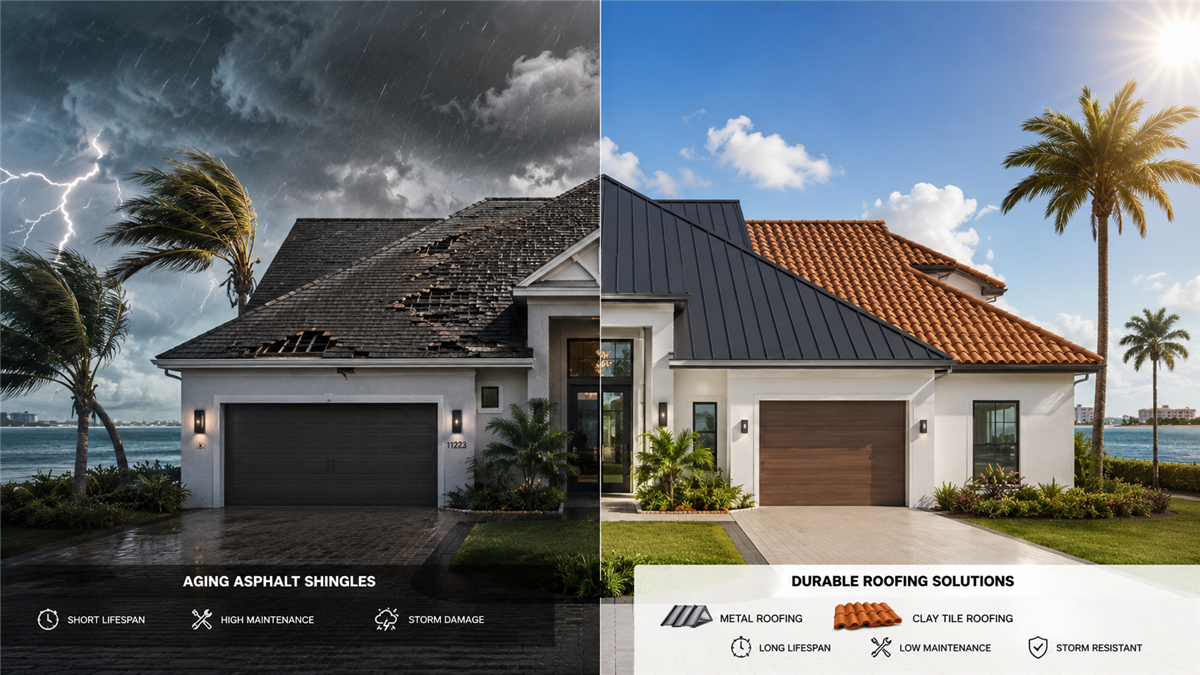
- Metal roofs: 40–70+ years
- Tile roofs (clay or concrete): 30–50+ years
- Shingle roofs: 15–25 years
Bottom line: Metal and tile roofs offer the longest lifespan in Florida’s climate.
1. Metal Roofs: The Longest-Lasting Option
Metal roofs are one of the most durable choices for Florida homes.
Key benefits:
- Resistant to wind, rain, and corrosion
- Can withstand hurricane-force winds
- Reflects heat, improving energy efficiency
With proper installation, metal roofs can last 40 to 70 years or more, making them one of the best long-term investments.
2. Tile Roofs: Durable and Weather-Resistant
Tile roofs—made from clay or concrete—are another long-lasting option.
Advantages include:
- Excellent resistance to heat and UV exposure
- Strong performance in heavy rain
- Long lifespan with proper maintenance
Tile roofs typically last 30 to 50+ years, though individual tiles may need occasional replacement.
3. Asphalt Shingles: Affordable but Shorter Lifespan
Shingle roofs are the most common option due to their lower upfront cost.
However, in Florida’s climate, they tend to:
- Wear out faster from heat and UV exposure
- Be more vulnerable to wind damage
- Require replacement sooner
Most shingle roofs last 15 to 25 years in Florida.
4. How Florida Weather Impacts Roof Lifespan
Florida conditions can shorten the life of any roof if it’s not built to handle them.
Key factors include:
- Intense sun and UV exposure
- Heavy rain and humidity
- Hurricane-force winds
This is why choosing the right material—and proper installation—is essential.
5. Installation Matters as Much as Material
Even the best roofing material won’t last if it’s installed incorrectly.
Professional installation ensures:
- Proper sealing and waterproofing
- Secure attachment to withstand high winds
- Compliance with Florida building codes
This significantly impacts how long your roof will last.
6. Maintenance and Longevity
Regular maintenance can extend the life of any roof.
This includes:
- Routine inspections
- Cleaning debris and drainage systems
- Repairing minor damage early
Proper care helps maximize your roof’s lifespan.
7. Energy Efficiency and Long-Term Value
Long-lasting roofs often provide additional benefits.
These include:
- Lower energy costs (especially metal roofs)
- Improved home value
- Better protection during storms
This makes them a smart investment beyond just durability.
What Most Homeowners Don’t Realize
Cheaper roofs can cost more over time
Shorter lifespan means more frequent replacements.
Wind resistance is critical in Florida
Not all materials perform equally during hurricanes.
Your roof is part of a complete system
It works together with windows, doors, and structure to protect your home.
What This Means for Your Home
The longest-lasting roof in Florida is typically metal or tile—both designed to handle the state’s harsh climate and extreme weather conditions.
While shingles may be more affordable upfront, investing in a longer-lasting material can save money and provide better protection over time.
By choosing the right material and ensuring proper installation, you can maximize your roof’s lifespan and keep your home protected for decades.
Subscribe to Statewide Windows & Doors's Blog



Comments